

You're Using The Wrong Butter For Baking — Here's What To Use Instead
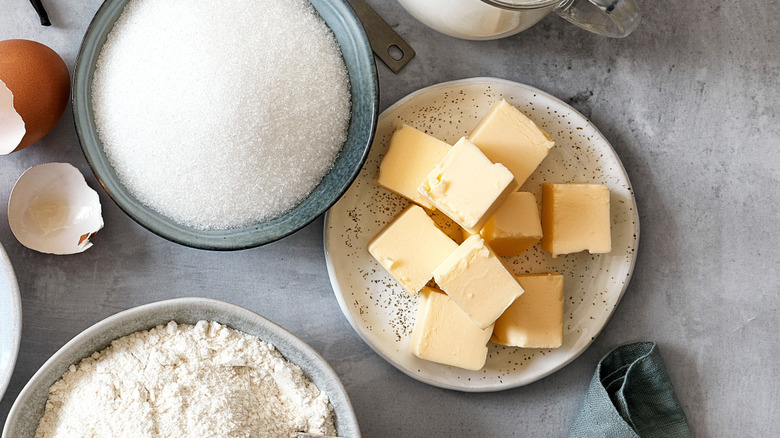
Unless you've decided that it's time to start making your own butter, you're likely working with what's at the grocery store. There aren't huge differences between the different sorts of butter you'll see on shelves, but you also shouldn't assume they're identical. When cooking with butter, is it possible to buy the wrong one?
We spoke to Tonja Engan, a baking expert and culinary specialist of the Land O'Lakes Culinary Center in Arden Hills, Minnesota, who could thankfully go into precise details about what kind of butter you should buy for baking. As it happens, butter designed for spreading on toast is not what you want.
Engan called stick butter the baking "gold standard," whether it's salted or not, explaining, "Most baking recipes in the U.S. are written assuming you're using traditional stick butter with a predictable balance of fat and water. That consistency is what allows batters and doughs to behave the way the recipe developer intended." It's worth remembering that stick and tub butter are made differently. Butter that has to be scooped from a tub or small container has a different mixture of ingredients than stick butter. According to Engan, "These products often contain added oils or more water, which can affect the flavor, texture, and height of baked goods."
Bake with stick butter, not spreadable butter
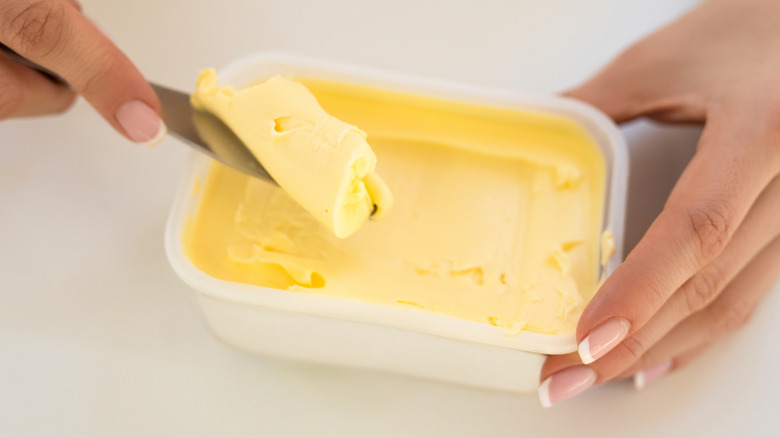
Your standard stick of butter shouldn't list any ingredients besides pasteurized cream and salt (unless it's unsalted, of course). On the other hand, if you're buying a small container of spreadable butter, it might include extras like soybean oil, canola oil, or vinegar; importantly, spreadable butter also has a much higher percentage of water. Tonja Engan explained that too much water and additional oil affect a baked good's taste, texture, and rise. "Extra water can lead to cookies that spread too much, cakes that bake up dense, or pastries that lack structure," she said. Also, watch out for whipped butter, which comes in a tub and only includes cream and salt but also has so much added air that its lighter weight will mess up recipe measurements.
Stick butter's consistency is largely due to butterfat, the natural fat found inside dairy products. According to Engan, "Most U.S. baking recipes are developed using butter with about 80% butterfat," with a little water to provide structure and texture. That allows the necessary baking chemistry to occur. Engan said, "In cakes and cupcakes, butter is often creamed with sugar to trap air, helping the batter rise and creating a tender crumb. In cookies, butter controls spread and chew [...] In biscuits, pie crusts, and pastries, cold butter creates pockets of steam that form flaky layers." We mentioned salted or unsalted butter earlier: The choice mostly comes down to personal preference and the recipe, although the best butter for baking, according to Alton Brown, is unsalted.