

What Actually Happens If You Eat Overnight Oats Every Morning
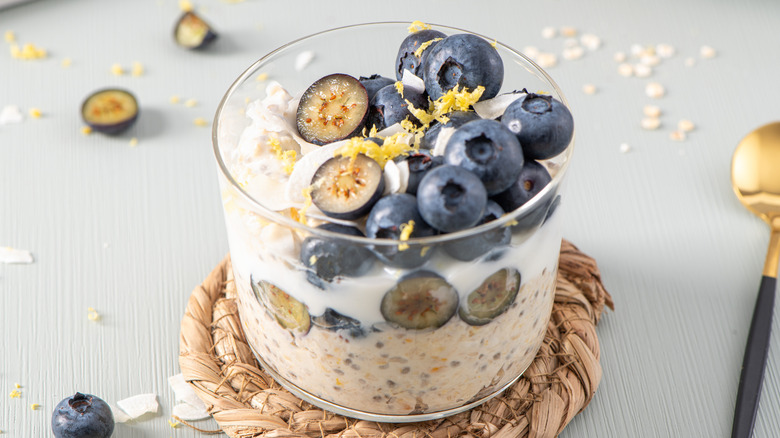
Overnight oats are a trendy way to eat your morning oatmeal, and they have a healthy reputation just like the old-fashioned stovetop kind. They're made by soaking rolled oats in milk overnight in the fridge, resulting in a creamy and filling breakfast that's eaten hot or cold and garnished with tons of toppings. Overnight oats are famous for being heart healthy, filled with fiber, and packed with antioxidants and anti-inflammatory properties. They're certainly a more nutrient-dense alternative to a fast food egg sandwich for breakfast, but you should know what happens if you indulge in overnight oats every morning — especially if you load them up with the works.
Overnight oats can be a little deceptive. Their mix-ins — like berries, nuts, and coconut milk — are often nutritious, but all of that can add up to more calories and sugar than you want to eat for breakfast each day. The calorie count in overnight oats varies wildly depending on the portion size and the ingredients. There are 150 calories in a ½ cup of dry rolled oats, and that number will climb with the addition of milk, fruit, and sweeteners.
The high fiber in oats is another double-edged sword; it'll help keep you fuller longer, but all that fiber can cause bloating and digestive discomfort if you eat too much or have a sensitive system. The phytic acid in oats can also disrupt mineral absorption in some people. Plus, eating the exact same thing every single day can lead to nutritional deficiencies if your diet is not sufficiently varied.
How to build a bowl of overnight oats with nutritional variety
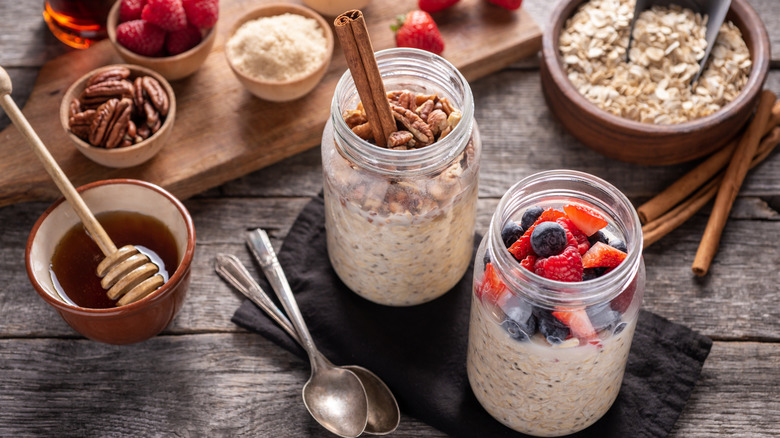
Overnight oats can be a great way to incorporate nutrient-dense foods into your diet if you use them the right way. Make overnight oats even more nutritious by starting with minimally processed oats. Milk or milk alternatives will add a few more nutrients right off the bat, but you can also use other liquids for oat hydration, like coconut water or kefir. Add in whey protein or other protein powders for more macronutrients, and some collagen liquid or powder can potentially support hair and skin health.
Nut butters can be a great mix-in to add protein and help make overnight oats more filling, but they are also quite calorie-dense. Sweeteners like maple syrup, honey, or jam do make oats enticing, but it's easy to overdo it. Adding just a little to the mix and then adjusting to taste after you add fruits and the rest of your toppings can ensure you don't accidentally overdo it. Some folks might prefer to incorporate calorie-free sweeteners like stevia or Splenda.
Fruit, nuts, and seeds are popular toppings for overnight oats, and they're a great addition in moderation. Add antioxidant-rich berries or a few sliced bananas for a pop of color, flavor, and some extra health benefits. Sprinkle on some chia seeds, hemp hearts, or air fryer toasted nuts for even more nutrients and a great crunch. Just like with all the ingredients in overnight oats, it's important to be mindful of portion size and nutritional variety.