

Before You Reuse Wooden Chopsticks, Always Check For This
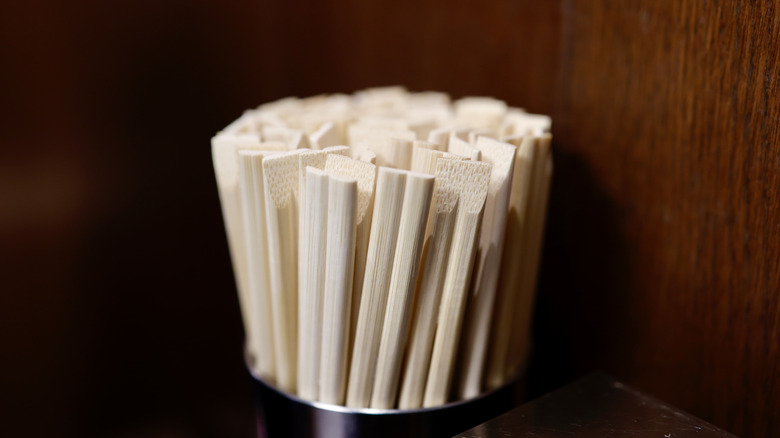
Using chopsticks instead of other utensils is a popular practice. If you prefer chopsticks, it may be because you're a big fan of Asian cuisine or simply believe they are more efficient for eating your favorite foods. Regardless, when ordering takeout from Asian restaurants, you'll often receive a pair of disposable wooden chopsticks (the easiest type for beginners). While these will get the job done once, it's important to check for cracks or splinters before using them again.
Splits in the wood can harbor dangerous bacteria – Staphylococcus aureus and E. coli, in particular. This is because the splits create crevices that are hard to clean and are susceptible to breeding bacteria quicker than smoother surfaces do. Splintered wood can also be painful or even dangerous if ingested, in some cases.
Even if they aren't splintered, low-quality chopsticks which are intended to be used only once or twice become susceptible to moisture over time (especially when exposed to humidity). This leads to degradation and mold growth, which can result in inflammation, among other health issue.
How to pick reusable chopsticks to use at home
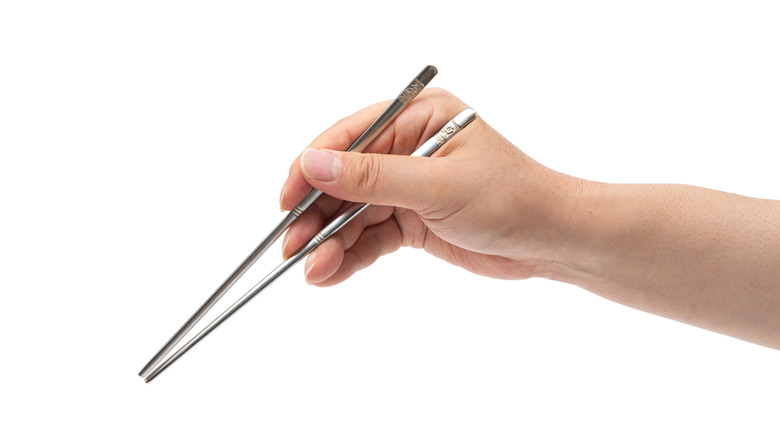
If you want to avoid the risk of splintering that comes with wooden chopsticks, buying a pair that is made for everyday use is your best option. Metal chopsticks are the safest in terms of maintenance and bacteria growth as long as they are dried properly to avoid mineral build-up. While the use of metal chopsticks is a common practice at Korean restaurants, using them can take some getting used to because of their relatively smooth surface. Alternatively, chopsticks made of high-grade polypropylene plastic are resistant to splintering, are dishwasher safe, and non-porous; which means food and water residue won't be absorbed by them, thus avoiding bacterial growth.
Nevertheless, while metal and plastic chopsticks are your best bet for daily use, cooking with chopsticks should be done with the bamboo variety. If you're buying wooden chopsticks, seek out ones that are high quality and durable. As far as maintenance is concerned, make sure to clean them using warm, soapy water and a brush, dry them off with a cotton cloth, and replace them as soon as you notice cracks or any other signs of wear-and-tear.