

The Walmart Egg Scandal That Proved 'Organic' Isn't Always What It's Cracked Up To Be
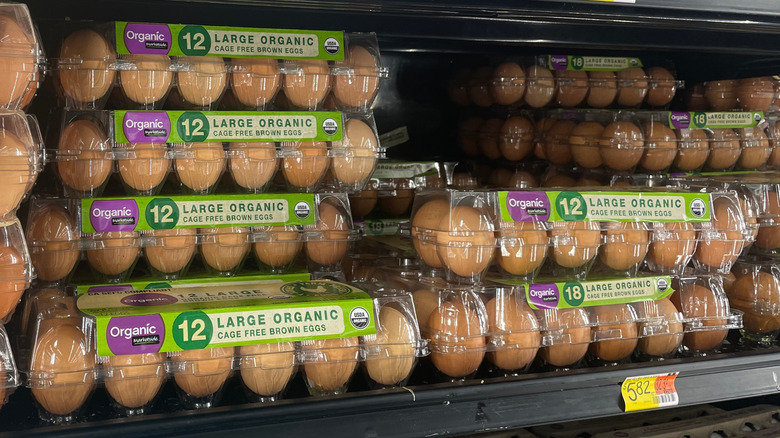
Even under strict USDA labeling laws, some companies still mislead consumers into thinking they're getting a certain type of product when they're really not. Walmart's private-label organic egg controversy is just one example. In January 2018, the egg supplier behind Walmart's Organic Marketside cage-free eggs — Cal-Maine Foods — was sued by a shopper who alleged the eggs were falsely advertised. The lawsuit sought reimbursement for consumers who paid premium prices for eggs they believed were from hens with legitimate outdoor access.
The carton's main labeling read: "organic cage free brown eggs." At the same time, the subhead messaging stated, "Hens raised on certified organic feed. Free to roam, nest, and perch in protected barn with outdoor access." These qualities are what consumers are willing to pay extra for because it suggests they're getting a higher standard of animal care under USDA organic regulations. At the time of the lawsuit, a dozen Organic Marketside cage-free eggs cost $3.97, while a dozen Great Value conventional eggs cost $1.86. However, upon investigation of a Cal-Maine Foods organic egg facility in Kansas, the hens were discovered to be living in conditions that didn't reflect the marketing claims, which meant consumers were paying a premium price for nothing.
Per allegations in the lawsuit, hundreds of thousands of hens were crowded in large, multi-level barns where they were not "free to roam," let alone able to peck the ground. The "outdoor access" referenced by the company reportedly consisted of screen-covered porches attached to the barns. It's worth noting that this type of enclosed, year-round set-up does meet the federal guidelines for organic labeling.
Scrambled standards for organic eggs
According to the lawsuit, both Walmart and Cal-Maine Foods were aware the hens were living in a set-up which did not fully align with what consumer expectations would be when reading the carton's labeling. Other lawsuits were filed against Cal-Maine Foods which had to do with price gouging and antitrust actions, but they remain the largest egg producer in the United States. That hasn't stopped them from being considered some of the lowest quality eggs on grocery store shelves.
In 2023, the USDA implemented the Strengthening Organic Enforcement (SOE) rule and updated the Organic Livestock and Poultry Standards (OLPS). The OLPS update introduced stricter requirements for outdoor access, including a requirement that the area be at least 75% soil with vegetation and plenty of space for hens to behave naturally.
Some consumers remain skeptical whether organic egg producers consistently meet both the regulatory standards and consumer expectations associated with the organic label. It's scandals like these that also fuel consumer skepticism toward all organic-labeled food — and understandably so. Updates to livestock regulation standards like what we saw in 2023 are intended to reinforce consumer trust.
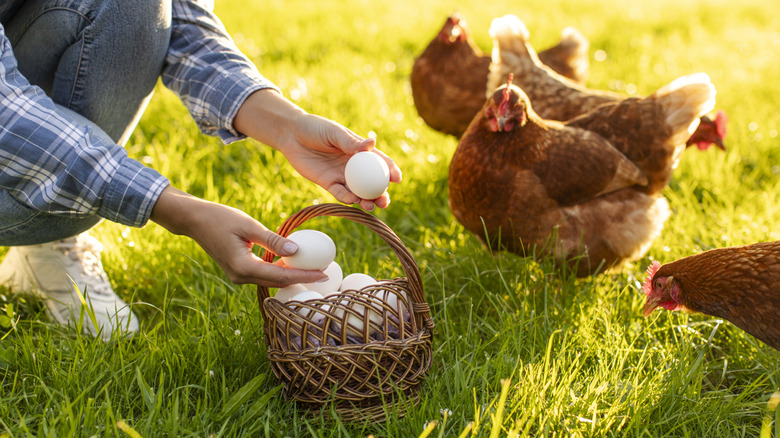
If you're trying to source quality eggs that may not necessarily be fed an organic diet but are at least humanely-raised (like pasture-raised chicken and eggs), consider seeking out egg producers that are local to your area. Its becoming increasingly common for residents of suburban neighborhoods to raise their own hens and many are happy to sell extra eggs from their flock.