

This Japanese Fish Is So Deadly That It's (Mostly) Banned In The United States
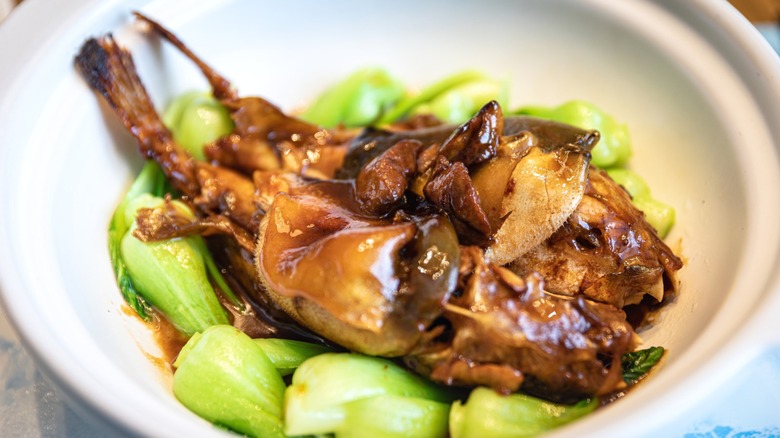
America is a famously permissive country when it comes to food. While countries such as the United Kingdom and Ireland may discourage certain foods through taxes (which memorably got Subway in trouble when an Irish court declared the bread was really pastry), and countries such as Denmark may try to ban a particularly spicy brand of ramen, America takes what one may call a "YOLO" approach to what one can sell. But there are exceptions, especially when it comes to certain kinds of imported meat. For instance, you can't import puffer fish, a delicacy in Japan because it can kill you if not prepared properly — although you can still get your hands on it if you know where to go.
For those whose knowledge of puffer fish goes only as far as "Finding Nemo," they're actually part of a larger family of fish known as tetraodontidae, numbering almost 200 species. They're known for their habit of temporarily ballooning to a much larger size to scare off predators. If that doesn't work, they have a back-up plan: good ol' deadly neurotoxin. Indeed, most species of puffer fish are highly toxic — but that doesn't mean we can't eat them. In Japan, they're eaten as a delicacy, usually in the form of sashimi but occasionally grilled or in a hot pot. However, if you consume any of the tetrodotoxin (which is mostly contained in the liver and ovaries), you can expect tremors, paralysis, and death.
Eating fugu is complicated
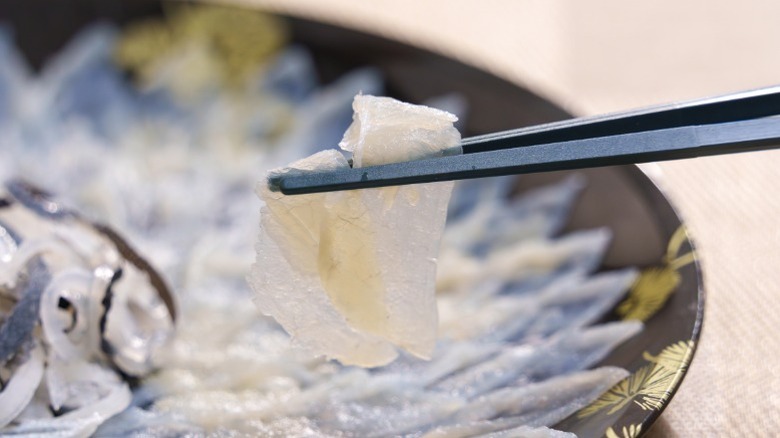
As you can imagine, it takes a lot to make fugu safe for human consumption. Japanese chefs train for years to properly prepare the dish, knowing exactly what parts are safe to eat while still making sure it's a decadent, enjoyable eating experience. For instance, fugu is commonly eaten in winter since that's when it's at its most tender and flavorful. Additionally, chefs must use long, bendy knives to carefully separate the flesh from the rest of the carcass, with even a single drop of blood in the wrong place scuttling the whole thing.
It makes sense that America's a little leery of having poisonous fish sent our way without regulation: indeed, the importation of fugu is heavily restricted, requiring both the American and Japanese governments to sign off on each shipment. As such, fugu is hard to find, and very expensive, in America — although you can still find restaurants serving it if you know where to look, such as Restaurant Nippon in New York City. Still, if you'd rather not go to so much trouble, you can always hit up your local sushi restaurant, even if you live in a small town.