

Don't Throw Out 'Bad' Blueberries — Here's How To Save Them
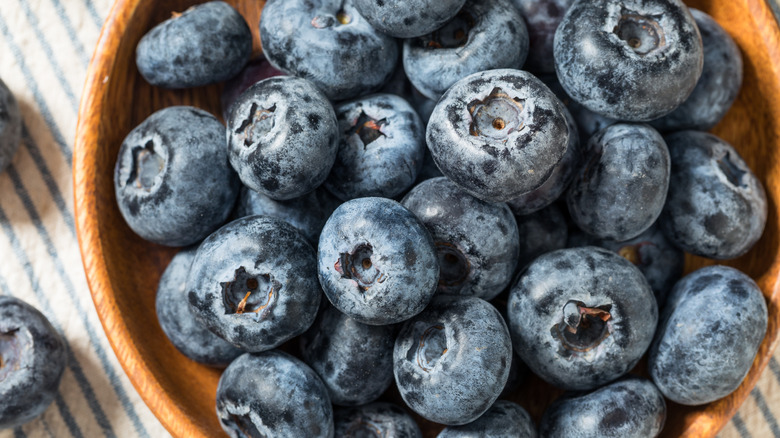
If you're anything like me, knowing when to eat and when to bin fruit is not easy. Take blueberries, for example. Of course, I know that mold is a no-go — but what about that one with shriveled skin or the one that looks really mushy? I know it's a bad habit, but if I'm honest, as soon as fruit looks anything less than perfect, I no longer find it appetizing — and I bet I'm not the only one.
However, the truth is that looks aren't everything, and blueberries don't become inedible as soon as they look a little "meh." They might not be fresh enough to top a yogurt bowl, but just like overly ripe bananas are perfect for banana bread, squishy blueberries have their uses, too. Instead of eating them as is or tossing them, you can save blueberries by either blending or cooking them. No one will know how mushy a blueberry was once it's whizzed up in a smoothie or baked into a muffin.
There are a lot of baked treats that benefit from blueberries. Muffins, banana bread, oatmeal cookies, pancakes, flapjacks, pies, pound cake, and cupcakes all work beautifully with blueberries as add-ins or fillings. And if you don't feel like baking or don't want to eat your berries right away, you can make homemade jam that you can use to top pancakes, mix into yogurt or oatmeal, flavor no-bake cheesecakes, or make a PB&J sandwich.
How to pick the best 'bad' blueberries
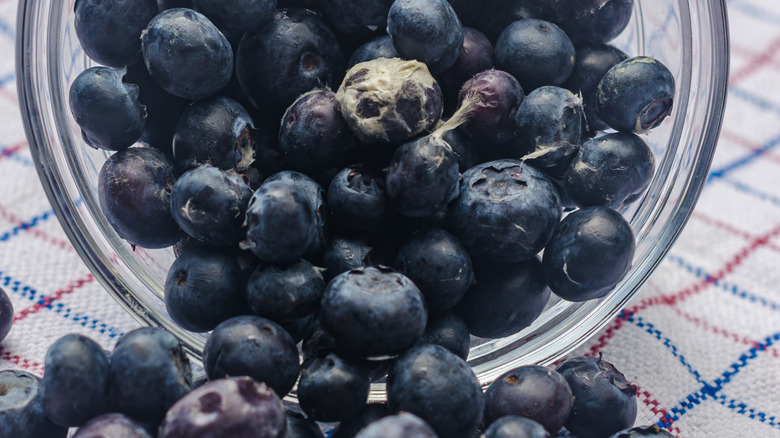
Unfortunately, you can't just pick any bad-looking berry to bake with, as some really will have passed the point of no return. The first thing to consider is how long you've kept the blueberries in your fridge. The longer they've been in there, the more careful you need to be, simply because they've had more time to decompose.
Mushiness is only the first stage of decomposition in fruit, and it isn't dangerous. So, if you know your blueberries are only a week old and the sole problem you see is mushiness, then you're likely good to go. The real signs of rot to look out for are discoloration, bad smells, and mold. For some larger produce, it's possible to cut around problem areas, but with fruit as small as blueberries, this isn't really feasible. You'll have to throw out the whole berry if half of it looks bad. And if you see mold, best practice says to throw out the whole pack. Mold spreads via contact, and if multiple berries in a pack have already reached that stage, the others likely aren't far behind.
If you're not sure whether they're good to eat, then the best thing to do is toss them — and if all of this feels like too much bother to deal with, that's a sign that you should try buying frozen blueberries instead of fresh ones.