

Stop Mushing Your Salad's Soft Ingredients With This Fail-Proof Technique
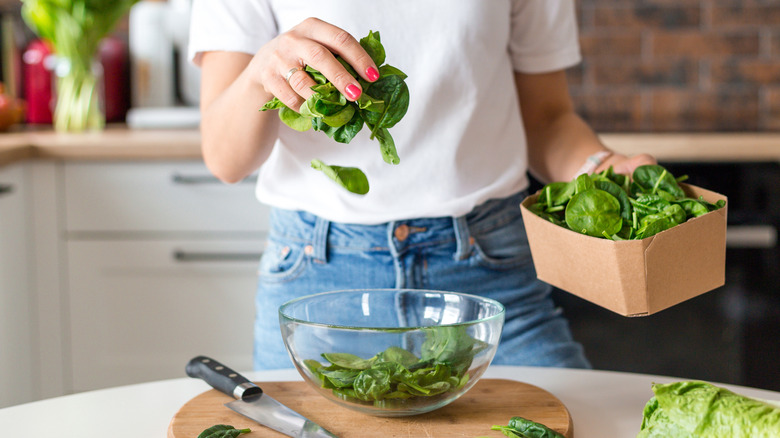
A salad should be fresh, cool, flavorful, and balanced — an eating experience reminiscent of a lovely stroll on a crisp spring day. It should not be watery, soggy, and upsetting, like walking in squishy wet socks. If you've eaten one too many sad salads, the issue may be how you're building it. According to Jason Stern, executive chef at Boone's in Atlanta, Georgia, you're making a big mistake if you're tossing soft ingredients with everything else.
"I don't blend soft ingredients in the mixing phase," Stern tells The Takeout. "They get beaten up too easily." Instead of throwing everything into a mixing bowl at once, Stern employs a step-by-step strategy and then sprinkles soft items on top once the salad has been plated. "I find it easy enough to mix them in with a fork when eating," he shares.
"We build a salad like a building," Stern explains. "We place our greens in a mixing bowl and season with a pinch of salt and a dash of dressing. Gently mix the lettuce of choice and start to build the foundation of the salad." For a better tossed salad, stop using tongs and use your hands instead. It's much easier to have a lighter touch.
For particularly heavy dressings, like a chunky blue cheese number, you should add salad dressing to the bowl first — this way you can coat the leaves more evenly with minimal tossing. From there, gently incorporate heartier vegetables, like shaved fennel, roasted corn, or shredded cabbage. Because the lettuce is already coated, you can dress the heavier vegetables quickly, ensuring that the more delicate leaves don't bruise.
Soft ingredients to pay attention to when making a salad
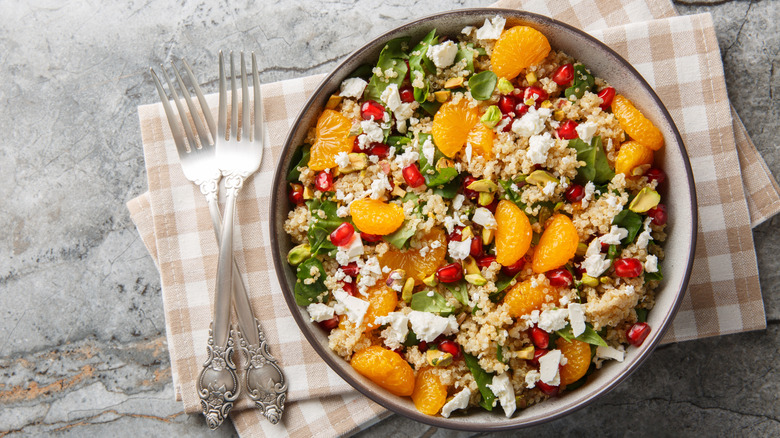
Diced avocado, fresh fruits, tender herbs, cooked vegetables, boiled eggs, and soft cheeses are among the ingredients that are too delicate to handle being tossed around from the beginning. Add-ins such as raspberries, mandarin oranges, sliced peaches, fresh basil leaves, and ripe tomatoes are easily bruised, damaging the ingredients themselves and releasing liquid. That extra moisture can make the salad go soggy quickly, dilute the dressing, and create a pool of watery vegetable juices in the bottom of the dish.
Ingredients like crumbled goat cheese, roasted sweet potatoes, oil-packed canned tuna (which is better for salad than the water-packed variety), diced avocado, cubed tofu, and boiled eggs will turn to absolute mush. As they break down, they will coat all the salad components in a heavy paste. This creates a decidedly unpleasant texture and dulls the flavors of the other ingredients.
If you want to include several soft components in your salad, you may not want to put everything on top. Some of these items can be mixed in, but they should be added at the very end and only minimally tossed. For example, firmer styles of crumbled feta cheese, blueberries, cooked tofu, or Italian flat leaf parsley are still quite delicate, but they can handle a gentle mix. However, something like boiled eggs or avocado definitely should be sliced or diced and arranged on top.