

The 16 Most Popular Sandwiches From Across The Globe
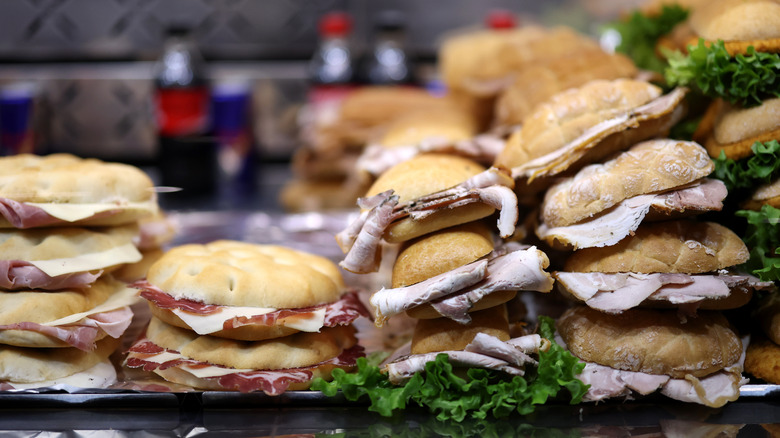
There aren't many foods that are as globally beloved, and as endlessly customizable, as the humble sandwich. While the core premise of this lunchtime favorite — fillings between bread — may be simple, the ways to add personality, regional flair, and culinary tradition are nearly limitless.
From bustling food stalls in Southeast Asia to formal tea rooms in Western Europe, the sandwich has evolved and traveled around the globe. Each place where one is served has put its specific stamp in the lunchtime staple. Whether it's the choice of locally sourced fillings to act as the star of the show, or the techniques used to prepare them like grilling, smoking, or spreading, every element speaks to the culture from which it came. Sandwiches aren't just delicious to eat; they're rich with culinary history.
If you don't have time to travel the world, you can still get to know sandwiches that reflect the places and people they come from. Here are 16 of the most popular varieties from around the globe.
1. Tombik Döner (Türkiye)
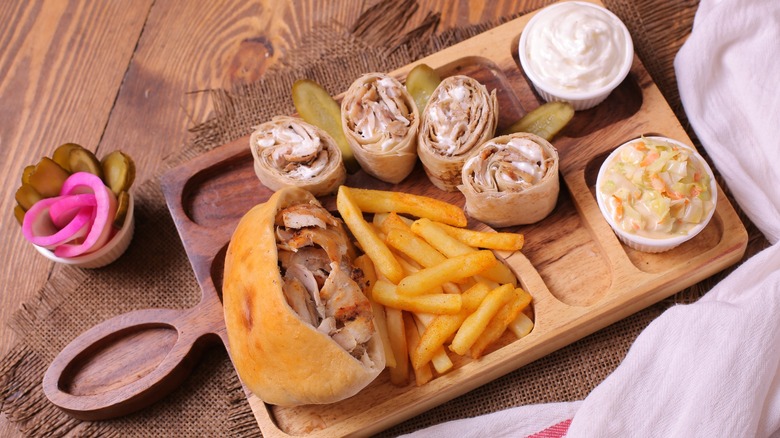
Not only is it among expert Rick Steves' recommended affordable traveling food picks, the Tombik Döner also happens to be one of Türkiye's most popular street sandwiches. Featuring succulent spit-roasted meat tucked inside a round, fluffy flatbread, the sandwich's name is drawn from the rotating method used to cook the meat, which slowly turns it on a rotisserie until it's rich and tender. Once roasted, sublime, sliver-thin slices of lamb, chicken, or beef are shaved directly from the spit and layered onto the still warm bread pocket.
Each sandwich is customizable, with ingredients like lettuce, tomatoes, onions, pickles that add nutrients, crunch, and a bright freshness. Sauces like tahini, spiced tomato, and yogurt bring creaminess and some zing. There are even some popular iterations that include fries stuffed right in the sandwich. Taking its cue from Ottoman traditions, Tombik Döner is a local specialty that has grown to global popularity. Not only is it a hit in its home country, but it's also among the most popular sandwiches in Germany.
2. Bánh Mì (Vietnam)
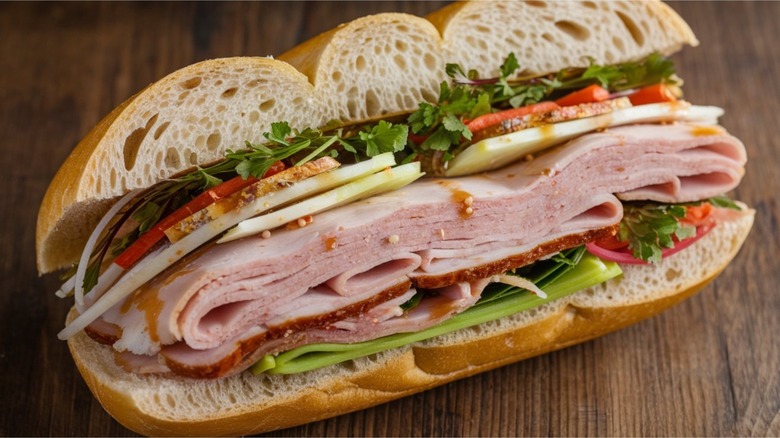
Chosen among the best sandwiches by our Takeout Fantasy Food Draft pros, the bánh mì is a classic sammie in Vietnam. A true celebration of both French and Vietnamese flavors, this selection is founded on a light, crisp baguette, which is filled to bursting with one or more preferred proteins (such as pork, chicken, tofu, or cold cuts, often matched with pâté for extra flavor and punch).
Other ingredients like pickled carrots and daikon can bring some crunch to the sandwich, while cucumber, cilantro, and chili can lend it a bit of vibrancy and heat. Add to all that a single, generous serving of mayonnaise and a few savory sauces to tie it all together, and you have one bangin' bánh mì.
The baguette was introduced to Vietnam during the French colonial period, but it wasn't until after the country gained independence in 1945 that it became common to fill the crunchy loaves with local ingredients. Today, bánh mì is largely considered a national favorite, and you don't need to go to Vietnam to get one. You can find the iconic sandwich in restaurants all over the United States.
3. Vada Pav (India)
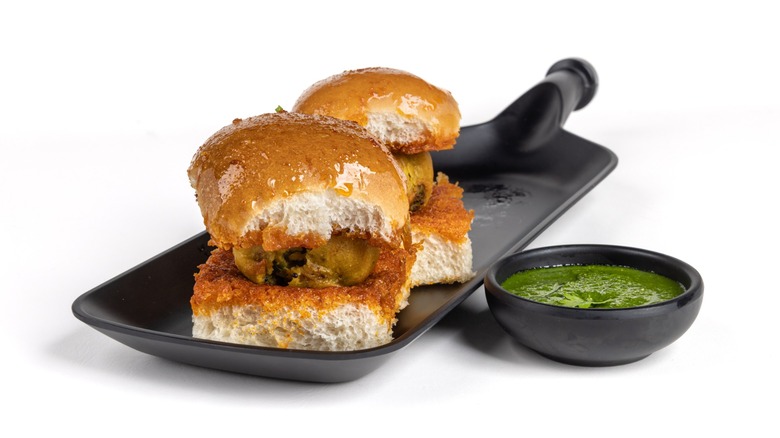
Among the most celebrated cheap sandwiches from around the world considered to be must-tries, vada pav is a popular street sandwich hailing from the Indian city of Mumbai. At its base, this sandwich is founded on a deep-fried potato fritter known as batata vada.
This consists of a spiced potato mixture, which is often flavored with green chili and masala, mashed, and shaped into rounds before being coated in chickpea batter. It's then fried until crisp on the outside and soft on the inside. Once the piping-hot fritter is ready, it's tucked inside a bread roll known as pav, which is often slathered with green chili-coriander chutney and dusted with dry garlic chutney.
Based on preferences, some vendors are known to serve this sammie with a fried green chili on the side if they want to bring even more heat to the meal. It's hugely popular in Mumbai, and the affordable price point of this local favorite only adds to its appeal.
4. Croque Monsieur/Madame (France)
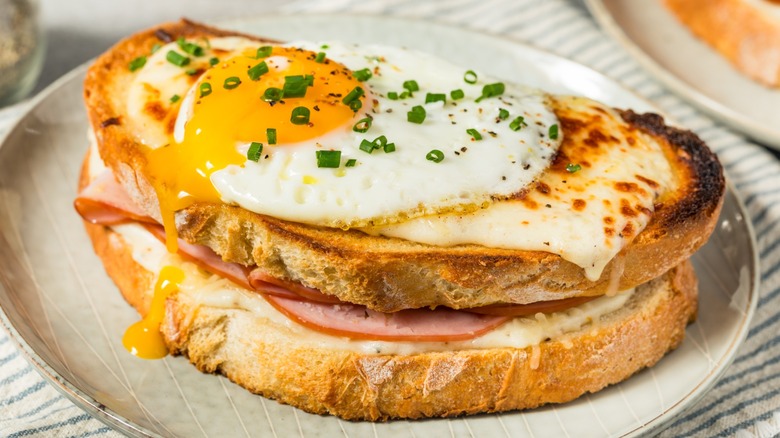
For fans of grilled cheese sandwiches, France has two sandwich picks that will delight you. The croque monsieur is one iconic option, with its mix of salty, savory ham and cheese served between slices of bread drenched in creamy sauce. The magic begins with soft sandwich bread, sliced ham (baked or boiled), and creamy Gruyère cheese. After this trio of delights is assembled, a topping of rich béchamel sauce is spread over the bread before it is baked or fried until crisp and golden.
What results is a French masterpiece that balances silky béchamel with melted cheese and savory ham, often served with a green salad for a bit of freshness. The croque monsieur first appeared on menus in the late 19th century in Paris, where it quickly became a favorite option for lunch or dinner.
Then, there is the croque madame. As for the difference between the croque monsieur and the croque madame, the sandwiches are exactly the same, but the latter includes a fried or poached egg placed on top.
5. Falafel Pita (Middle East)
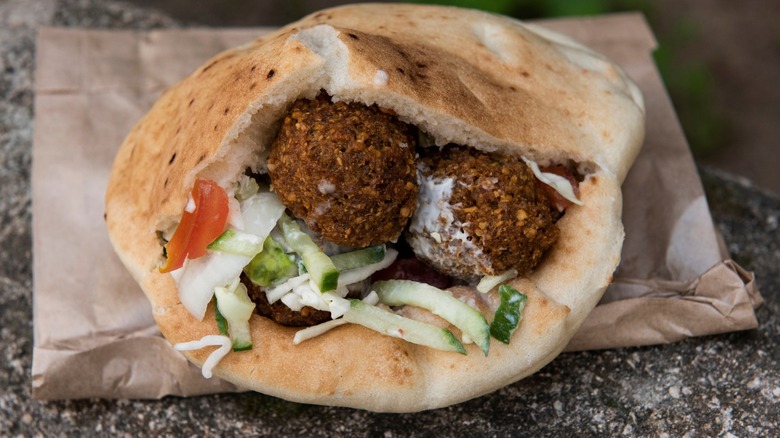
Not only is it among the most popular global foods, but the falafel is also one of the Middle Eastern foods you have to try at least once. Beloved throughout the region, the falafel pita features crispy chickpea fritters tucked inside a fluffy pita pocket, resulting in a sandwich that's nutritious, affordable, and ubiquitous throughout the Middle East.
The falafel mixture is usually a blend of soaked and ground chickpeas paired with flavorful spices like parsley, cilantro, garlic, onion, cumin, and coriander. Once mixed together to form patties or spheres, these falafel balls are fried until golden on the outside and tender on the inside.
Once the falafel balls are placed inside the pita, fresh vegetables like lettuce, tomatoes, and cucumbers are added, as well as a few pickled ingredients, often beets and red onions. A smear of tahini sauce then brings a creamy character to the pita pocket. While variations on the iconic sandwich exist in different Middle Eastern countries, they're all delicious and wildly popular.
6. Katsu Sando (Japan)
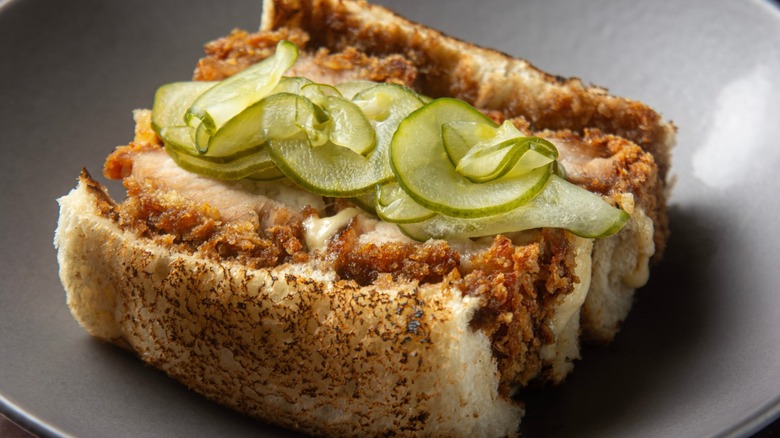
The katsu sando is a sandwich from Japan that takes a crispy, panko-breaded cutlet and layers it between slices of soft milk bread known as shokupan. This crispy, salty sandwich is most commonly made with a pork cutlet — though sometimes chicken makes an appearance — that's fried and then coated with a tonkatsu-style sauce.
A finely shredded cabbage slaw made with some variation of mayo, mustard, soy sauce, and sesame oil is added for a fresh crunch and a tangy bite. The bread is airy and tender, bringing a lovely contrast to the salty, crispy character of the other ingredients.
The katsu sando is a common sighting in Japan, found in convenience stores and restaurants across the nation. Much of its appeal is in its simplicity, with the crisp cutlet, savory sauce, and soft bread offering everything the sandwich needs without any unnecessary elements. As in many Japanese dishes, these ingredients are engineered to work effortlessly together in harmony, and the fact that it is an easily transported, handheld meal makes it that much more praiseworthy.
7. Choripán (Argentina)
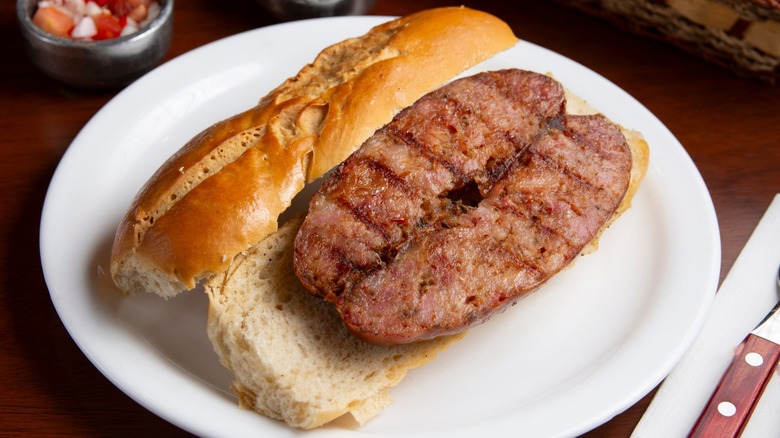
For any sausage fans out there, choripán is a sandwich you'll want to try. Known as Argentina's signature grilled sausage sandwich, it embodies the country's no-nonsense approach to delicious, meat-forward cuisine. The name choripán is a portmanteau combining the sandwich's two key ingredients — chorizo and pan (bread) — a testament to its straightforwardness.
The sausage in a choripán is cooked over a grill. Once browned and juicy, it's tucked into a baguette-style loaf with a crunchy exterior and a soft, pillowy crumb. The sandwich is finished with a smidgen of chimichurri, a sauce made with herbs, garlic, and oil. Often served alongside meat dishes in Argentina, chimichurri gives the sandwich a bright, sharp kick that contrasts the fattiness of the pork sausage.
Some choripán iterations also include salsa criolla, a relish made with fresh tomato and onion. In Argentina, choripán is a popular street food often served at social gatherings and public events, known to be present wherever crowds are.
8. Smørrebrød (Denmark)
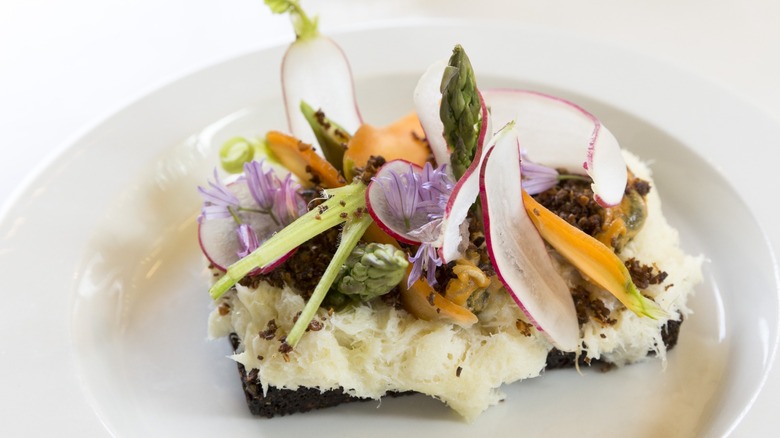
This next sandwich hails from Denmark, the country known for eating the most butter. It is fitting that smørrebrød, Denmark's most beloved open-faced sandwich, is built on a foundation where butter is a star player. The base is buttered rye bread, known as rugbrød.
The name smørrebrød translates directly to "buttered bread," which describes the original form of dense slices spread with fat and topped with traditionally Danish ingredients like herring, cheese, and cured meats. What began as a sustaining meal for farmers eventually evolved into a national culinary tradition. As Denmark became more urbanized in the 19th century, taverns and eateries began serving more ornate versions with refined, artfully arranged toppings. Stacks of fish, meats, herbs, sauces, and vegetables were arranged into ever more aesthetically pleasing visual feats.
Despite this artsy evolution, the basic structure stayed the same, with a single slice of buttered rye as the bedrock of this Nordic sandwich. Smørrebrød is most often eaten with a knife and fork and is usually enjoyed in a specific order. Meals will begin with lighter fish versions before moving to richer, meat-centered ones.
9. Bocadillo de Jamón (Spain)
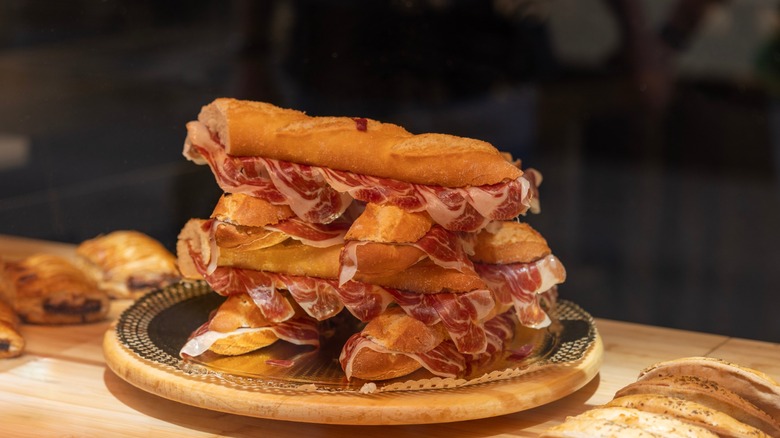
You could say that our next popular sandwich really knows how to ham it up. The bocadillo de jamón reflects the Spanish affinity for cured ham and is ubiquitous throughout the country. The iconic sandwich is built on a crusty baguette-style roll, piled high with slices of jamón serrano or jamón ibérico.
While they're both salty and intense, each cured ham option offers a unique flavor. Jamón serrano leans savory, with a distinct nuttiness, while those opting for jamón ibérico will be met with a more rich, delicate version of this sandwich. As for the bread itself, it is most commonly split lengthwise, then filled quite simply, thus allowing the flavor of the ham to truly shine.
Some iterations of this sandwich have olive oil lightly drizzled on top and others feature garlic and tomato pulp smushed into the bread. Still, many diners opt to keep their sandwich pure, with the full focus being on the cured meat itself. Bocadillo de jamón is served at cafés, restaurants, and snack bars, and its usually eaten as a snack or light lunch.
10. Pan con Chicharrón (Peru)
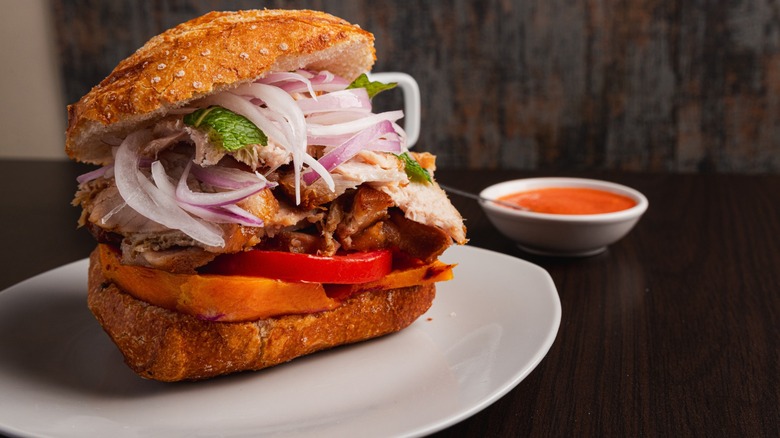
The Peruvian sandwich that earned a place on this list is the pan con chicharrón. A traditional snack built around crispy fried pork belly, the pork in a pan con chicharrón is slowly cooked, then fried until the majority of the fat renders and the exterior becomes crisp.
This creates a scrumptious contrast between crunchy skin and tender interior that diners go wild for. As for the name, the word chicharrón refers to this specific method of frying until browned and crisp. Once it is prepared to peak golden perfection, the pork is tucked within a soft bread roll, then paired with slices of sweet potato, which adds a mild sweetness and earthy undertone.
A final flourish via salsa criolla, made from red onion and seasoned for vibrancy, brings some extra magic to the sandwich to really make it sing. Widely popular across all of Peru, especially as a breakfast option, pan con chicharrón owes its wide appeal to its killer combination of pork, sweet potato, and onion relish.
11. Chip Butty (England)
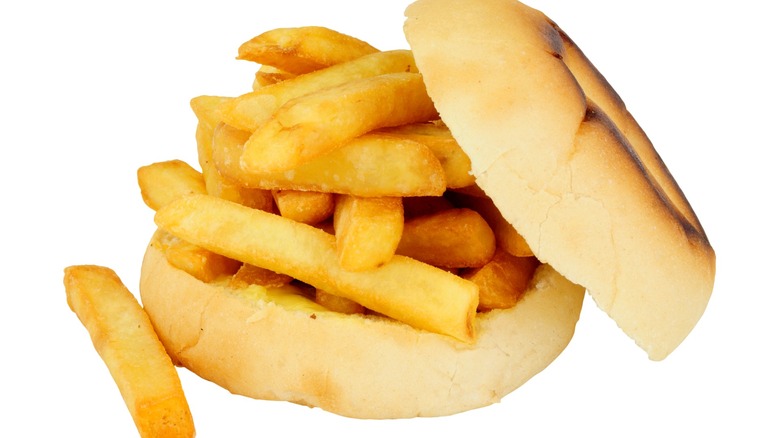
A chip butty is England's way of proving that sandwiches don't have to be complicated to be iconic. At its core, the chip butty is created by thick-cut fries being tucked inside buttered white bread or a soft roll. You won't find any complicated layers or fancy sauces here, just carbs on carbs. The chip butty is as simple as can be, featuring only bread, butter, and chips (which is what they call fries in England).
These fries are usually served piping hot and salted, and are sometimes splashed with vinegar or topped with a smidgen of ketchup. The butter in this sandwich melts against the warmth of the chips. For a recipe devoid of protein or vegetables, it brings an astounding amount of flavor to the table.
Chip butty is an oft-seen selection across menus in England, purchased by diners everywhere from chip shops to finer dining locales. The sammie is also known by other regional names like chip cob and chip barm. But whatever moniker you give it, the chip butty is familiar to all, and a favorite of many.
12. Torta (Mexico)
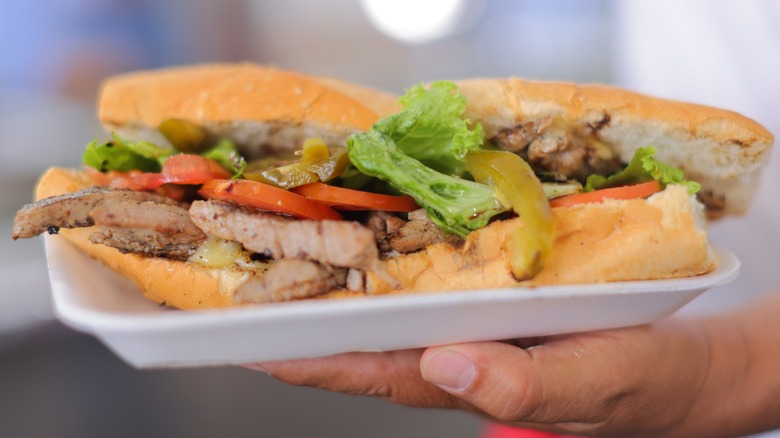
Mexico enters the mix with its famous torta. The torta is served on either a bolillo or telera roll, which is sliced and filled with a range of ingredients that varies depending on the region of Mexico where you order the iconic sandwich. The most common ingredients include a layer of refried beans spread on the bread and fillings like grilled beef, pork, chicken, or breaded cutlets.
Tortas may be served in vegetarian versions as well, which will most often feature options like beans and avocado as the main ingredients. Diners can keep things fresh with additional toppings like lettuce, tomato, onion, and pickled chilies. Other popular options for torta customizations include avocado, mayonnaise, or cheese.
As for the roll itself, it is important that it be hearty enough to hold any chosen sauces and fillings without completely falling apart. This ensures that the torta is practical as the popular street food staple it has become in Mexico.
13. Chivito (Uruguay)
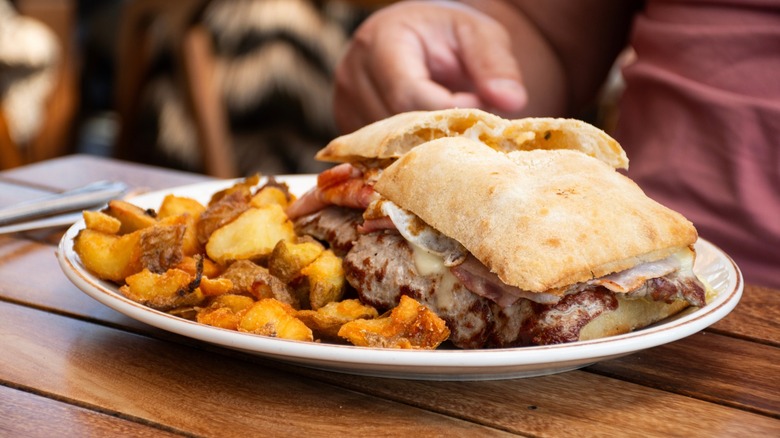
Widely considered to be Uruguay's essential sandwich, the chivito showcases a thin slice of grilled beef steak, which is tucked inside a warmed bread roll. The sandwich is then built upward from there, layered with items like ham, bacon, melted mozzarella, lettuce, tomato, and a fried or boiled egg. Some versions of chivito include olives or mayonnaise, to diners' preferences. Despite its somewhat comical name (literally translated as "little goat"), the chivito contains no such goat meat — only beef is served on these sandwiches!
The first known chivito hit the scene in the 1940s in the coastal city of Punta del Este, and over the years the sandwich has (literally) grown from there, adding ingredients on its way to becoming famous across Uruguay. Ample enough to enjoy as a standalone meal, the chivito's distinct combination of meat, vegetables, cheese, and bread in one packed sandwich has made it a national favorite.
14. Francesinha (Portugal)
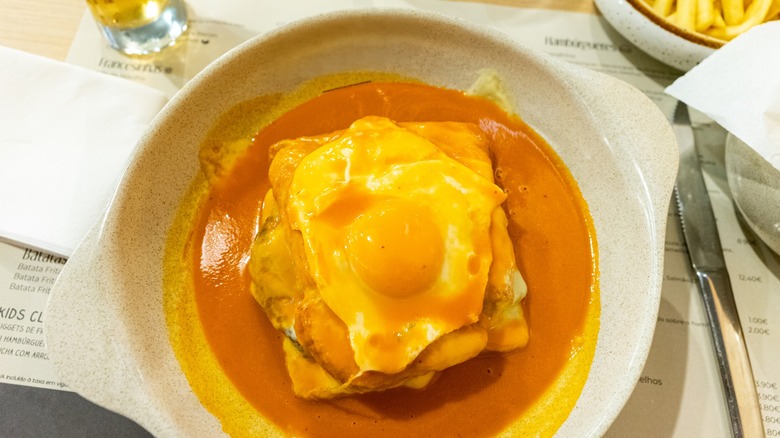
Portugal's favorite sandwich is known as a Francesinha, and it's a rich, layered sandwich from the city of Porto. The name itself — literally translated as "little Frenchie" — nods to its inspiration, the French croque monsieur. The Francesinha transforms the French concept into something more substantial, with thick slices of bread stuffed with a combo of ham, steak, or roast meat, plus Portuguese sausages, like linguiça.
The entire ordeal is then smothered with melted cheese before being broiled, which seals it all beneath a golden layer of creamy, gooey goodness. What truly makes the Francesinha shine is its signature sauce, which is a hot tomato-and-beer blend that is sometimes laced with aromatics and a hint of spice.
This savory sauce is poured atop the entire sandwich, soaking into the bread in much the same way that béchamel soaks the bread in a croque monsieur. Many versions include a fried egg on top, and it's often eaten with a side of fries that are meant to be dipped into the sauce.
15. Pan Bagnat (France)
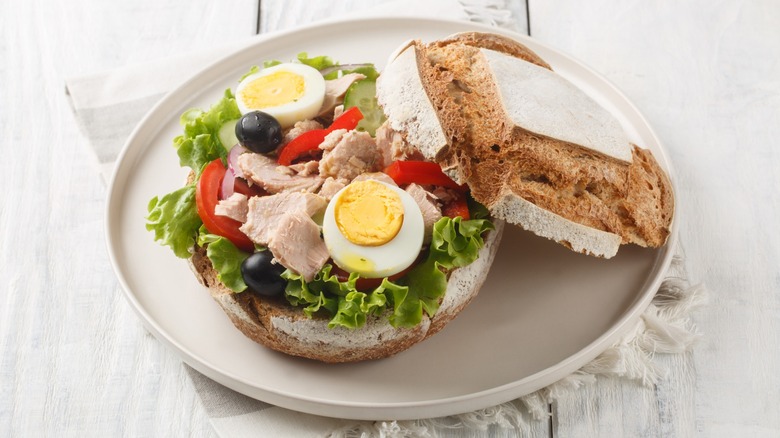
A popular Provençal-style sandwich, the name pan bagnat literally means "bathed bread." While it isn't dunked in liquid, this dish starts with a crusty round roll that's topped with all of the essential ingredients of salade niçoise. It may sound strange, but it's delicious.
Like a salade niçoise that's been turned into a sandwich, you'll find the same tuna packed in oil, anchovies, ripe tomatoes, onion, and olive oil that form the foundation. Unlike lettuce, however, the bread in a pan bagnat soaks up the juices from these savory ingredients, giving the meal an extra burst of savory flavor.
This inventive French sandwich creation was said to have been thought up as a practical way to salvage day-old bread. But whatever the reason for its ingenious inception, the pan bagnat takes a mainstay salad associated with the Southern French city of Nice and elevates it to a delicious sandwich that delivers all the flavors of Provence in a loaf of bread.
16. Gatsby (South Africa)
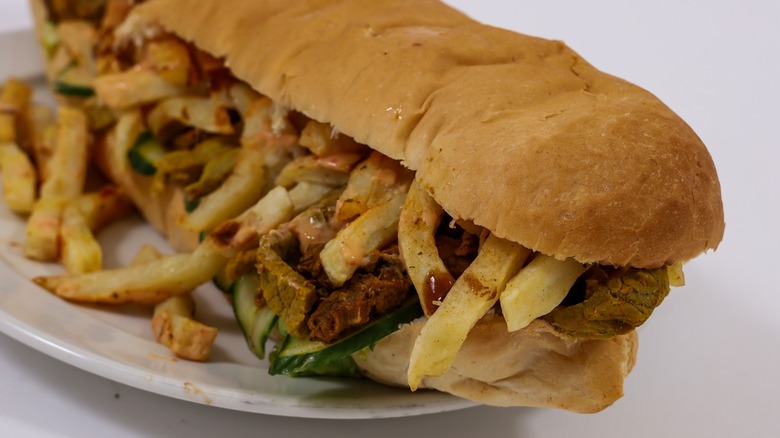
When Americans think of Gatsby, the first thing that comes to mind is likely a novel by F. Scott Fitzgerald. But for South Africans, a Gatsby is a massive submarine-style sandwich that, funnily enough, was also named for the iconic book, possibly a reference to the meal's undeniable decadence. Composed on a long loaf, the sandwich is designed for sharing. It's filled to bursting with some combination of hot French fries, polony (a South African sausage), steak, sausage, calamari, or eggs.
The fillings are often seasoned before the sub is splashed with a dash of salt and vinegar. Regardless, it is always packed to the brim, its size being one of its signature features.
The Gatsby was first seen in the 1970s in the Cape Town suburb of Athlone, starting out as an improvised meal of fries and meat inside bread. Originally a creative solution for a quick group meal, the sandwich has evolved into a symbol of Cape Town's food culture.