

Remove Fat From Ground Beef In Seconds With This Easy Trick
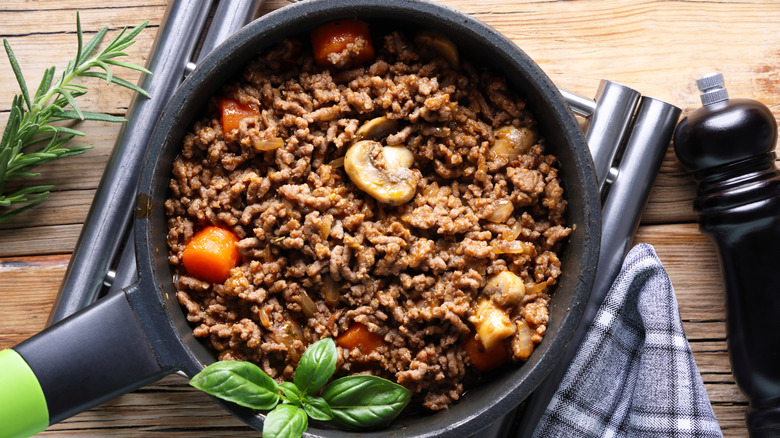
Ground beef can have a very high fat content, with one of the most common lean points being 70/30 — that's 30% fat! We might buy high-fat cuts over leaner cuts because they're on sale or because they'll make nice juicy burgers. But not every meal will benefit from quite that much fat. If you're not using the best fat ratio for ground beef, and the fat starts to melt and pool in the pan when you're cooking it, how should you get rid of it?
The easiest trick is to use paper towels to soak up the excess liquid. Using a pair of tongs to hold the towel, you can quickly soak up as much or as little fat as you want without making a mess or removing the meat from the pan. To avoid touching the meat and risking some of it sticking to the towel, gather the meat to one side and then tilt the pan so the liquid runs to the opposite side. Thicker paper towels work the best, but anything will do in a pinch. Once you're done, all you need to do is get the paper towel in the bin. If it's literally dripping, it might be easier to grab some Tupperware to deposit the towel in (especially if you'll be using more than one piece), and then you can tip everything into the bin when you're done, completely mess-free.
Why is using paper towel better than draining the beef?
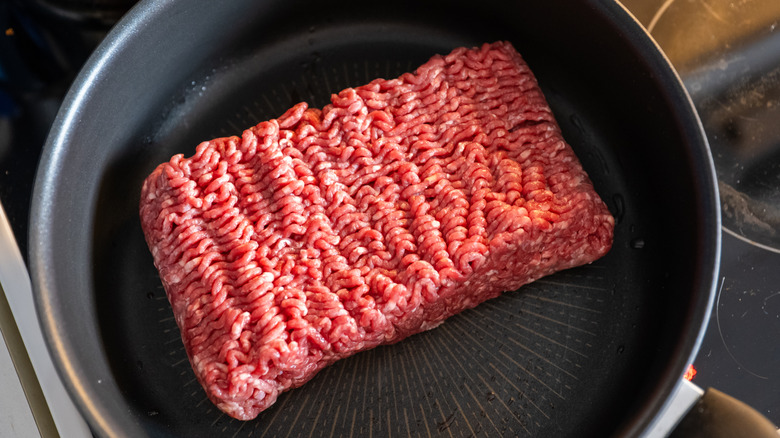
Until now, you might have been using a colander to drain your beef and get rid of excess fat. However, draining ground beef is far from ideal. To start with, it gets rid of all the fat, which is probably not necessary. While you might not need all of it, keeping at least some will add a lot of flavor to your dish. Secondly, if you drain it over the sink, you'll be sending hot fat down your drain, which can cause problems for your pipes and even your local sewage system. Lastly, it makes for extra dirty dishes to clean and just generally takes a lot of time compared to the paper towel trick.
If your ground beef produces so much excess liquid that you need an annoyingly large amount of paper towel to mop it up, you might be dealing with more than just fat. Ground beef is prone to releasing a lot of juices, and overcrowding your pan is one of the biggest mistakes you can make when cooking ground beef. With no space to evaporate, the moisture gets trapped and pools in the pan along with the excess fat. It's easy to tell the difference between the two liquids — pure fat is clear, bubbly, and oily, while fat mixed with trapped moisture is watery, grayish, and cloudy in color, and generally looks a lot less appetizing.