

The Specific Cut Of Meat Raising Cane's Uses For Its Famous Chicken Fingers
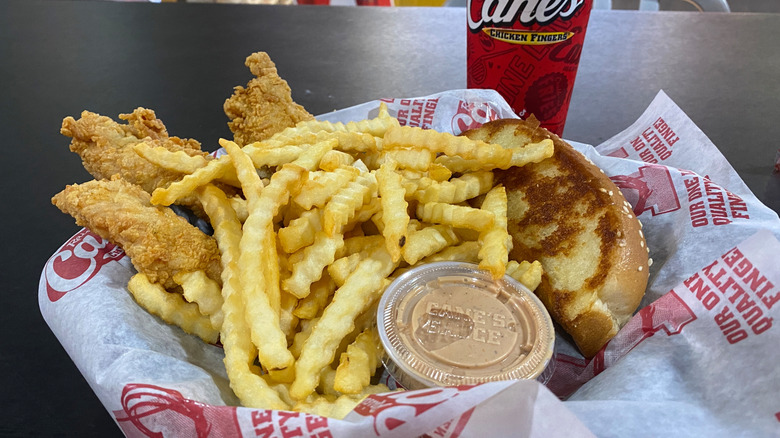
You pretty much go to Raising Cane's for one thing, its chicken fingers. They're the star of the show. These freshly-fried chicken strips have been a huge success over the years, to the point where its CEO has become one of the richest people on earth. The strips themselves involve whole cuts of white meat, but that doesn't mean they're just any part of the chicken breast. The cut is specifically the chicken breast tenderloin, which is a portion of the breast meat that's located on the bottom of each chicken breast.
They're elongated and thin, hence the signature chicken finger shape, and the meat itself cooks quickly thanks to the fact they're relatively small. Chicken tenderloin is the most ideal cut for chicken tenders because they come in the perfect size for cooking (no trimming necessary) and their texture is, well, tender. Since it's chicken, you know it'll eventually take well to dipping sauces, too. And at this point, you probably know everyone loves Raising Cane's sauce to the point of obsession.
The chicken tender is thought to have been invented in one place
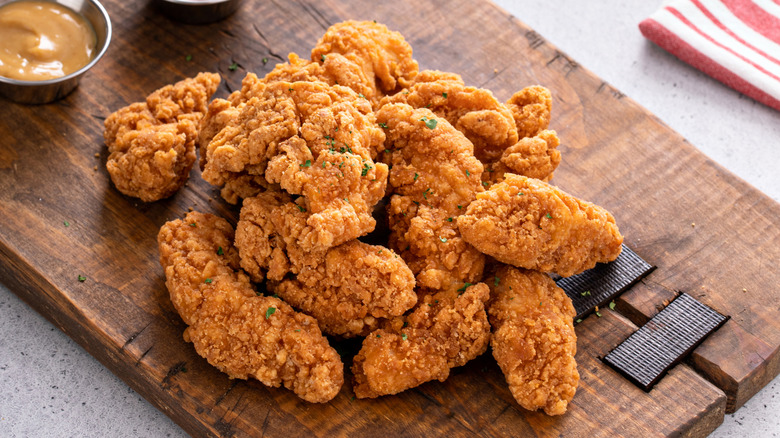
As simple as they might seem, the origin of the chicken tender (aka the chicken finger or chicken strip) is somewhat unclear. It's generally believed that fried chicken tenders as we know them originated in a restaurant called the Puritan Backroom in Manchester, New Hampshire. Chicken tenders were invented in the restaurant's kitchen when a cook tried to figure out what to do with the loose pieces of chicken that would come off chicken breasts.
At first, they were an unremarkable menu item, but eventually they grew so popular they became the restaurant's bestseller. As you can see based off the fact that seemingly every fast food menu has chicken tenders now, that little tender strip of chicken has gone on to create an entire subcategory of restaurants. Raising Cane's owes its entire business to that little, juicy morsel of chicken.