

You're Using The Wrong Salt For Finishing Dishes — Here's The Best One
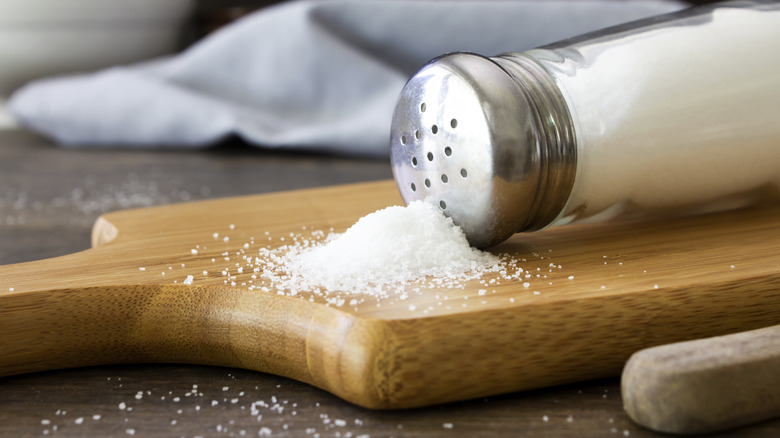
Using salt in a recipe is one of the most elementary things you'll need to do in a kitchen, but adding it to your dish as a garnish often requires a bit more context and foresight. Not all salts are created equal, and while many steaks are at their best when finished with seasoned salts, even unseasoned salts differ greatly when it comes to topping a dish. Generally speaking, the best choice for garnishing your food is a flaky sea salt, as this will provide the most flavor without overwhelming the dish's taste or texture.
We discussed why sea salt is a great garnish with Chef George Ryle of Swaledale Butchers. The chef gave us further insight into what separates sea salt from its many alternatives. "A good finishing salt is all about texture," Ryle began. "You want large, delicate flakes, pyramids or thin shards." The chef also noted that the crunch plays a big role in how the salt complements the food itself. "That brief crunch creates a little pop of salinity that lifts the food. It doesn't simply make everything taste salty," Ryle explained. "It adds contrast and sharpens flavor." This burst of flavor is a big reason why flaky sea salt works especially well for garnishing steak, but applies to other dishes like salads, roasted or baked vegetables, and even some desserts.
Salts you shouldn't use to finish your favorite dishes
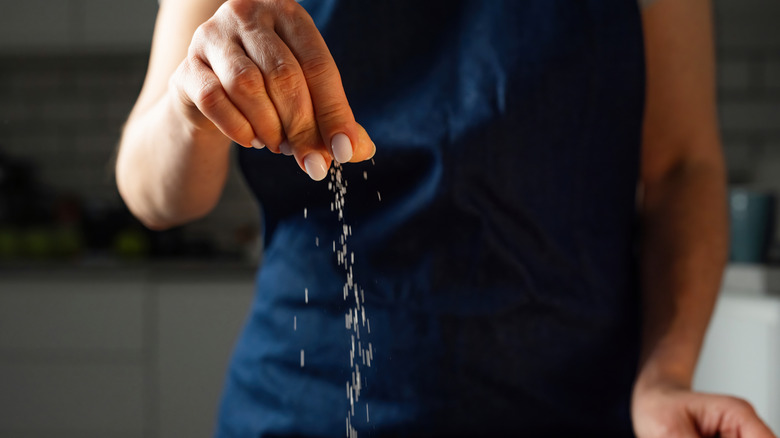
While it's clear that sea salt is the ideal pick for garnishing most recipes, it's important to note that there are some types of salt that are notably worse choices than others. For Chef Ryle, table salt is a major no-go as a finishing touch to your favorite dish due to the fact that it is both "too fine and too aggressive." This shouldn't be surprising to long-time cooks and bakers, as relying on iodized table salt is known to be one of the biggest salt-related mistakes you can make in the kitchen. Beyond that, however, there are two additional types of salt that Ryle says to avoid for one reason or another. Kosher salt, despite being great within some recipes, "lacks visual appeal and the delicate shatter you get from a true flake," according to the chef, while coarse grinder salt is too thick and can have a distracting texture that disrupts the dish.
Nevertheless, when it comes to what kind of sea salt, Maldon (a gourmet version of sea salt from England) is an ideal choice. Speaking about the high-quality style of salt, Ryle explained, "Those hollow, pyramid-shaped crystals give a clean crunch without any grit. Because the flakes are so light and thin, they dissolve quickly and leave a bright, clean salinity ... Some mined salts can taste faintly metallic or bitter. Maldon doesn't — it's consistent and it does exactly what you need it to do."