

The Oldest Butter Ever Eaten Was Churned And Buried Before The Birth Of Cleopatra
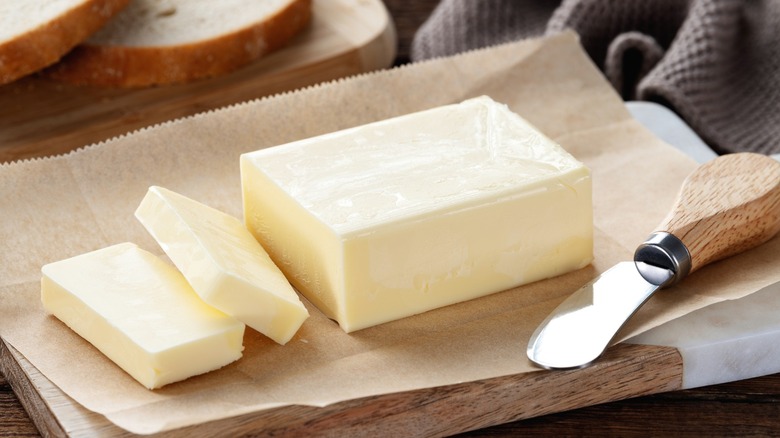
Ahh, the wonders of modern refrigeration! It's easy to take for granted, but the ability to safely store perishable food to help it last longer was by no means guaranteed throughout history. In the days before refrigeration, what could you do to preserve that tasty butter you worked so hard to churn? Well, if you lived in ancient Ireland within walking distance of a bog, you could drop that bad boy right in there and keep it (mostly) preserved for thousands of years. In fact, Irish bog butter was churned and preserved before Cleopatra was even born — and, shockingly, it's often still edible when retrieved.
There are plenty of stories of Irish peat workers discovering bog butter, wrapped in hay or preserved in ancient barrels and stored in the bog for centuries. But only a couple, Morris Lane and his son Connor, have shared the 3,000-year-old delicacy they discovered with Andrew Zimmern of "Bizarre Foods" fame. Zimmern, ascertaining it as butter made from goat's milk (which can also boost your baked goods), described tasting "spoilage and a lot of funk" as well as a "corpse-ish" flavor. Despite the unsavory descriptors, however, he seemed tickled pink by the whole experience, giddy at the chance to try something this singular.
Bogs are excellent at preserving stuff
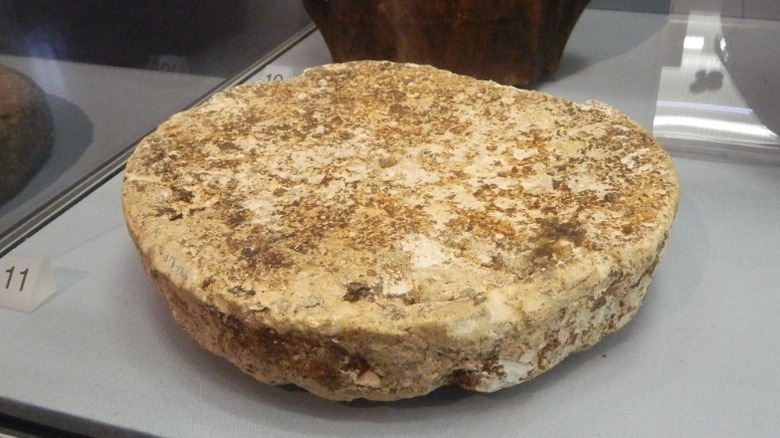
While we don't know for sure exactly why ancient people stored their butter in bogs, the most common theory holds that it was a way to preserve it. Bogs, after all, are terrific at preserving things: not only are they quite cold, they're acidic and contain so little oxygen that it's prohibitively difficult for bacteria to form. With no bacteria, there's no decomposition (hence those alarmingly well-preserved "bog bodies"), and without decomposition, there's no spoilage. This is also similar to why honey, with its antibacterial properties, lasts indefinitely.
There are other theories, too. It's possible, for instance, that butter was hidden in bogs to keep it safe from thieves. After all, butter was a luxury good back in those days, and in fact was occasionally used as currency. If you could store it in a place that would not only maintain its value but deter thieves who might not want to wade into a treacherous bog, that was a win-win as far as you were concerned. In any case, it's all kinds of cool that you can fish up some 3,000-year-old butter from a bog and safely eat some — even if it might not taste that great. (If you'd rather make your own butter while skipping the bog, all you need is cream.)