

11 Unique Foods You Can Find In Greenland
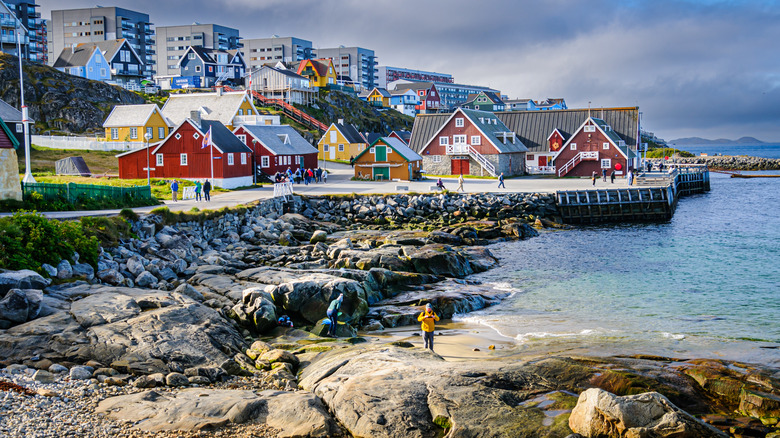
The territory of Greenland might sound like a land fraught with lush green grasses in expansive fields, but the reality is quite different. With only approximately 20 percent of the island habitable, the rest of the space is enveloped in ice and snow, far too thick for sustainable communities. The climate features a long winter season lasting for eight months of the year (October to May) with a short-lived summer season (considered June to early September). With temperatures only reaching above freezing during the distinctive month of July, you may be starting to wonder what type of foods are commonly found on a Greenlandic plate.
The answer is that the need for survival in a cold arctic climate, combined with limited access to resources, has encouraged resourcefulness. Greenlanders forage from both the land and sea for nourishment, eating what can be found instead of the mass farming seen in other countries. Fishing and hunting during the summer months is a true requirement to ensure enough food is stocked to remain comfortable for the long winter season.
The extended winters also make preserving foods of great importance, often using the worldwide method of fermentation to complete this. Foods are also kept fresh through salting, using seal blubber, or drying. This combination of factors has led to the creation of several Greenlandic foods which may appear unique to those not from the island.
Kiviak
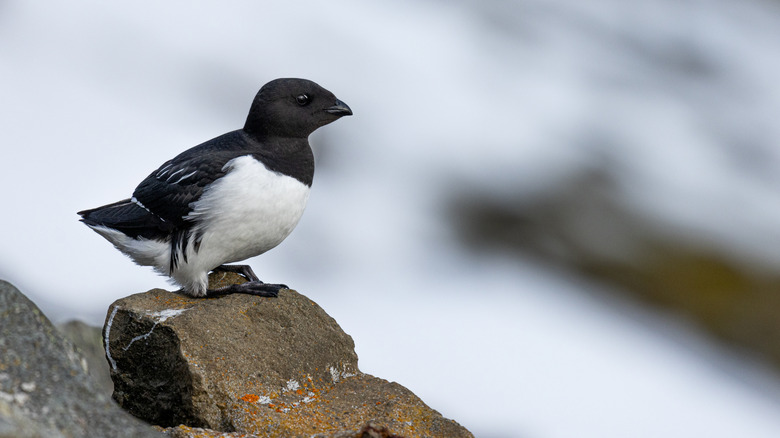
If you are familiar with the claims that rotting meat provides a high for certain individuals, then you may also have heard of kiviak, the Greenlandic dish thought to have inspired this trend. Unlike the spoiled food involved in the trend, though, kiviak is a dish that relies on the process of fermentation to safely preserve the food. Before the wonder of freezers were common, the Inuit people were forced to take advantage of their environment to survive. With this dish, they managed to use both the abundance of birds called little auks in the summer, and the cold environment around to their benefit.
Kiviak is created by storing several little auks whole (approximately between 300 and 500) in an empty seal skin. The skin is then sewn shut, and seal fat is slathered on the opening to ensure the meat remains fresh. The resulting filled skin is then buried under stones. This forces out any remaining air within the skin while also ensuring no local animals can get to the food. The meat is then left to ferment in the seal carcass for several months before it's ready to be served.
The flavor of kiviak is described as quite strong and unique. If you have not tried other fermented meats before to compare with, blue cheese is often described as a close frame of reference for potency. It's considered a treat in the culture of Greenland, typically reserved for festivities like weddings and birthdays.
Black crowberry
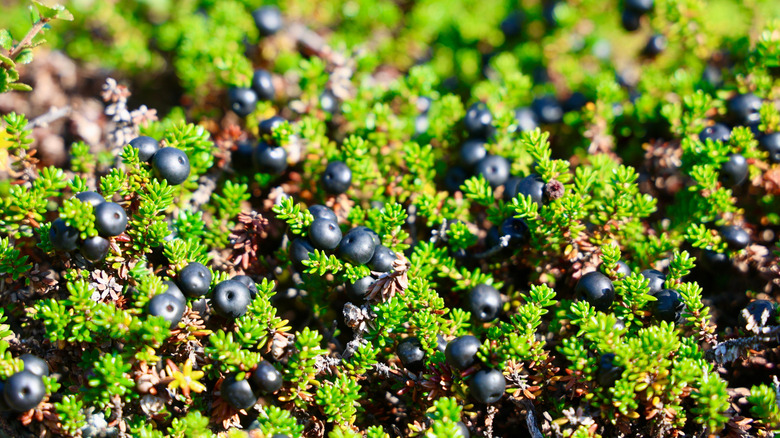
Chock full of nutrients like antioxidants and fiber, these small berries provide an important boost of vitamins to the diet of Greenlanders. A common fixture throughout the Greenland bush, the berries bloom in the months of May and June, ripening through July and August. The plant itself is a short shrub, boasting small branches with needlelike leaves. The coloring of the berries starts as pink, with them reddening and eventually darkening to a blackish-blue as they ripen. With berry-picking season overlapping with hunting season for many animals, it's not uncommon for hunters to stop at a berry patch for a little snack boost before carrying on.
Crowberries are eaten raw, dried, and are often added to several dishes and dessert items. Freezing the berries enhances their sweetness, which is why some people wait until after the first frost to pick them. The only issue with this is that their composition is more fragile when this happens, and they will squish more easily if harvested at this time. If you prefer a firmer berry, the good news is that tossing them into the freezer will have the same effect on taste. They are heavily used for all sorts of recipes in Greenland, such as in jams, ice creams, pie fillings, and even in teas.
Lumpfish roe
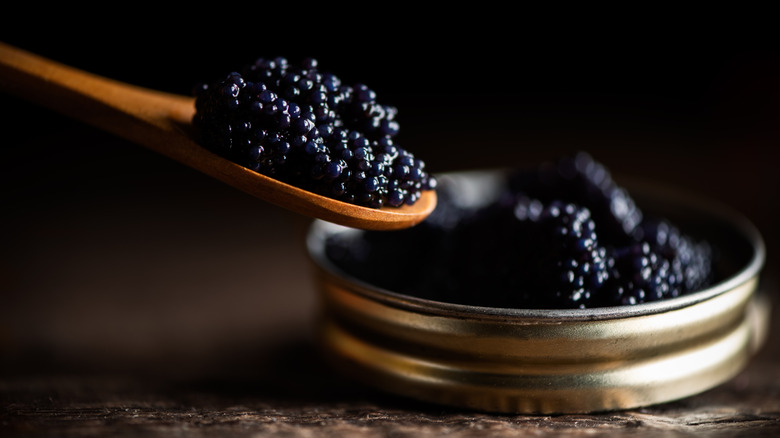
If you are a caviar fan, then chances are you will enjoy lumpfish roe as well. Although similar, it's important to note that there is one particular difference between caviar and roe. While true caviar comes from a sturgeon, roe comes from other fish, from trout to salmon. Roe has even been harvested from marine wildlife such as sea urchins, though people seem to be split by their feelings about eating it.
As the name would indicate, lumpfish roe is the unfertilized eggs of a lumpfish, specifically. Found throughout the North Atlantic ocean in Canada, Iceland, Europe and Greenland, the lumpfish appears round in shape, with a bumpy skin texture. It doesn't have scales and its meat isn't regularly consumed, making demand for roe is greatest value. The taste of lumpfish roe is described as being similar to regular caviar but with more of a sea salt flavoring.
With true caviar a quite expensive product, lumpfish roe is considered a more wallet-friendly alternative for those looking to indulge. In Greenland, lumpfish roe is used frequently in meals, especially during fishing season, which runs from March to June. They are a great pop of texture and flavor when added to foods like salads or paired as a side dish with foods like yogurt. It's also popular for them to be scooped on top of blinis (a mini pancake), with sour cream.
Polar bear
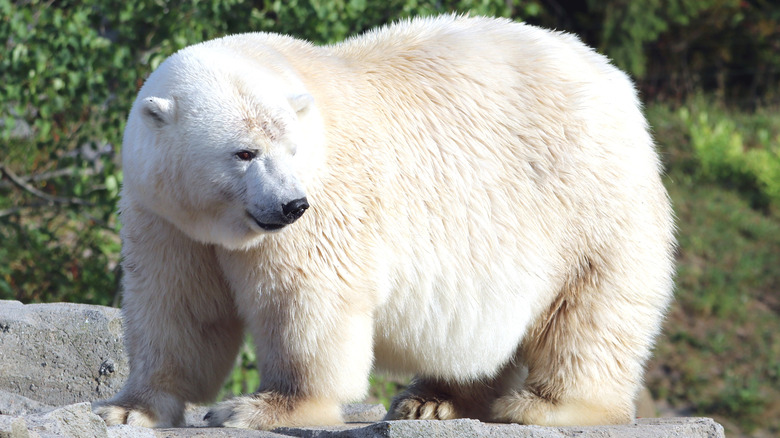
Having polar bears on a list of unique foods of Greenland might cause a person to do a double-take. This is especially true when you've become used to seeing them on a different list; namely, as one of the species affected by climate change. Indeed, the polar bear is considered a vulnerable species by the International Union for the Conservation of Nature worldwide, with only about 26,000 estimated to remain in the world.
With numbers like this, it can be hard to believe that the hunting of polar bears is allowed to continue at all. However, it's important to remember that in Indigenous cultures, polar bears have long been hunted for the resources they provide, such as their hides and meat. Due to this, the Indigenous residents of Greenland are given permission to hunt polar bears with a professional hunting license. In order to maintain the population, a quota on polar bears is allotted in certain countries, including Greenland. This allows for polar bear hunting to be a continuous tradition passed down in Inuit culture.
Polar bear meat can be used in a variety of ways, however, it's essential to cook it thoroughly before eating. The bears can carry a parasite called trichinella which can cause a host of unpleasant symptoms if ingested. For this reason, those consuming the meat often opt to boil it for several hours, to be on the safe side. It can also be added to stews, cured, or served braised.
Mattak
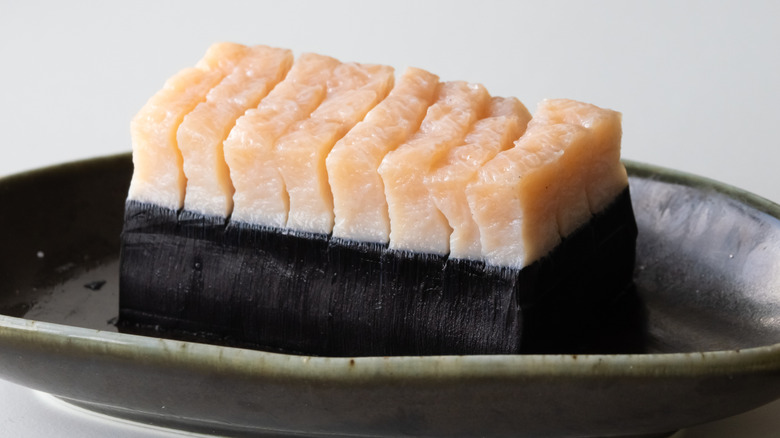
If you have been wondering where the Inuit get their vitamin C fix from in a country where produce is widely imported from Denmark, here is one of the sources. Mattak, a dish created from whales, is considered a treat within Greenland, often pulled out on celebratory occasions. The food itself is made from whale skin and blubber, and can be served raw or cooked.
With the long history of the Inuit hunting whale for resources, the hunting of large whales continues to be permitted though a quota is maintained. Quotas are then separated by division (east and western Greenland), and then by species, with a separate quota for each. In eastern Greenland, only one species of large whale is permitted to be caught (the common mike), while in western Greenland, there are four total (the common minke, humpback, fin, and bowhead whales). Numbers are monitored by the International Whaling Commission, which focuses on ensuring the population of these species is not affected, while the cultural practice continues.
As this dish can be made from a variety of different whales, it can sometimes appear in starkly different colors. For example, mattak created from a beluga whale may have grey and white hues, while that created from a finback whale could appear black. The blubber itself does not have much taste, while the skin is more savory with a dash of saltiness. On the texture front, the food is considered very chewy, earning it its alternate name of "Greenlandic chewing gum".
Reindeer
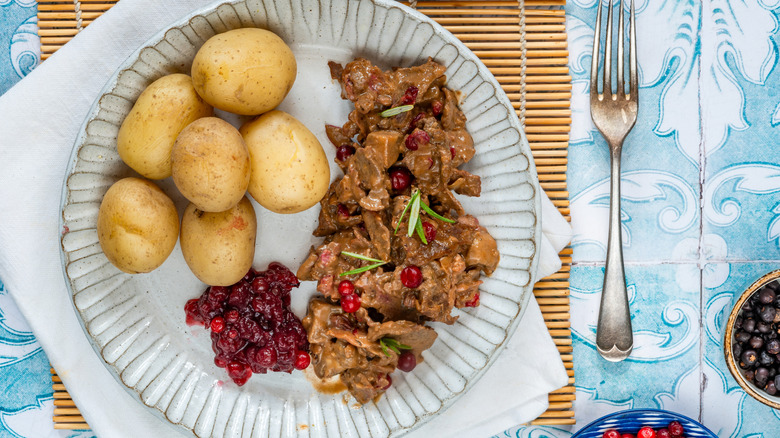
Reindeer is an extremely common food in Greenland. They are found throughout the country. Although reindeer are native to Greenland, additional deer have been released by humans into the wild. This combination has led to a deer population so plentiful that the hunting of reindeer is considered vital for both animal and country. There is the concern that an elevated reindeer population could lead to a lack of food required to fill the bellies of the herd. In this scenario, the vegetation would also struggle to recover from being over-picked by hungry deer. For this reason, both parties benefit from the yearly reindeer hunting season.
If you're not familiar with the beginner's guide to loving venison, be advised that the possibilities of foods to make with deer have some limits. Items like reindeer sausage, steaks, reindeer leg, or even a reindeer-induced variation of osso buco can be created with the meat of these creatures. The flavor profile of reindeer is unusual when compared to other widely available meats in the country, like musk oxen, in that it's considered earthy with a hint of sweetness.
Ptarmigan
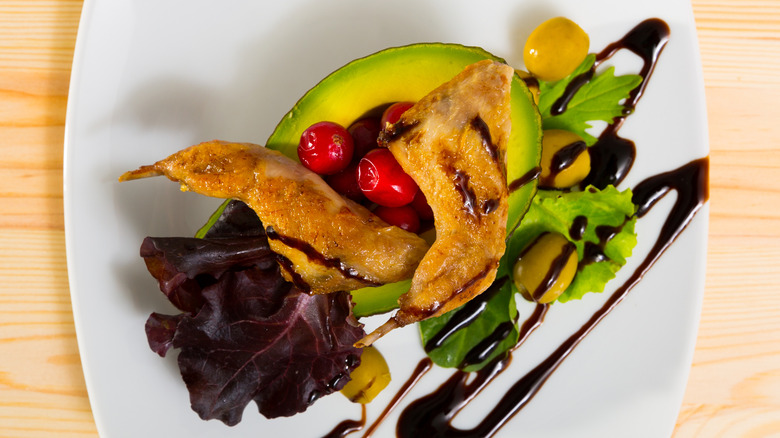
Ptarmigan, which are found throughout Greenland, are popular game birds approximately the size of a hen. Their feathers molt with the season, changing from grey in the summer, to white in the winter, which helps to camouflage them from predators. This can make hunting them more of a challenge, with their feathers blending into the blinding white of the snow. The ptarmigan also adapts to the winter months by growing extra feathers on its feet, an interesting feat of nature. In this way, they create their own natural snow shoes with the added benefit of keeping their tootsies toasty warm.
The number of them fluctuates each year, but the population overall is considered to be sizable. Despite the camouflage, hunting them only makes sense, especially when you consider that they are one of the few species of bird which does not migrate from Greenland for the winter months. The meat can be marinated, boiled, or fried. For those who prefer not to cook, it is also popular for it to be eaten raw.
Seal
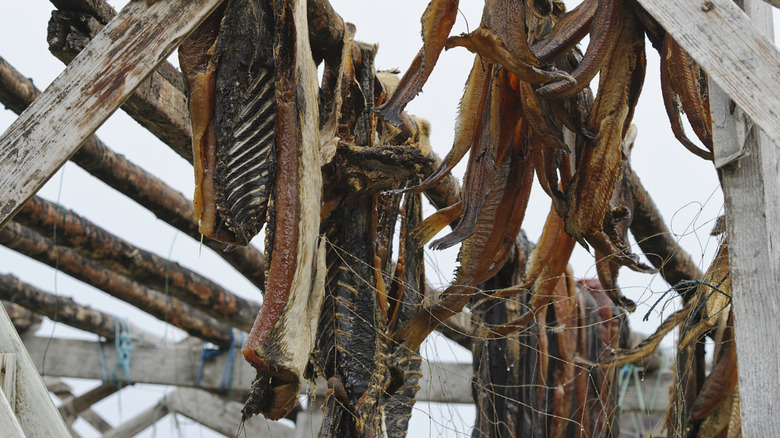
Many thousands of years ago, seals were an all-in-one problem solver for Greenlanders. They provided food for families, fat (a resource which had many uses, including oil lamps), and pelts which could be used to create clothing. While some of these uses may not be as relevant in modern day, seal meat has remained a big part of Greenlandic cuisine.
On the other hand, there have been some changes over the years in relation to hunting for seal meat. Today, populations of seals are monitored to ensure they don't dip below sustainable levels, and regulations exist for seal hunting. Nets that would have been used for seal hunting long ago are now outlawed, for example, and harpoons are no longer.
As for how seal meat is consumed, it is commonly enjoyed dried, eaten with blubber, or in a soup called suaasat. Suaasat is a popular Greenlandic dish, which features the meat, vegetables, and grains alongside the seal meat. Steaks can also be created from seal meat, along with roasts and stir fries. The meat is rich in proteins, perfect for maintaining energy levels through the frigid and long winters.
Musk ox
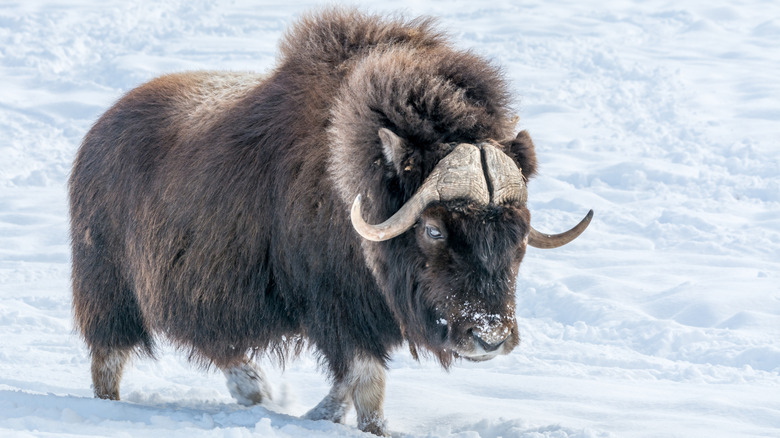
At one point, this hairy animal was only found in the northeastern area of Greenland. Seeing relocation as an opportunity to have a thriving population in the west portion of Greenland as well, 27 of these creatures were transported to the west. As the west has wider access to food for the musk oxen, they flourished in the area, and the population now sits at an estimate of several thousand. They are very popularly seen throughout Greenland, both in the wild and in the food culture.
Seen as a beef substitute on the island, musk oxen have countless uses. This means food items like tartare, soup, steaks, and roasts. But it also means that food items like musk ox Thai curry, and even a musk ox pizza, are available. Yes, the idea of a 'muskox supreme' is not just a pipe dream over in Greenland. The meat is so commonplace that restaurants on the island even have a separate musk ox sections displayed on menus, similar to how U.S. restaurants commonly have beef and chicken sections.
Kalaallit Kaagiat
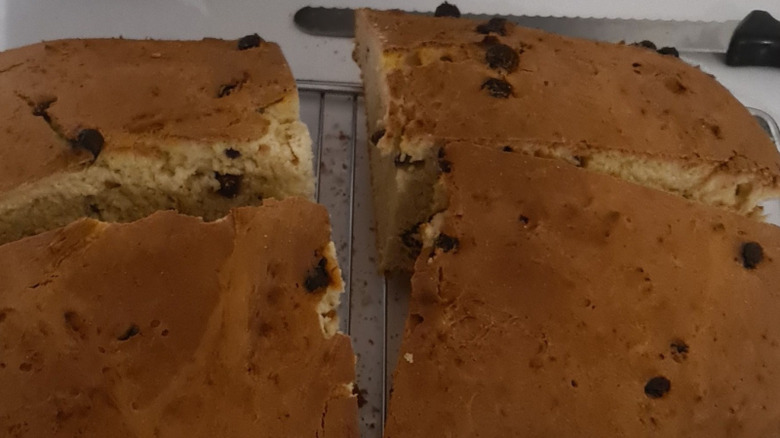
If you're getting tired of meat items being covered on this list, you might be finally jumping for joy that there is finally an addition from a different food group. Even if the true identity of this food item, may be a bit complex. Somewhere in the ballpark of both cake and bread, Kalaallit kaagiat is a popular dessert in Greenland made with raisins and ground cardamom. Though you should be warned that the word 'cake' might spawn expectations that don't quite match this food. As opposed to the soft, fluffy cake that you might associate with the word, many sources mention it being categorized as somewhere in the grey middle area between a bread and a cake.
The taste of the final loaf is sweeter than your average store-bought loaf of bread. But the problem is that the level doesn't quite reach the territory of a true cake. If it were used in a sandwich context, the sweetness would likely throw the taste off from what you were expecting. Some mention adding some jam to the slices, to give it a boost. Kalaallit Kaagiat is popularly served during festivities or brought as a treat during get-togethers.
Arctic Char
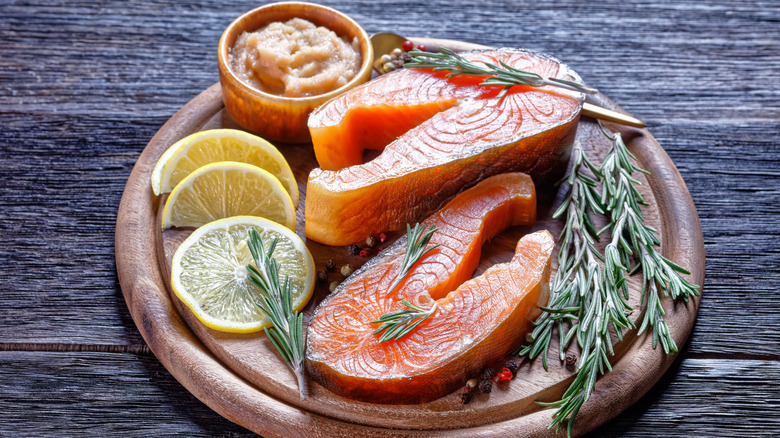
Though Arctic char can be found in several different countries in the Arctic region, Greenland is the place where anglers seeking these fish can hit the jackpot. Within many of the hundreds of freshwater lakes in Greenland, these fish are found in abundance. Although Arctic char do migrate to the sea for a couple months of the year, they require freshwater to both reproduce and weather the winter. This means that the Arctic char roam the lakes of Greenland for a good portion of the year, and on an island where resources are thin, necessity has made them a part of Greenlandic cuisine.
Though the Arctic char may appear alike to a salmon at a first glance, there are some clear differences that will have you identifying the two from each other like a true seasoned fisherman. First off, both fish may have spots on their sides, but the color will differ. Char will have pink, white or red, while salmon will have dark colors, or many not even have any. Char also have a white outline on their fins that salmon lack.
If you've already run through your list of five whole fish you can serve to impress your friends, cooking an arctic char at your next get-together can certainly make a statement. The flavor of this fish is considered mild, with a fragile skin. It's typically served smoked (for preservation), though drying the fish or serving it grilled are common as well.