

This Simple Pan Swap Will Seriously Upgrade Your Mac And Cheese
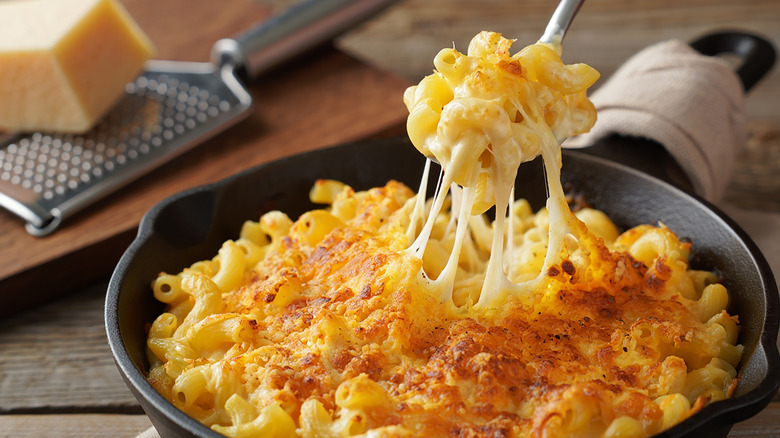
Mac and cheese may very well be the most comforting of comfort foods. The creamy dairy goodness, tangy cheese, and filling pasta harmonize in a way that just oozes luxury. While it's easy to opt for boxed pasta with instant sauce, making it from scratch is extra decadent. However, the dirty dishes and prep steps can be prohibitive. Swapping out your cookware for a cast-iron pan, though, can ease these difficulties and lend a delicious and professional result.
To upgrade your mac and cheese using a cast-iron skillet, you'll first want to make the cheese sauce in the cast-iron pan. Then, add your cooked pasta to the cheese sauce and toss until it's fully coated. Once you've topped it with breadcrumbs or herbs if desired, place the skillet directly into a hot oven and cook until the top is crisped and golden brown. Once you remove it from the oven, let it cool for a few minutes before enjoying so the cheese sauce sets.
Classic three-cheese mac and cheese baked this way gets a crunchy, toasted top and crispy edges on the bottom and sides. You can serve it directly out of the cast iron, or cook individual mac and cheese portions in smaller cast-iron pans if you want a restaurant-like feel. Some say certain cast iron pans may impart a slight metallic flavor, so be sure you use a pan that's been properly cared for.
Why a cast iron skillet rocks your taste buds and saves you effort
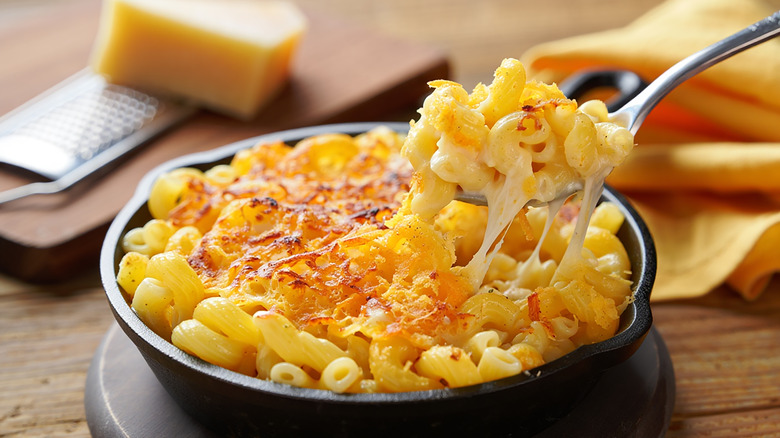
The reason a cast-iron pan is mac and cheese's best friend comes down to a few factors. First is the way it simplifies cleanup. The only dishes you'll dirty are serving utensils, a pot for boiling the pasta, any serving plates, and the cast iron itself. You don't need a casserole dish for baking, because cast iron is safe at even high oven temperatures. And you won't need to make the cheese sauce in a separate pot, because well-seasoned cast iron is non-stick. You can even cook bacon and other mix-ins in cast iron for a smoky, rich finish.
Another reason to make cast-iron skillet mac and cheese is that cast iron distributes heat evenly, meaning you'll end up with crisp edges and a warm, gooey center. It also retains heat well, so your mac get won't get cold while serving. If you want to prep unfinished macaroni and cheese a day ahead, the cast iron can go directly from the fridge into the oven, as long as you do so while the oven preheats.
Lastly, you can use this hack just about anywhere. Cast iron works on electric and gas stoves — and even induction cooktops. Outdoors, cast iron can withstand campfires and direct contact with hot coals. Because it minimizes cleanup, offers versatility, and offers amazingly crispy, gooey result, a cast-iron pan is the perfect companion for the best baked mac and cheese.