

What Is The Best Time Of Day To Eat A High-Protein Meal? Here's What To Know
Protein is often associated with building and repairing muscle, and health messaging has often promoted post-workout meals as the ideal time of day to get the most protein. And while this isn't wrong, there has also been recent and growing awareness that you don't have to consume a high-protein meal after exercise in order to enjoy its benefits.
In fact, Dr. Kezia Joy, a registered dietician nutritionist and medical advisor with Welzo, says, "There isn't a 'best' time for everyone to have protein. The majority of research indicates that distributing your protein throughout the day will be more beneficial than consuming it all during just one meal." Dr. Joy adds that many people have very little protein at breakfast and instead consume the majority of their daily protein at dinner. But according to science, that isn't the best time to eat your biggest meal.
"Even though eating protein at night is not bad for you, the major issue is not the timing of your protein, but an imbalance of your overall diet — specifically, whether or not you have been consuming enough protein during the day," says Dr. Joy. A high-protein meal at night leaves the body with fewer opportunities to consistently support muscle tissue, including the brain and heart.
Dr. Joy notes that older adults, in particular, may benefit from eating more protein earlier in the day rather than later. For individuals who are sensitive to slow-digesting protein — especially when combined with fat in evening meals — eating a lot of protein at night may cause discomfort and negatively affect sleep quality.
Protein with every meal is best

So, how much protein should we consume at each meal? Research indicates that for longevity and healthy metabolic function, an average daily intake of about 0.8 grams per kilogram of body weight is adequate for adults, while 1.2 grams per kilogram of body weight may benefit elderly individuals. This amount can differ depending on factors like age, activity level, metabolic health, and individual fitness goals, according to Dr. Kezia Joy.
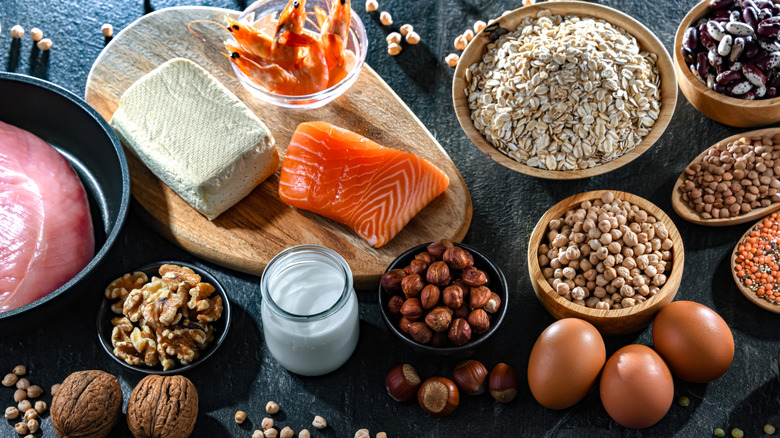
If you aren't able to get enough protein during the daytime hours, Dr. Joy recommends planning your meals to ensure consistent protein distribution. For example, if your daily protein goal is 100 grams, you could break that into 30 to 35 grams of protein at each of the main meals of the day (breakfast, lunch, and dinner), or about 20 to 25 grams at each meal and two 15-gram snacks in between. Dr. Joy also advises consuming quality protein sources, such as eggs, dairy, fish, poultry, lean beef, soy, or plant-based, vegan meat alternatives to support your muscles and metabolism and reduce hunger. She also notes that combining protein with fiber-rich carbohydrates and healthy fats can enhance the digestion of nutrients.
For breakfast, try a breakfast burrito – the easiest high-protein breakfast you can meal prep — made with three eggs, 1 ounce of shredded cheese, ¼ cup black beans, and sautéed veggies wrapped in a whole-grain tortilla. Lunch could be a stir-fry with 6 ounces of tofu, 2 cups of mixed veggies, and a ½ cup brown rice. Dinner could be fish tacos with 4 ounces of grilled fish, such as cod, topped with cabbage slaw, and served in 2 small corn tortillas.