

Founded In Italy, This Popular Olive Oil Brand Is Now Owned By The Chinese Government
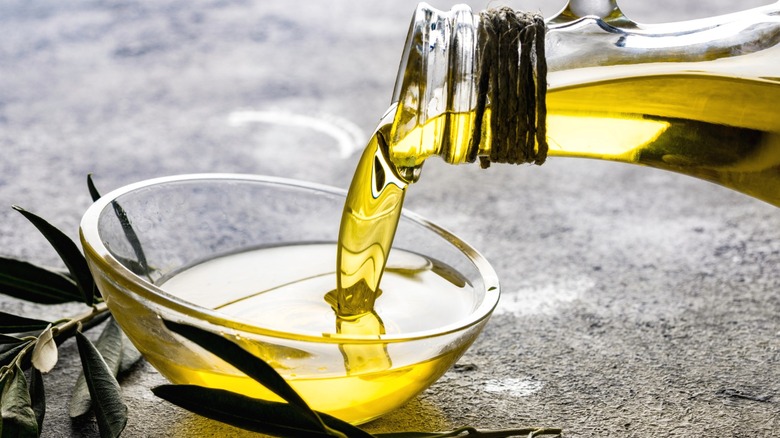
What could be more quintessentially Italian than olive oil? Sure, it's actually Spain that leads the world in olive oil production, but the cultural association is there; having been established in the mid-20th century due to Italy's postwar cultural boom (and Spain's isolation under Francisco Franco). Still, one would expect Italian olive oil brands to be clothed in the red, white, and green of the Italian flag. Well, it turns out Filippo Berio, one of the most popular Italian olive oil brands, does not. It is, instead, majority owned by a company run by the Chinese government.
More specifically, Filippo Berio is owned by Salov, an Italian olive oil group which also owns the Sagra brand. Through a majority stake, Salov is owned by Bright Food, a Chinese food conglomerate which purchased the stake in 2014. Bright Food is itself owned by the state through the Shanghai Municipal People's Government — essentially, the city of Shanghai and its mayor. It's a little like that "30 Rock" bit where NBC is owned by a random wig company, except instead of a random wig company it's, y'know, the Chinese government. (As far as we can tell, there's no indication the Chinese government has any nefarious plans beyond making a lot of money and putting people on the Mediterranean diet.)
The history of Filippo Berio, from Italy to China
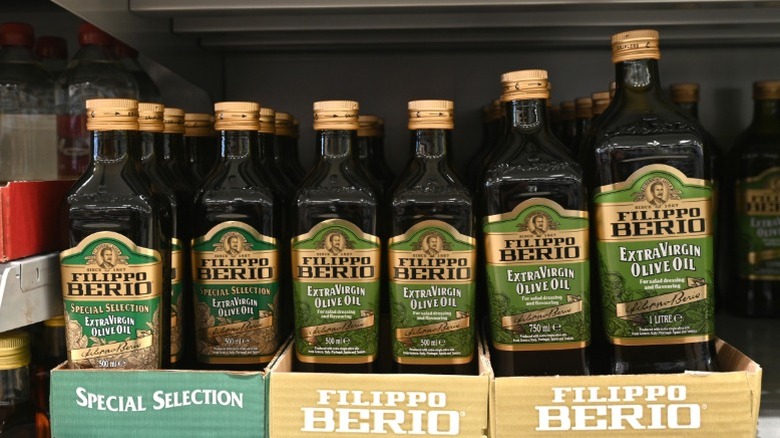
The story of the company begins with the birth of its founder, Filippo Berio, in 1829. After a move to Tuscany introduced him to the world of olive oil, he became immersed, and in 1850 began selling his own oil. The brand proper wasn't founded until 1867, but a few short decades later in 1911 it was already famous enough that bootleggers were selling counterfeit Filippo Berio olive oil in New York.
Filippo Berio has kept its name prominent through the usual avenues, like commercials — including a memorable one where the brand's name got sung over and over again to the tune of Figaro's aria from "The Marriage of Figaro." (In the advertising world, combining Italian food and opera is what's known as a "slam dunk.") And while it ran into some of the same issues as other Italian olive oils — namely, being accused of false advertising for hiding its non-Italian origins, as the oil is often made in Spain or Tunisia — it's still seen as a brand well worth splashing on your risotto a la Lidia Bastianich or dipping your bread into in defiance of Italian tradition. All that's really changed is the owner.