

Lidia Bastianich's One-Ingredient Trick For Tomato Sauce With A Spicy Kick

Celebrity chef Lidia Bastianich is something of an expert on Italian cuisine, to say the least; to the point that Bastianich said her last meal would be an Italian spread of food. Seeing as how pasta sauces are Bastianich's forte, it's no surprise she's spoken about how to elevate a simple tomato sauce. In an interview with Tasting Table, Bastianich gave a breakdown of how she mixes up a spicy sauce, and said her secret ingredient (besides tomatoes) is peperoncino, the Italian term for red chile peppers.
If you go for something like Calabrian chiles from Italy, you'll be adding a sweet, smoky pepper with a noticeable kick to your tomato sauce. It won't entirely overpower the dish like a habanero pepper would, but it also won't be as mild as, say, a poblano. There can sometimes be confusion between "peperoncino" and "pepperoncini" peppers. Peperoncino refers to standard chiles, not those small, yellow-green peppers that we call pepperoncini (which are called friggitello in Italy).
That said, most peppers can be worked pretty easily into a spicy tomato sauce — peperoncino just happen to be this celebrity chef's pepper of choice. For a quicker, zero-effort spicy sauce, Bastianich also said there's nothing wrong with adding Tabasco sauce, although she implied it's not the traditional approach.
Spicy tomato sauce with hot Italian chiles
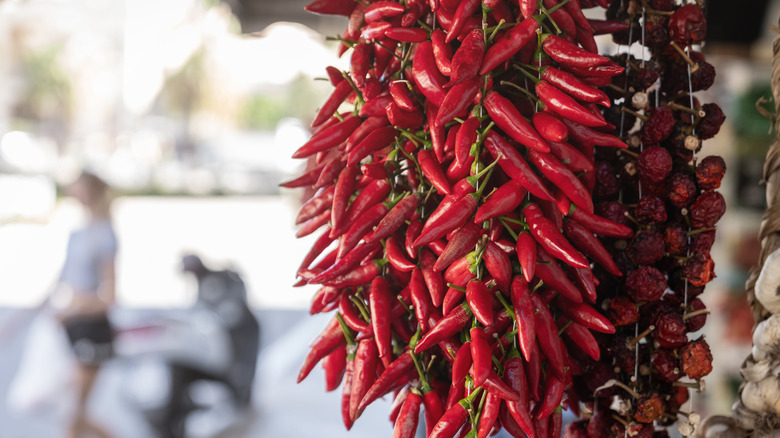
You could simply add crushed red pepper flakes, which is how arrabbiata tomato sauce is often made. However, if you've got access to fresh peppers then it's not especially difficult to puree those directly into the sauce. As a reference, if you're making a sauce with two pounds of tomatoes (which should last you a few nights), you could go with anywhere from one to five chile peppers depending on size and your preferred heat. Feel free to adjust your ratios. More peppers will naturally heat up the sauce while diluting the tomato flavor.
You can puree both the tomatoes and peppers together at the same time, but Lidia Bastianich suggested that she prefers using a food mill rather than a food processor for this step (a processor retains too much air and drains color). A food mill is a kitchen tool which looks intimidating, but it's a go-to gadget which can strain and mash foods with a hand-turned crank. At first glance, it requires a bit more effort than the press of a button on a food processor, but food mills will help you remove those tomato and pepper seeds more easily and you'll have more control over the consistency of the puree.
Static Media owns and operates The Takeout and Tasting Table.