

There's A Best Time To Eat Breakfast, According To Science
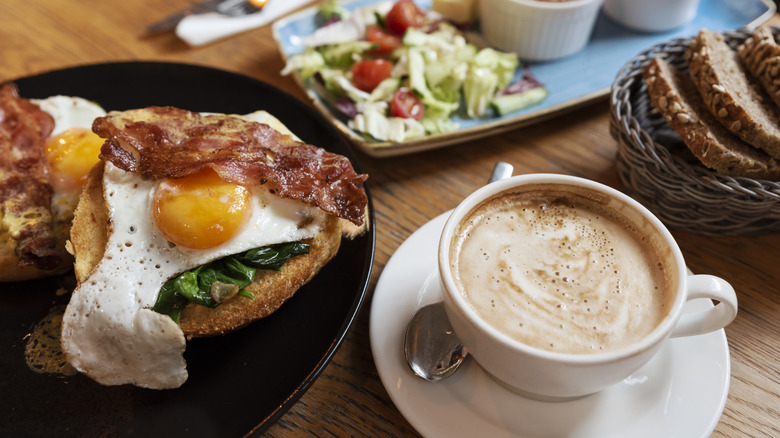
Even for the most committed food lovers, breakfast can be tough. Plenty of us don't wake up hungry, and by the time our stomachs have woken up we're already well into our days. It's all too easy to fall into the "might as well wait for lunch" trap. Then there are people who are starving as soon as they open their eyes. They'd love a full English breakfast or maybe a huge stack of homemade brown butter pancakes, but who has time? According to registered dietitian nutritionist Kezia Joy, we should really be making that time.
Joy, who serves as medical advisor at Welzo, recommends carving out a window for breakfast within one to two hours of waking. That said, the best time to eat breakfast varies from person to person and depends on activities you do first thing in the morning, like exercising, as well as your work schedule. As Joy puts it, "Consistency is the goal, while perfection is not necessary." Studies show that consuming even a small meal in the morning improves multiple cognitive variables, including focus, processing speed, language skills, and more. So, while there's no need to lay out a feast first thing, an easy breakfast routine can have a host of positive effects.
How eating breakfast at the correct time can improve health
Joy went on to say, "Consistently consuming a morning meal may aid in promoting long-term metabolic health ... In general, metabolic processes tend to be at their highest levels of efficiency early in the day." This means our stomachs empty faster and our guts absorb more nutrients in the morning compared to the evening, when insulin sensitivity drops. Biologically, the human body is ready for food early in the day, so by eating breakfast we are working with our natural processes.
In addition to this, Joy mentions that circadian rhythms have an effect on people's eating habits. This is backed up by research which suggests that, although eating breakfast keeps everyone more satiated throughout the day than skipping it, "morning people" are more satisfied by an early meal than "night owls."
"Consuming breakfast earlier in the day has been shown to correlate with a lower BMI," Joy continued. However, when it comes to weight loss in the short term, the effects of eating breakfast are less clear. "Some studies have found that skipping or delaying breakfast can result in increased calorie consumption during the remainder of the day for certain individuals." It would be remiss not to mention that many of these studies are observational and don't control for lifestyle factors. Building healthy habits is essential for sustainable weight loss, so while breakfast probably isn't the elusive "fat burning trick" our mothers spent the '90s looking for, it may help you stay at a weight that suits your body.
How to start your day right
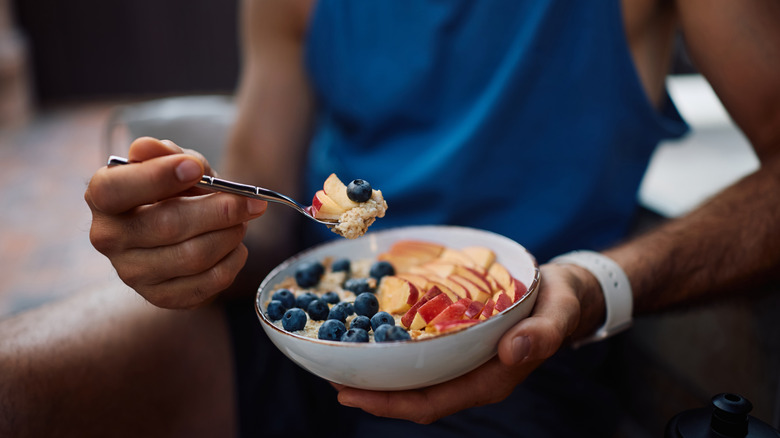
Joy recommends a breakfast that will keep you full for a while and fuel your morning. She suggests protein-rich options like eggs, yogurt, and legumes, as they leave you feeling satiated while also preserving muscle mass. "Combining a high-protein food with a high-fiber food will create an even greater sense of satisfaction," she adds. In addition, she mentioned that high-fat foods, fruit, and whole grains will keep your energy up until lunch.
A healthy breakfast doesn't have to be elaborate or time-consuming, however. "The most important thing when it comes to choosing what to eat for breakfast is to choose something easy to prepare and that has plenty of nutrients," says Joy. "It doesn't have to be complicated to be good for you."
Joy went on to stress, "Many people find that they do not experience hunger until later in the day if their first meal of the day was balanced and nutritious." Beyond that, you're the best judge of what's right for your morning meal. If you want something light in your stomach while you commute to work and have time to meal prep during the weekend, you could make a batch of no-bake energy balls. If your main issue with breakfast is getting bored with the same old overnight oats, rotate through a few of the world's favorite international breakfasts. And if you simply don't like breakfast food, you can always eat dinner leftovers from the night before.