

If Your Dish At A Restaurant Is Served Like This, Feel Free To Send It Back Right Away

Some dishes should be served cold — think borscht, salad, and sushi. But if you order a hot meal at a restaurant, you should expect it to arrive, well, hot. Is a cold dish enough to warrant a complaint, or should you sit back and eat your congealing carbonara?
We spoke to Frankie Weinberg, distinguished professor of management at Loyola University New Orleans, to get an industry insider's answer to this awkward question. Weinberg is the co-owner of two New Orleans restaurants, Good Catch and Pomelo, and his answer is emphatic. "Yes, it is absolutely okay to send back a dish if it arrives cold," he says."Temperature is an important part of a meal, releasing aromas and flavors as the chef intended, whereas colder temperatures, when not intended, tend to dull flavor." The best chefs cook accordingly: pros like Wolfgang Puck heavily season cold food to compensate.
If you're not a natural complainer, take comfort in the fact that you're doing the restaurant — and yourself — a favor. Room-temperature food could pose a safety risk, and chefs want to keep customers safe and happy. "Most chefs would rather remake a dish rather than have a guest who is silently disappointed," says Weinberg. The restaurant management can use the information as feedback, too. "They also need to know that there is somewhere a breakdown in the system between them preparing the dish properly and its presentation at your table, as this gives chefs and managers information that will help to provide corrections to avoid future issues," he said.
Is it better to ask the chef to reheat the dish or to remake it?
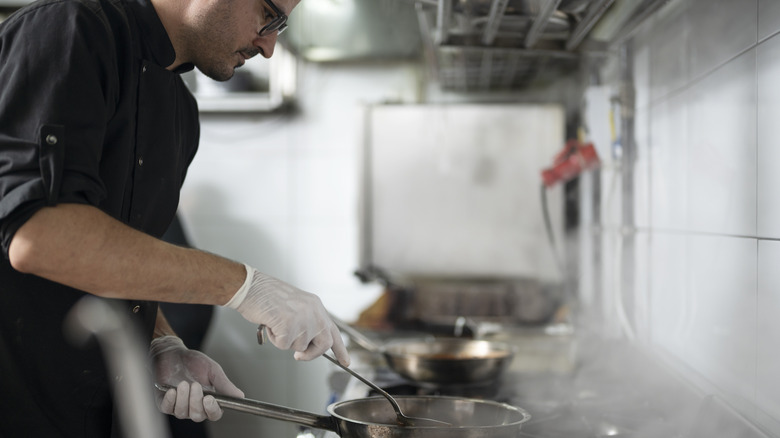
Does a cold dish need to be remade, or can staff simply pop it in the microwave? "It really depends on the dish, but in many cases a new plate is the better option," says Weinberg. "There are certainly some items that can be reheated carefully without detriment to the final product, but there are also many dishes that would become compromised through a reheating process."
Reheating can affect the taste and texture of a dish: No amount of finesse will restore cold eggs to their former glory. It can pose a food safety risk, too. Reheating pushes the food into the danger zone, the temperature range where bacteria thrive, so it must be done quickly. Every time the food is reheated, the chance of contamination increases because bacteria may not be fully eliminated.
It's riskier to reheat some foods, such as rice and mushrooms, because of potential bacterial growth. Weinberg recommends asking the chef to choose. They probably know about the risks — and showing trust in the chef can help soften the blow of a complaint. "Many chefs are aware of these distinctions, and guests should feel comfortable asking what the restaurant recommends," he says. "This small moment of trust can often lead to the best outcome."