

For Ultra Creamy Scrambled Eggs Reach For One Ingredient From The Dairy Aisle
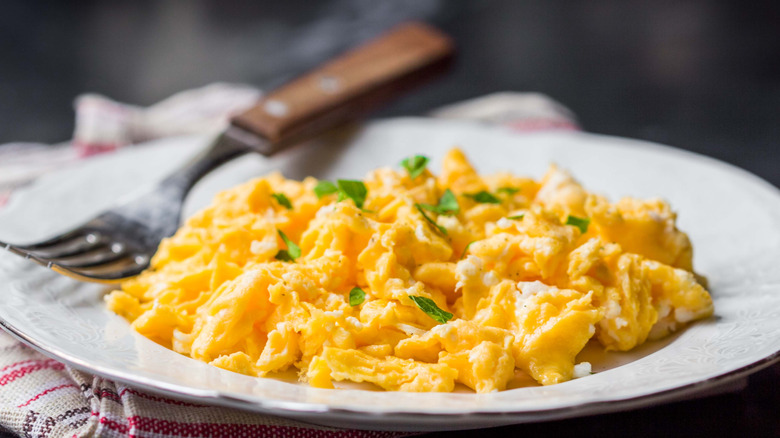
Scrambled eggs seem so simple, but the fact that there are about a billion tips to make them better belies this fact. For example, if you want your eggs fluffy, beat them with a balloon whisk or add some lemon juice or vinegar. (Acid allows the eggs to develop air pockets, and these, in turn, bring the fluff.) Should you prefer your eggs creamy, though, what's the best add-in?
"My preferred 'ultra-creamy' approach is technique first, then a dairy add-in that's designed to be pleasant when warm," said Nelson Serrano-Bahri, chef and director of innovation at the American Egg Board. One such addition is cream cheese, which brings a slightly tangy flavor and a smooth, creamy texture to the table.
Serrano-Bahri suggests pouring the beaten eggs into a warm pan after melting a little butter. Cook them over low heat, stirring all the while, until they're almost (but not quite) set. At this point, mix in half a tablespoon of cream cheese per egg. "This works beautifully because you're combining gentle coagulation (tender curds) with fat and moisture that stay creamy when warmed," he said.
Other dairy ingredients that can give your eggs a boost
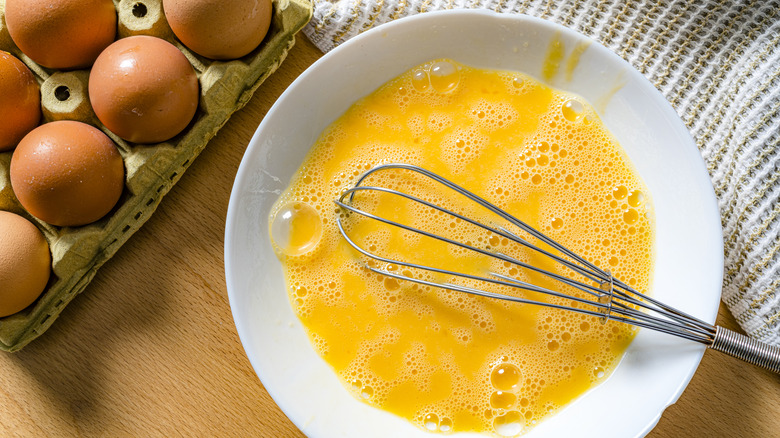
Cream cheese isn't the only dairy product that can make your eggs creamy, of course. Cream itself can do the trick, and Nelson Serrano-Bahri suggests stirring in a small splash once the scrambled eggs are nearly set. (About a tablespoon of whipping cream per egg can work wonders.) He also name-dropped cottage cheese and crème fraîche as being workable cream cheese alternatives. (The latter, hard to spell though it may be, is a favorite Bobby Flay egg add-in.)
One unexpected egg addition you might consider isn't technically a dairy product, but still shares the properties of being white and creamy: mayonnaise. "Mayo is an emulsion (oil and egg and a little acid), so when you add a small amount to beaten eggs, you're essentially adding fat plus emulsifiers that can help the curds feel softer and more lubricated on the palate," Serrano-Bahri said. He advised mixing mayo into the beaten eggs before you begin cooking, but recommended going easy on the amount so the flavor isn't detected. Half a teaspoon to a teaspoon per egg ought to do the job, he said. "At the small amounts above, it shouldn't scream 'mayo,'" Serrano-Bahri said. "Most people will just read it as 'richer.' If you add too much, the flavor can become noticeable, especially the slight tang from the acid and the signature mayo aroma."