

Why Fall Off The Bone Ribs Aren't Always A Good Thing
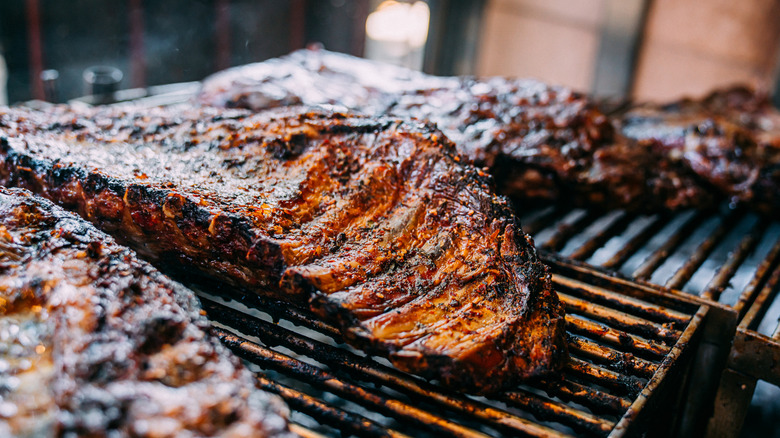
The conventional wisdom goes like this: Well-cooked ribs should fall off the bone. The idea that crumbly meat is the best meat is so ingrained in mainstream culinary culture that it seems odd to even question it. Conventional wisdom isn't always right, though, and in fact, it could be considered one of the many rib mistakes that can ruin your BBQ . According to Kelsey Murphy, one of three acclaimed host chefs who'll be cooking for the Players Tailgate on Super Bowl Sunday, the truth is a little more nuanced.
Undercooked ribs are chewy and tough. At the very least, ribs that fall off the bone provide visual confirmation that the meat is tender. "It means the connective tissue has broken down and is no longer clinging to the bone," Murphy says. "It gets so much hype because this is when meat is most tender and easy to eat and chew."
That hype isn't always deserved, though. There's an ongoing debate in the barbecue community over whether ultra-tender meat is a good thing at all. "Fall off the bone can be a sign of overcooking if it completely crumbles," says Murphy.
It's not just about overcooking. Personal preference plays a role, as it often does. "Some people enjoy the chew and work of a rib that isn't completely fall off the bone," Murphy explains. She's on Team Tender, though. "When it comes to my preference, I like a crunchy bark on the outside, a good smoke ring on the immediate inside, and fall off the bone ribs ... The more tender my meat is, the better!"
Tips for tender ribs
Cuts that are rich in collagen — the connective tissue that holds meat together — turn from extra-tough to extra-tender when you cook them at the right temperature. The process doesn't happen instantly, though. Low, slow heat gives the collagen time to relax, release, and transform into gelatin, which helps keep the meat soft and flavorful. You can't rush the process, so plan ahead.
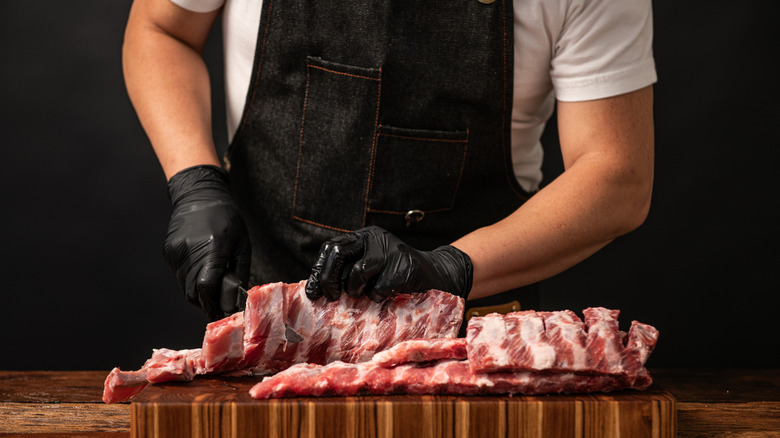
It's important to prep your ribs properly, too. For the first step, remove the tissue-like membrane from the underside of the ribs; skip this important step and your ribs will turn out chewy every time. The membrane made of connective tissue, too, but unlike collagen, it won't soften with time. Peel it off with a butter knife before adding your dry rub.
Different cooking methods produce different results, so pros like Murphy combine techniques for the best ribs, like the 3-2-1 method, which makes the tenderest pork ribs. "I believe that ribs cook best when multiple methods are used," she says. "I like to smoke them first in a dry rub and then continue to cook them for a few more hours in either an oven or the smoker while basting them in sauce and adding vinegar around the ribs to keep them moist." Be patient. Tender, tailgate-ready ribs take time — whether they fall off the bone or not.