

31 Years Ago, The Kirkland Name Took Over Costco — Here's How It Was Picked
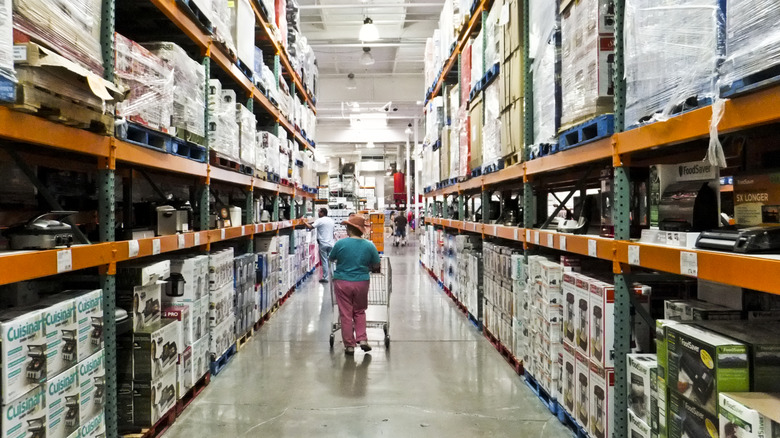
Costco's Kirkland Signature brand is a private-label success story. The products make up around a third of Costco's sales, accounting for $86 billion in 2024. That's a big portion of the estimated $271 billion that Americans spent on private labels the same year. What makes Kirkland stand out?
When Costco started experimenting with store brands in the early '90s, the retailer stuck to the standard rules. Different products had different private labels, like Cloud detergent and Chelsea toilet paper. In 1995, the retailer made a radical change. Costco decided to re-launch all of its store brand products under one label — and that label needed a name.
Executives floated a few ideas before deciding on Kirkland Signature. They didn't want to use the name Costco because the chain worked too closely with other brands. They considered naming the brand Seattle Signature, since the company was born in Seattle, Washington, but they couldn't get the legal rights. Ultimately, they chose Kirkland, after the Seattle suburb that housed the brand's original headquarters.
There was a certain irony to the name — Costco was already in the process of moving its headquarters from Kirkland to Issaquah, another Seattle suburb. Issaquah Signature didn't fly, though. "Nobody could spell Issaquah anyway," the retailer's co-founder, Jim Sinegal, told The Wall Street Journal. Launching the Kirkland Signature brand was risky, but it paid off; the brand has become a symbol of Costco's commitment to quality.
Why Costco created the Kirkland Signature brand
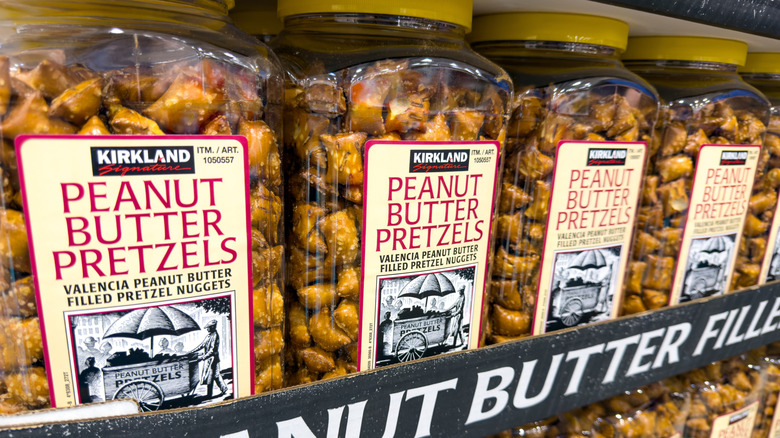
Just about every major grocery chain has its own store brands. Step into Target, and you'll find shelves stocked with Good & Gather and Favorite Day. Kroger has Simple Truth, Private Selection, and Home Chef in addition to the standard Kroger store brand. So why does Costco only have one?
Jim Sinegal decided to consolidate Costco's brands after a conversation with a warehouse manager. Sinegal asked the manager about a new private label product — and was met with confusion. The manager hadn't known that the label was part of the Costco brand. Sinegal realized that if managers couldn't identify Costco's store brands, customers couldn't either. He decided to create one store brand for everything, from snacks to sporting goods.
It was a radical idea. There's a reason why most retailers have multiple private labels: If a customer dislikes one product, they'll get a bad impression of the whole brand. Some brands even separate their private labels by quality. Kroger's Private Selection label is, theoretically, better than the standard Kroger brand.
Costco only sells high-quality products, though. It's part of the brand's business strategy. Kirkland Signature products don't always hit, but when they miss, it's not for lack of trying. Costco has high standards for the products they develop. The retailer can't afford to lose customer trust: doing so would jeopardize Kirkland's good name.