

This Major 2007 Frozen Food Recall Forced A Brand Into Bankruptcy
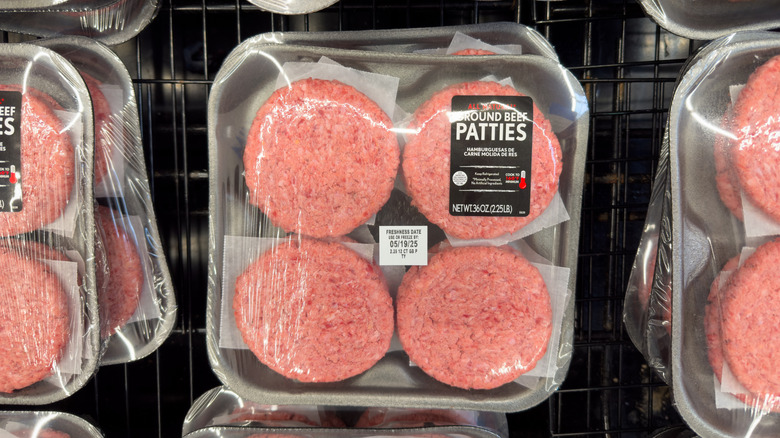
Food recalls should never be taken lightly because they can sometimes be life-or-death situations. Throughout U.S. history, at least 14 deadly food recalls have swept the country, leaving a mark on the families of victims and the public in general about how even the most common food products can turn out to be unsuspectingly lethal. The Topps Meat Co. recall from 2007 may not have been one of the deadliest, but its repercussions were so significant that the company at the center of the controversy had no other option but to file for bankruptcy. Topps closed its business just six days after issuing what would become one of the biggest ground beef recalls in recent history.
The Topps recall serves as a hard lesson to the food industry, especially since the company was an established brand when it got hit with a serious public health and safety concern. Topps was in its 67th year of operation in 2007, so the E. coli outbreak linked to its products at the time seemed manageable. It initially recalled a small batch of frozen hamburger patties after discovering potential contamination with a fatal strain of E. coli. However, the number of affected products surged to 21.7 million pounds in a matter of days, forcing the brand to make a big financial decision that would ultimately lead to its demise.
How a delay in the recall played a part in Topps' downfall
By the time Topps started retrieving some of its patties on September 25, 2007, at least 30 cases in 8 states had already been linked to the E. coli strain found in a sample of its products. The initial recall was for 331,582 pounds of beef. Four days later, Topps issued a much bigger recall of 21.7 million pounds of frozen patties after further investigation suggested a wider scope. At this point, the U.S. Department of Agriculture admitted that the wider recall should have been issued much earlier since the result of testing was already available weeks before the announcement. Usually, the PSA is issued around the same time that the reason for the recall is discovered since the system is designed to act fast to contain the problem as quickly as possible.
Because Topps' recall came late, much of the meat that was supposed to be retrieved from stores had already been consumed by customers. As a result, Topps Chief Operating Officer Anthony D'Urso could do little more than extend his well-wishes to those who had gotten sick from eating the product. "This is tragic for all concerned. We hope and pray for the full recovery of those individuals," he was quoted as saying by Tuscaloosa News. Aside from supermarkets, Topps' meat products were sold to schools, hotels, restaurants, and hospitals. Considering the scale of the issue, it didn't come as a surprise that the brand filed for bankruptcy and terminated its operations shortly after, causing 87 people to lose their jobs in the process.