

3 Signs That Your Ground Beef Isn't Fresh
If you've ever bought ground beef to use in a specific recipe only to question whether it's edible after opening, you aren't alone. Cooking with meat that's gone bad is one of the biggest mistakes people make when cooking ground beef (or any other meat, for that matter). Consuming ground beef that's no longer fresh or safe to eat can lead to illness caused by E. coli or Salmonella. Both bacteria can cause symptoms ranging from fever, nausea, vomiting, and stomach pains to more serious problems like a bloodstream infection (E. Coli) or sepsis (Salmonella).
Not everyone knows how to tell when ground beef has gone bad, and some of the signs of spoiled meat are less obvious than others. Not knowing good ground beef from questionable ground beef is a common kitchen habit that could lead to food poisoning, and no one wants that. It's important to read the label on the ground beef package and pay close attention to the look and smell of the meat. Pay attention to these characteristics the next time you open a package of beef.
The ground beef is past the expiration date
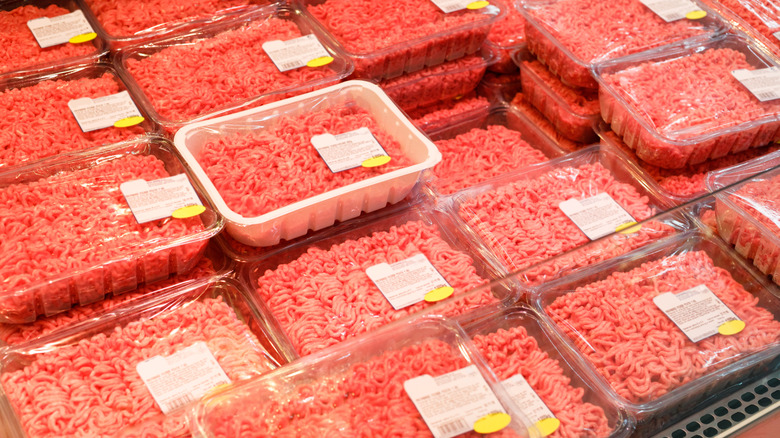
Packaged ground beef will have a label with various bits of information (weight, price, etc.), and on that label is an expiration date. This date shouldn't be confused with the sell by date, which refers to the final date the grocery store is allowed to have it stocked for sale. Generally, ground beef can last for a few days in the refrigerator after this date before it needs to be cooked, frozen, or tossed. The expiration date is more of a final cut-off date for ground beef. This day marks the estimated end of freshness and the beef's imminent decline. It's best to simply toss ground beef if you take it out of the fridge and see that it's past the expiration date.
One other date you might see on the label in tandem with the expiration date is a best by date. While it sounds just like an expiration date, it's actually there to let you know that your meat may not be at peak quality beyond this date. However, if you only see a best by date and no expiration date, it's best to check your ground beef for other signs of going bad before cooking it. If you remove the ground beef from the packaging and it looks good but you aren't ready to cook it, freezing it will keep it good for up to four months. Just be sure to write the date you put it in the freezer on the bag.
Slimy, smelly beef is a bad sign

If you take ground beef out of the package and immediately cringe at the foul odor hitting your sinuses or the texture is slimy, you really shouldn't be eating it. The change in texture is hard to miss since fresh ground beef should feel damp rather than wet. Fresh ground beef should feel smooth and firm to the touch. You should be able to easily separate the meat in your hands with zero slime. As the meat begins to rot, bacterial cells build up along the surface and are responsible for the disturbing texture alteration.
If you aren't sure what rotting meat smells like, your nose (and maybe your gag reflex) will certainly react to the foul odor in a way that signals it shouldn't be eaten. Rotten ground beef will have an offensive odor that may be sour or smell like ammonia. The smell should be enough to stop questioning whether it's what you should be having for dinner. On the other hand, fresh ground beef will have the faint smell of iron, without being overbearing. Like the slimy wet texture, the foul odor can be attributed to bacteria, only this time you're smelling the gasses the bacteria emit.
Discolored meat is another bad sign
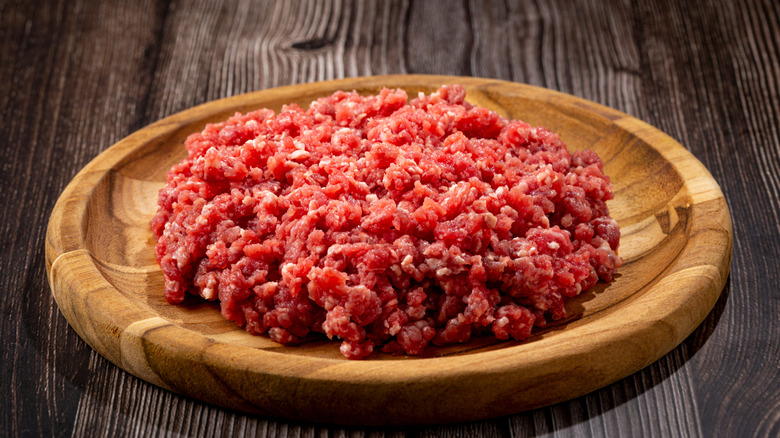
If the other signs indicating lack of freshness aren't present or prominent, you should still do a visual exam of your beef just to be sure. If the ground beef isn't safe to eat, you'll likely notice grey patches. This grey hue comes from bacteria breaking down the meat's iron compounds (aka myoglobin). Meat that's discolored due to bacteria will likely have other notable signs present (like a foul smell) telling you it's gone bad. For better or worse, discoloration in ground beef doesn't necessarily mean it's inedible.
When myoglobin in meat comes into contact with oxygen, the two compounds form oxymyoglobin. Oxymyoglobin is behind the typical reddish pink color of ground beef. One reason ground beef can turn brown or grey is from lack of oxygen exposure. If that's the case, the meat is likely still safe to eat. Air-tight packaging slows down oxygen loss, but it can still happen.
So, while color is a good indicator that the meat isn't as fresh, it's not a perfect signal. If the ground beef is entirely grey or brown, yeah it's probably best to throw it away. Otherwise, if it's still ahead of the expiration date, it doesn't smell or feel slimy, and there's no mold, it's likely your meat is still good. If ground beef you purchased recently is less fresh than it should be, find out if you can return the bad food to the grocery store you purchased it from. If you can't, throw it out. Better safe than sorry.