

The Best Way To Make A Tender Pot Roast Isn't Your Slow Cooker — Grab This Appliance Instead
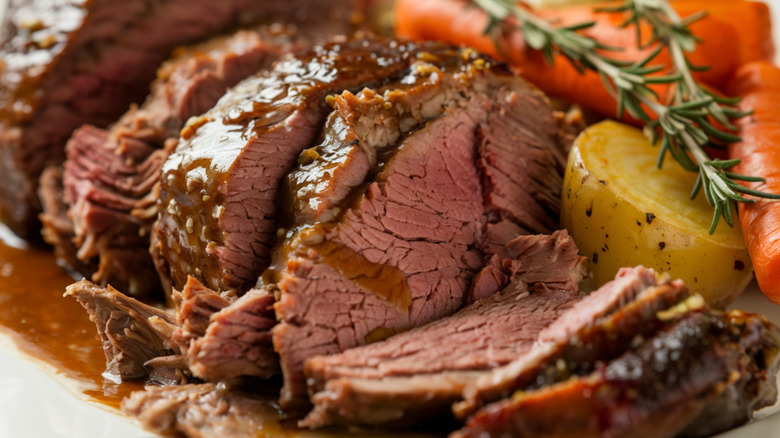
Pot roast is kind of a catch-all term used for braised beef cooked with vegetables. For one thing, it can be made with different cuts of meat (our pick is chuck roast but Julia Child preferred rump roast). Likewise, there are several different ways you can cook a pot roast. The easiest is to simply microwave a heat-and-eat product like the kind made by Hormel. You can also bake it in a Dutch oven or use a slow cooker, but cookbook author Coco Morante prefers a different appliance. Judging by the name of her magnum opus, "The Instant Kitchen Meal Prep Cookbook," it comes as no surprise that she opts for a pressure cooker.
The reason Morante prefers a pressure cooker over a slow cooker is, as she told The Takeout, "Slow cookers are ... slow. They're great for when you've planned ahead, not so much for when you want to get dinner on the table quickly. Pressure cookers have a slightly steeper learning curve for beginners, but as long as you know the basics, or just follow well-tested recipes, you'll get great results." She admits that they have a slightly smaller capacity — a 6-quart pressure cooker only accommodates a 4-pound roast, while a standard crockpot can usually fit a 10-pounder. Still, for the average appetite, 4 pounds is probably more than enough. She also says the final product is pretty similar to the pot roast you'd make in a slow cooker, despite the shorter cooking time. "Both methods of cooking have pretty minimal evaporation, so once you open up the pressure cooker or the slow cooker, you're going to get a similar result."
How to use a pressure cooker for pot roast
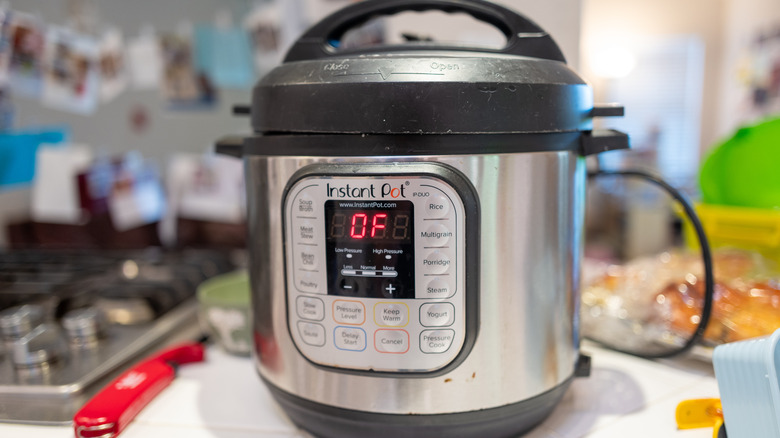
"Pressure cookers rely on steam pressure building up in the pot, so you need at least a cup of liquid to get things going," said Morante. "As a rule of thumb, you'll want to allow 20 minutes at high pressure per pound of meat to end up with a tender pot roast. Allowing for some time for the pot to come up to pressure and then release pressure afterwards, you're looking at about an hour and a half for a 3-pound roast." This compares favorably to the four to eight hours it can take if you're using the aptly-named slow cooker.
There are a few caveats to using a pressure cooker, however. According to Morante, you "can't have a liquid that's too thick, or it won't release enough steam to build pressure before it scorches on the bottom of the pot. Tomato paste and other thick tomato products can be especially problematic for that. Oh, and dairy can scorch on the bottom of the pot as well. There are also considerations with how high to fill the pot based on whether you're cooking something that'll foam up and expand, like grains and beans." In her opinion, your best bet is to use a recipe that was specifically designed for use in a pressure cooker rather than taking the dump-it-all-in DIY approach that's more feasible with a slow cooker.
You can also use the pressure cooker to make gravy
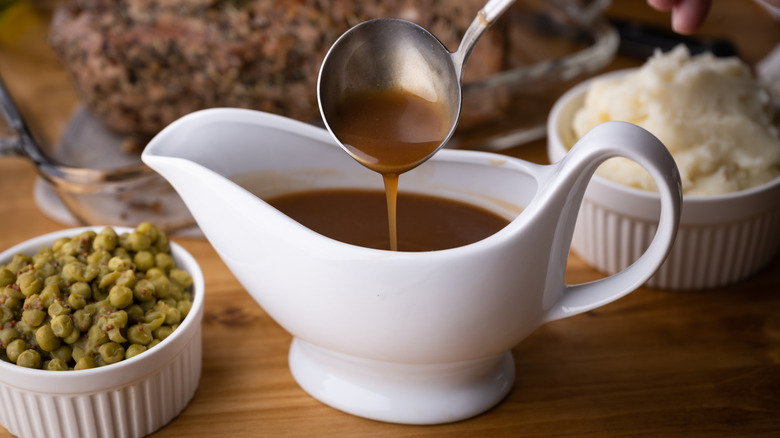
One thing that a pressure cooker can do that a slow cooker can't (besides reduce the cooking time, of course) is allow you to make gravy right in the same pot. Both a slow cooker and a pressure cooker will leave some liquid residue behind that can be thickened up to form a sauce for the meat and vegetables. With a slow cooker, however, you'll need to pour the liquid out into a smaller pot and add flour, cornstarch, butter, and any other desired ingredients which then simmer on the stove top.
There's no need for this step if you use a pressure cooker, though. In fact, Morante doesn't even add extra ingredients to her sauce. "With a pressure cooker," she says, "you can reduce the sauce or cooking liquid down on the sauté setting and end up with more concentrated flavor after the fact." Morante says 15 minutes of simmering should evaporate 1 cup's worth of liquid, which would be nearly all of it if you went with the minimum amount. In that case, it's best to keep a close eye so it doesn't dry up. If you wait until it thickens just the right amount, "Your cooking liquid can be reduced into a flavorful gravy."