

The Wine-Ordering Mistake A Lot Of People Make (And Why You Should Avoid It)
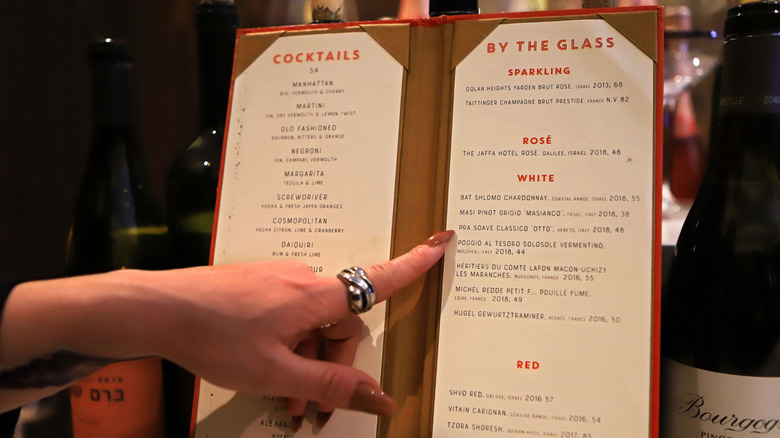
A wine menu can be daunting if you're not a sommelier. There's often an intimidating list of descriptions that leave you feeling in over your head. If your wine expertise stops at Cabernet Sauvignon, it's easy to just choose your wine based on the color. That's a mistake, though, according to Zach Pace, a veteran sommelier, wine educator, and owner of Volta Wine + Market in Saint Petersburg, Florida.
In an interview with The Takeout, Pace explained: "Color can be an effective way of judging flavor but it's not foolproof. For example, thick-skinned grapes like Petite Sirah have consistently deep color and full body, however Nebbiolo (a grape from northern Italy) looks a bit more pale, varying from garnet to delicate light red in the glass but has paradoxically high acid and tannin — especially in their youth — in a way that belies their appearance."
Orange wines (made with white grapes fermented with the skin still on) can have a fuller-bodied profile closer to a red wine, while whites that edge on red include barrel-aged white wines like White Roja, White Boudreaux, and White Burgundy. Food pairings also complicate wine selection because what you eat influences the wine you're drinking (yes, you can serve white wine with barbecued meat, by the way). "If the menu is protein-rich, fatty steaks then you'll want a wine with higher tannin," Pace said. "That same tannic red, however, with lighter, leaner fare will make the wine taste overly drying and bitter, and the food will fall flat."
Easy criteria to use for selecting wine from off the menu

A preference between white and red is a good foundation, but it's better as a starting point for wine selection. Pace said to look at other clues on the menu that'll pinpoint something you'll really like. The region where the wine originates (high elevation vs low elevation wines, for instance) can tell you a lot about its features and flavors. Match those qualities with what you typically enjoy to find something suitable and try to send wine back without being rude if you misjudge.
"If you love Napa Cabernet, for example, but the joint doesn't stock those, look for warm-climate regions that would produce a similar style," Pace said. "Hotter weather [equals] riper fruit flavors and softer acidity. If you like the typical high-acid punch and tarter flavors of some Italian wine, look for cooler climates like New Zealand or Santa Barbara."
A sommelier on staff can make a huge difference, too. Ask the expert and you can avoid the guesswork entirely. You still need to know a little bit about your tastes for the sommelier to do their job, though. "In a perfect world, you ask specific questions, for instance: 'We're in the mood for a younger French red with bolder fruits and medium to full body, somewhere around eight bucks,' but absent that give them a wine, region, or grape style you typically like. And don't be afraid to give them a price range — it's always easier than making the sommelier guess or infer," Pace said.