

The Coffee Order That Made Me Want To Quit My Job As A Barista
After over a decade in the service industry and just about every front of house job you can imagine across restaurants, bars, and coffee shops, I got out and into food writing. But even now that I haven't used a POS system in a few years and have to get my daily steps in intentionally rather than going home with throbbing feet after every shift, there are a few sentences that still set my teeth on edge. And the worst of them might just be, "extra hot, please." This is just a red flag in the context of coffee shops, to be clear. I agree with extra hot curries and noodle soups. Milk-based coffee drinks, not so much.
I never quite worked out why, but every customer who asked me for an extra hot latte during my days as a barista delivered the request as if they knew something I didn't. As if they were the ones who stayed after hours at the shop for coffee tasting sessions, product testing, and latte art tutorials while I had my feet up, when the reality was the opposite. Of course it was. Because anyone who actually does work with coffee and milk knows that an extra hot latte is a ruined latte. Not only is it very likely to burn the drinker's mouth, but it won't taste great, as milk begins to denature and become scalded at relatively low temperatures, and it can all happen in just a few seconds.
The science behind banishing extra hot coffee orders, and why many baristas hate the request
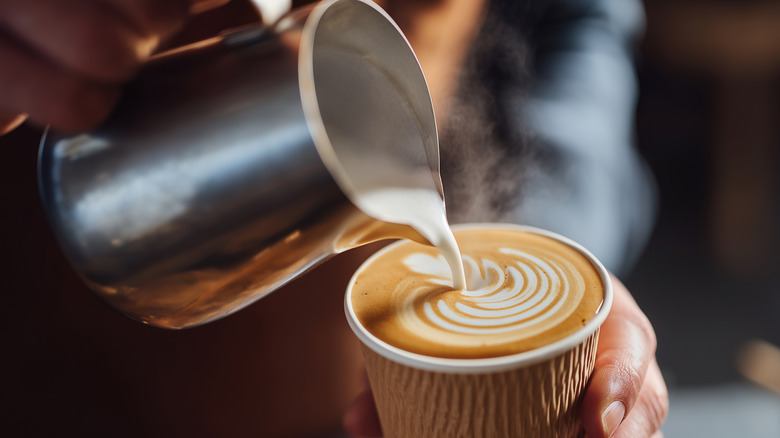
Foaming milk is based on science, but as any good barista will tell you, in practice, it's an art. In training, I used a thermometer to make sure the milk reached at least 120 degrees Fahrenheit, and never went over 140 degrees Fahrenheit, but day-to-day, they get in the way. Instead, most baristas use the look and feel of the milk to gauge its temperature and therefore its readiness. Good microfoam has the texture of heavy cream or paint, along with a particular shine. There are also sound cues to go by, as well as the feel of the stainless steel jug against your hand. So, when you order your coffee extra hot, you're asking a barista to go against all their instincts, and in all likelihood, burn their hand too.
But that's not all. Perhaps even more importantly, you're also asking for a coffee that won't be very enjoyable. Milk tastes best at around 130 to 140 degrees Fahrenheit. When it gets hotter than 160 Fahrenheit, the proteins in milk start to break down, and it goes from microfoam to something that closely resembles extremely hot white water. Around this same temperature, it also starts to smell and taste burnt. And yet, every customer who asked me for an extra hot latte wanted to see that steam wand kept in the milk for an absurd amount of time, despite the difference between micro-foam and a literal hot mess coming down to just a few seconds.
What you should do for a hotter drink instead of ordering extra hot
While it's possible that some people just like the taste of burnt milk, I always assumed that most people who order extra hot lattes just aren't drinking them quickly. Evidence backed this up — there was an increase in extra hot orders in the winter, particularly when temperatures dropped low.
If you're an "extra hot" person and want to learn to order coffee a better way, there are temperature solutions. Firstly, maybe a latte isn't the drink for you? A long black or Americano topped with a healthy amount of steamed milk would stay hotter for longer, as the water is served at a higher temperature than milk. Likewise, espresso shots are pulled at around 200 Fahrenheit, so a latte or a flat white with two or three shots will be hotter than the same drink with one shot. If you're worried about getting the shakes, you could ask for the extras to be decaf, which will add negligible levels of caffeine.
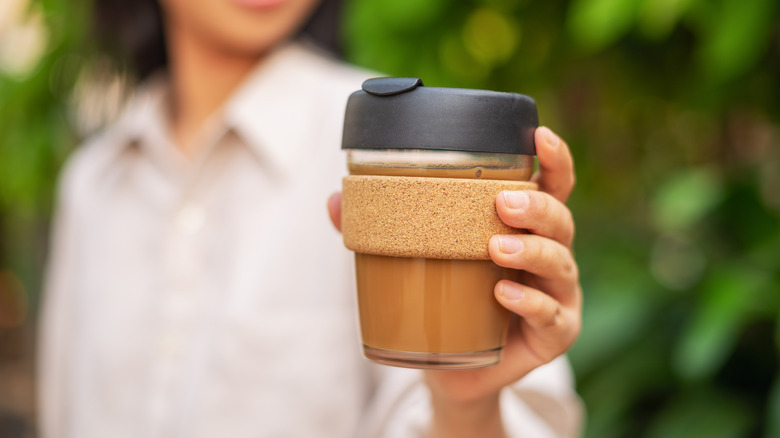
You could also rethink the vessel you're drinking out of. Paper cups aren't well insulated, but most good coffee shops are happy to make your drink in a cup you bring in. Why not get a double-walled, insulated mug that will keep your latte steaming for hours?
The final fix isn't for everyone, as many of us grab coffee on the go. If you have time, though, get a drink-in latte to enjoy inside the warm, coffee-scented shop, out of a real mug. It won't get cold nearly as quickly as a drink exposed to the weather outside, and if you're lucky, maybe you'll get to know your barista as you drink it. Despite the passionate feeling about coffee orders, a lot of them are very nice.