

Don't Cook That Batch Of Bacon In Your Cast Iron Pan — Here's Why
We may receive a commission on purchases made from links.
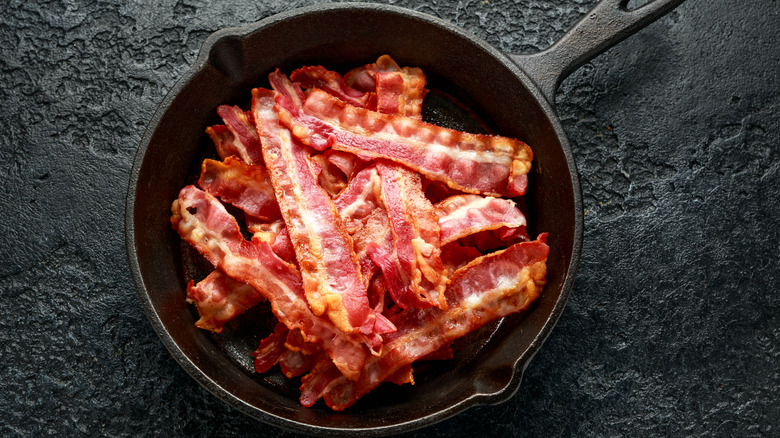
There are a dozen ways to add flavor to bacon if you're not satisfied with its salty, savory nature. But doctoring up your meat is a fruitless endeavor if it isn't cooked properly. No one wants soggy bacon, and there is such a thing as too crispy. When both of those characteristics occur, a great disservice has been done to a culinary hero. And according to the executive chef at Rancho de Los Caballeros, Robert Cornett, that's precisely what you'll get if you attempt to cook bacon in a cast iron pan.
The problem lies in how a cast iron pan absorbs heat and the makeup of the protein. "Cast iron heats slowly and retains heat aggressively," Cornett exclusively tells The Takeout. That's terrific for some foods, but detrimental to others. "For bacon, that means uneven rendering — some areas crisp too quickly while others lag behind. Bacon doesn't benefit from high heat retention."
Cornett leans on his experience in the culinary industry to further illustrate his point. "In a professional kitchen, that lack of control costs both quality and consistency," he says. "Controlled, even heat produces better texture and a cleaner finish." Of course, that begs the question: how does an executive chef cook bacon?
The best way to cook bacon isn't over the stove
So, cast iron pans are out when it comes to frying up bacon. Not to worry, though, as Robert Cornett has a couple of stellar recommendations for cooking your protein to perfection. The first one he mentions still utilizes the stove, just with more appropriate equipment. "For small batches, heavy stainless or quality nonstick pans provide better control," he says.
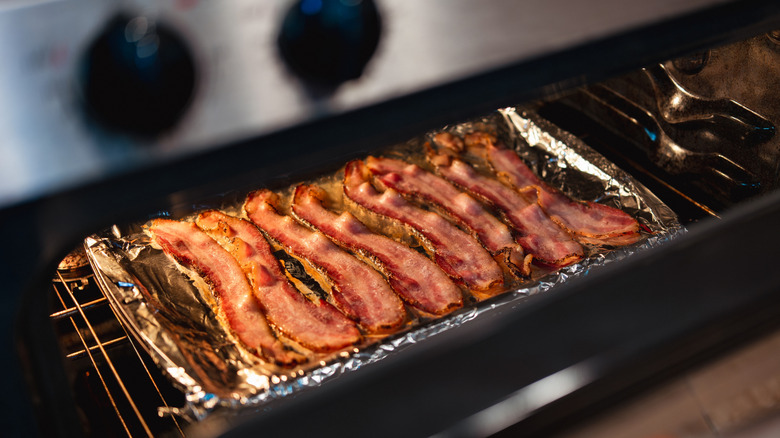
Nonstick cookware like the CAROTE Nonstick Frying Pan Skillet will do a fine job of cooking a few slices of bacon. But if you want the candy bar of meats on demand — or if you're cooking for a crowd — there's an even better way to prepare it. "For volume service," Cornett says, "the oven on sheet pans is the gold standard — even cooking, minimal splatter, and repeatable results service after service."
For what it's worth, as a former member of the culinary industry myself, I never stray from the sheet pan method. It makes cooking bacon a mess-free affair, and, as a bonus, you don't have to babysit a pan while it heats. That gives you more time to tackle whatever you're serving it with. Or, if it's being enjoyed on its own, it allows you to relax as the delightful aroma of bacon wafts through your kitchen.