

The Ingredient That Makes Dunkin's Sourdough Extra Tasty
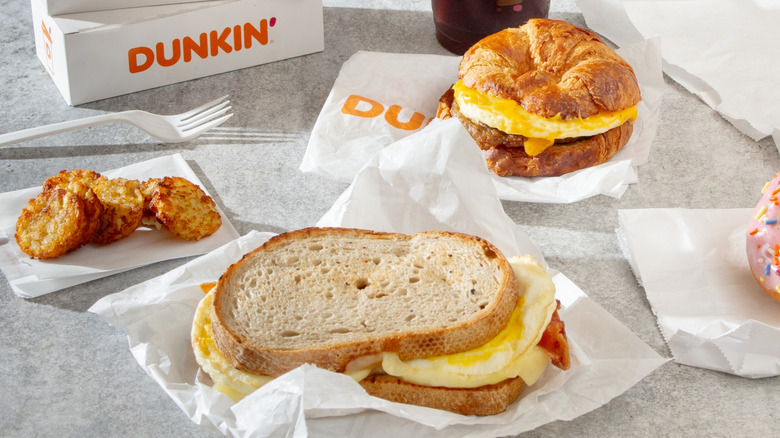
Although sourdough is not a protected term in the U.S., sourdough enthusiasts will passionately defend what constitutes a real sourdough loaf from a fraudulent one. And that is the use of a sourdough starter. If you're new to sourdough starter, it's a mixture of water and flour that naturally ferments from the wild yeast and bacteria it collects. The live mixture not only leavens bread, but also lends a distinctly "sour" taste. While there are some Dunkin' menu items to steer clear of, the chain's sourdough bread is legit, as it contains sourdough starter.
The longer sourdough starters have been maintained — regularly refreshed and fed with flour and water to keep the cultures alive — the tangier the bread will taste. Not only does Dunkin' use a from-scratch sourdough starter, but it was created by the company's research and development manager, Josh Gomes, back in 2012. The starter is still used in Dunkin's exceptionally flavored sourdough bread today.
Beyond the starter, Dunkin' sourdough bread features a blend of rye flours to strike a mid-range level of tanginess — not overpowering, but just enough to provide balance for the rich, fatty flavors of the eggs, bacon, and cheddar cheese in Dunkin's sourdough breakfast sandwich. Salt, malted barley flour, and yeast also help support the bread's flavor, structure, fermentation speed, and bake time.
Why Dunkin's real sourdough bread is unique
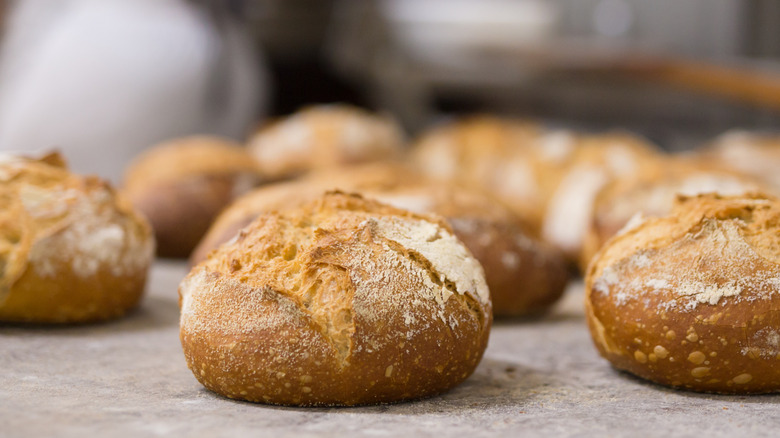
While sourdough's natural fermentation makes it unique from other breads, what's even more rare is that Dunkin' is one of the only chains producing sourdough using a starter. With approximately 10,000 Dunkin' locations in the U.S., that adds up to a massive amount of loaves; all baked using a process that's more challenging than making bread with commercial yeast, as other chain restaurants do.
Unfortunately, bread that's labelled as sourdough can be made with a long list of mostly unrecognizable ingredients that mimic the taste and texture of sourdough starter. These "sourdough" breads list yeast higher on their ingredient lists, since yeast acts as the main leavening agent; and acids like vinegar are commonly used to emulate the tang of sourdough made with starter. Some sourdough sold at major grocery stores isn't the real deal either. Packaged brand names, private labels, and even some sourdough from grocery store bakeries indicate a lack or non-existence of actual starter on the ingredients list.
Bypassing the long fermentation process required for both the starter and sourdough bread allows companies to produce more bread at a quicker rate, while also being cost-effective. Cutting corners may still lead to an okay-tasting bread, but it won't have the distinct tang of authentic sourdough — which is why Dunkin's sourdough bread tastes better than the rest.