

11 Problems In The Restaurant Industry That Customers Don't Realize

It's a Friday night and you've just entered the doors of your favorite new neighborhood haunt. Glasses are clinking, forks are en route to hungry mouths, drinks are flowing. Servers and bussers move about the room in a choreographed dance of service all the while with a smile on their faces. Customers' delight fills the air (sometimes less than delight). It appears to be an otherwise successful night at the restaurant. The tables are full and the point-of-sale machine is ringing.
Maybe what you see isn't always what you get though. According to Restroworks, the restaurant industry is projected to make $6.81 trillion by 2032 making it a huge industry — one most of us don't understand. Beyond the food and the physical space, restaurants juggle thin margins, staffing shortages, bureaucracy, unpredictable demand, technology, reviews, and even weather.
Customers see only the final performance; the rehearsal never stops backstage. But what actually happens backstage that customers never see? Three people working inside the industry: a U.S. pizzeria owner, an Australian/Malaysian restaurateur in Turin, Italy, and a former chef-turned-hospitality-coordinator-and-baker in Italy together pull back the curtain on what the industry really looks and feels like today.
1. The myth of profitability
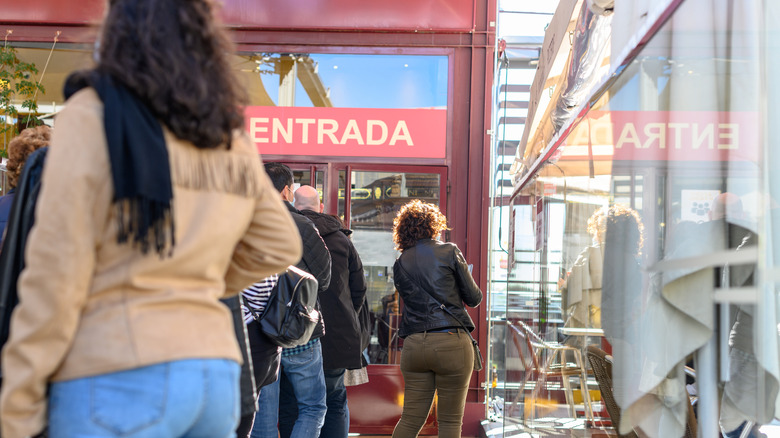
Full dining rooms don't equal profit and thin margins exist. Even when restaurants are packed to the brim, it can still mean riding a fine line. Many restaurants have a profit margin hovering around 5%. There are the obvious reasons; balancing food costs, rent, utilities, staffing, and maintenance, which add up. Megan Sheridan owns Damn Fine Pizza in Port Orchard, Washington. Sheridan notes that "experiencing consistently high volumes of business may appear to the public as a marker of a successful restaurant. In reality, it can be physically and mentally exhausting for staff to operate at 60 miles per hour without natural lulls to reset and recuperate." Sheridan adds, "the wear and tear on furniture, restrooms, and equipment from serving 100 to 300 people everyday is significant, creating constant maintenance demands that add time, cost, and pressure for us as operators." A line out the door is great, but when the rush is only two to three nights per week, it can create a tipping point.
Justin Yip is the owner of Lo Straniero and Sate & Sake food truck in Turin, Italy. Yip specializes in Malaysian food, but often holds pop-up culinary events like a Mexican food month, Turkish week, or American Thanksgiving. "Just because you have a line out the door on the weekends doesn't mean you are doing well," says Yip. "It's the midweek that counts — looks can be deceiving." Profitability isn't only about demand; it's also balance in volume and distribution.
2. Labor is the backbone and the breaking point
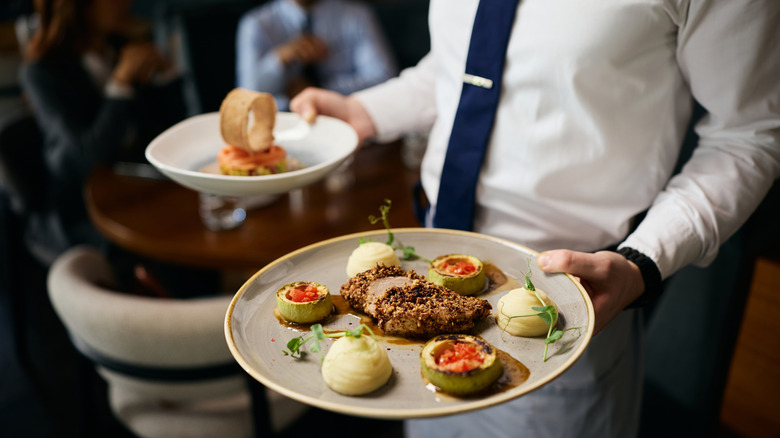
The biggest shortage in restaurants today isn't customers, it's labor. Despite the restaurant industry continuing to grow worldwide, operators find it challenging to staff, most notably in North America. "During COVID-19 and facing middle age with uncertainty in job security, so many of these old-school industry folks decided to change career paths and left the service industry," says Megan Sheridan.
Worker expectations have shifted as well. Rising living costs worldwide have created a different set of needs. Around 90% of operators are claiming they need to pay more in wages. Turnover, meanwhile, is around 41 to 43% for kitchen and serving positions. Large North American chains are providing things like healthcare, retirement savings, and other benefits, making it hard for small restaurants to retain and compete. The kitchen has the most positions ready to be filled. "Right now there's a dire need for back-of-house talent like prep cooks, line cooks, and dishwashers — because of this it's easy to hop from job to job rather quickly if one place doesn't suit you or another job opportunity arises," notes Sheridan. This poses a challenge for operators and staff, with Sheridan adding, "As an operator, spending time training a new employee not only costs more in labor expenses, but also drains the staff responsible for training new hires."
3. Retaining staff can be a struggle

Every employee departure resets the clock on training costs, consistency and the overall flow of service. Even when restaurants do manage to hire, keeping people is another battle. The work is physically and emotionally demanding, requires nights, weekends, and holidays, and relies on a level of flexibility few industries ask for. "There is a reliance on employees being flexible and going the extra mile," says Justin Yip. "It's very human. Food is human."
Post-COVID, many workers reassessed whether those tradeoffs were worth it. Elyssa Young, who worked as a chef in Australia at The European before shifting roles to an agriturismo, Valleponci, in Italy. Young says the hours were the breaking point for her: "In your 20s it's fine and fun, but then you start getting older. I found myself not really liking the hours and the lifestyle connected to that."
For operators, the burden isn't just cultural, it's financial. Training new staff drains time and money, and the workers who remain often shoulder the strain. "There's a significant burden on my back knowing that I'm directly responsible for my staff's quality of life based on their income," says Megan Sheridan. "While I want to provide a living wage for staff, labor is also our biggest expense."
4. Food waste isn't just environmental, it's financial
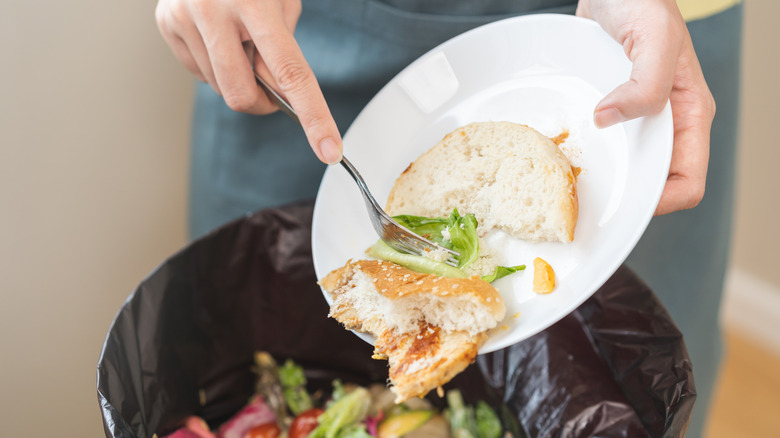
Globally, an estimated 17% of food is wasted between the retail, restaurant, and residential spaces. Restaurants feel the pressure. For operators, waste shows up in the form of lost margins. Notably, spoiled products and food prepped incorrectly, which can erode profits.
How waste manifests varies worldwide. At Lo Straniero in Turin, Justin Yip buys produce and products at a local outdoor market, Porta Palazzo, which is Europe's largest outdoor market. With frequent shopping trips and affordable food prices for fresh ingredients, waste remains low at his restaurant.
In the U.S., operators often lack that flexibility. Megan Sheridan explains that many restaurants rely on distributors facing their own staffing and logistics issues. "We often receive products that are either close to expiration or mishandled during the delivery process," she says. Rising fuel costs also increase distributor minimums, which forces restaurants to buy larger quantities of food at one time — in turn, increasing food waste.
Reducing waste requires systems. Systems require training. Sheridan says at Damn Fine Pizza, dairy products and produce are the most common items lost. To monitor this, the team uses waste logs and first-in, first-out rotations (FIFO), date labeling on every item, and daily whiteboard tracking. Waste becomes not just about sustainability, but also a means of survival in an industry with such thin margins.
5. Tech as a tool and a trouble spot

Technology is a tool and a tension spot in the industry. About 65% of operators incorporate new technologies. For smaller restaurants, it can be an asset to balance thin margins inherent to the industry. Megan Sheridan is a proponent of technology. "All of our payroll, onboarding, scheduling, tip distribution, marketing, and ordering occurs online or via apps." Adding, "Our POS works with all of these components to create almost any metric report, which is invaluable anytime we have a question about how to schedule, order, or add new menu items."
Innovation can also be a deterrent. AI and automation are creeping into everything from resumes to drive-thrus. Some restaurateurs lack originality, relying on AI to do the job. Sheridan notes, "AI is actively ruining the food industry by taking away the creativity and originality in a lot of concepts." According to reports, industry positions could become up to 80% automated. "AI is taking away jobs from talented people and it's creating false expectations for customers," Sheridan says.
In Italy, reservations are a common dining habit. People rarely show up on a Friday night without one. For Justin Yip, technology has allowed him not to be glued to his phone taking reservations. Customers can book online. The POS also produces reports, allowing him to learn about the business and stay on track. Meanwhile, Sheridan cautions, "Technology should be used to improve our lives and not take away the authenticity and sweetness of living."
6. Reviews bite harder for small restaurants

We all do it — we head to Google to search for the best dinner spot in town, scrolling the reviews. We hover with indecision when a spot looks good, but its star count doesn't match. For small restaurants, this can have a huge impact. Leaving a review to explain a bad situation that wasn't made right can be justified, Elyssa Young says: "When a staff member is rude, whether it's day one or 100, that's a different story." But most restaurants really do want to make you happy. For Megan Sheridan, the sentiment is this: "I think in general people are afraid to interact with other strangers especially when a negative confrontation might be involved, but we really want to know if something is wrong in the moment so that we can offer another option."
Larger chains can absorb negative reviews, with reputations and funding behind them. On the flip side, small restaurants are impacted more, but can also leverage reviews. For Justin Yip, small restaurants have an advantage, with a higher chance of getting good reviews: "Having a staff that basically feels like family means we can serve our customers well. The reviews tend to be more descriptive and personalized."
7. Weather, location, and bureaucracy play a role in success
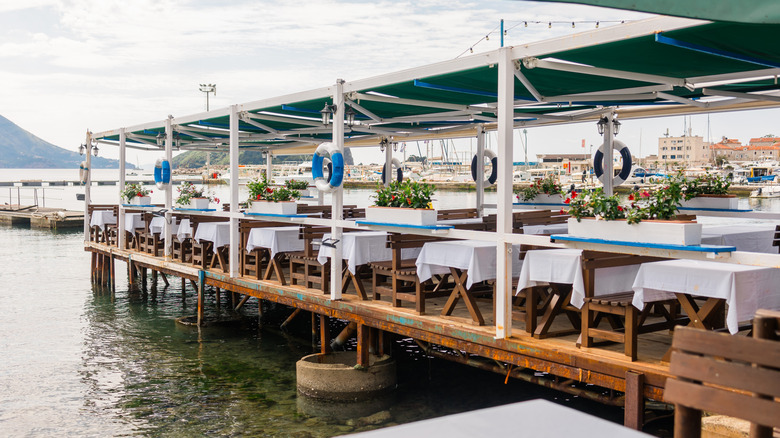
Customers often assume success is internal (menu, service), but external forces quietly dictate viability. Weather events can shut down power for days and spoil inventory, while tourism patterns, construction, and local regulations alter foot traffic and operating costs. The hurdles are endless regardless of concept or geographic location.
Valleponci, where Elyssa Young works, operates on the touristic Ligurian coastline. The business is highly seasonal, which makes balancing personal life tricky. Even the physical road up to the restaurant affects demand — rocky, narrow, and ancient, it winds through the mountains where the land and the sea meet.
For Justin Yip, Turin empties in the summer as locals head for the mountains and the beach, making payroll during slow months difficult. Then there are the dreaded Italian taxes. In a country known for slow and convoluted bureaucracy, this has a huge impact. "In Italy, I have been told to think of taxes as taking on a business partner that gets a cut for not doing anything," says Yip.
For Megan Sheridan in the state of Washington, construction projects nearly shut her new business off from foot traffic during peak season and there is another on the way. "The loss of income from construction projects in a small town like ours during peak season will most certainly force many local businesses to close without support from the city," she says. When construction finally wrapped (the first time), sales jumped by 25% year-over-year.
8. What looks like success isn't always success
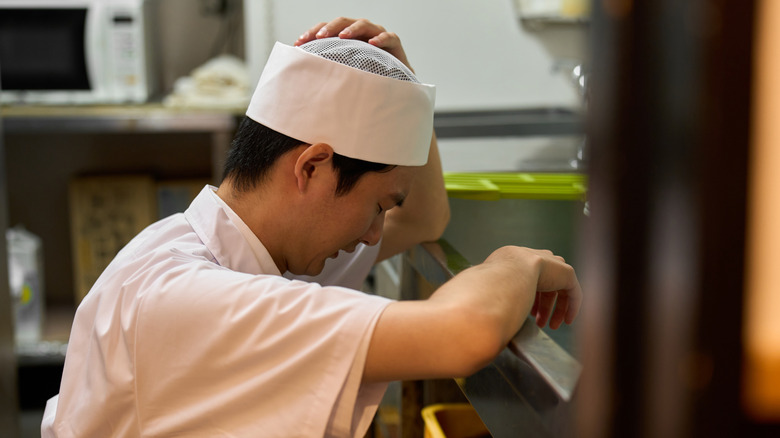
Here enters the optics of hype. Beyond the thin margins and lines out the door also comes burnout. Operators have to balance "yes" with "no." Saying "yes" to every event or every reservation doesn't always mean success if burnout follows closely behind. This becomes especially important when trying to keep a core staff, which is crucial for success, but also in a landscape where labor, good labor, isn't easy to find. Balancing burnout is a key component in order to arrive at success.
For Megan Sheridan in the U.S., where a persistent labor shortage means up to 77% of operators have reported trouble hiring and retaining employees, the balance is top of mind. "Without setting firm boundaries and learning the value of saying 'no' to opportunities I know would burden the business, I wouldn't be able to manage this level of volume in a healthy or sustainable way," says Sheridan. Despite the common myth that owning a successful restaurant equates to a handsome income, it doesn't necessarily translate to that reality. Sheridan adds, "I'm not in this to make a profit — I'm doing this because service and cooking great food is literally in my blood and I have a desire deep in my bones to create opportunities for my staff and enrich the community I live in."
9. Delivery apps: necessary evil?

For small restaurants, technology can be a tool. It can add value in the form of efficiency and knowledge. But for those same restaurants, often the economics of delivery apps don't make sense. Across the board, delivery apps like Uber Eats or Postmates typically charge restaurants a commission ranging from 15 to 30%, with the latter being the most common. Contrary to popular belief, for small restaurants doing lower volume with thinner margins, these apps don't increase sales.
Justin Yip says, "The apps take 30%, that's a huge cut." Yip doesn't partake in delivery apps at Lo Straniero: "We made this choice deliberately being an Asian restaurant. We believe in the hospitality side of things and the atmosphere of the restaurant. Having delivery riders congregate and loiter doesn't provide a good atmosphere for the customers and staff."
The same sentiment holds true at Damn Fine Pizza. Beyond the large commission, operators don't have control as to what happens to the food after it leaves the restaurant and how it is handled. Rather partaking in delivery apps, Damn Fine Pizza has opted for takeaway only directly from it, which in turn accounts for 20% of sales.
10. Shifting consumer behavior and expectations

The data shows a growing restaurant industry globally. Even with all the recent changes in the industry from labor shortages, to technology, and even a global pandemic — it continues to thrive. Customers today are more focused on well-sourced ingredients, experiences, and a premium product. They might be willing to spend more if their expectations are met. Restaurants have to be nimble. Without a longstanding reputation or being part of a big chain, it has to keep up with trends and technology. Restaurants have to source ingredients thoughtfully, tend to social media, implement technology that can help the business thrive (or at least survive), and balance the humanity of staff.
Meanwhile, customers expect speed, efficiency, sustainability, and an experience, not just a meal. Operators and their staff carry this responsibility. For Megan Sheridan, there are no days off: "I always have to be on at my restaurant; off days are not allowed when you believe in leading by example."
11. Don't be the lull
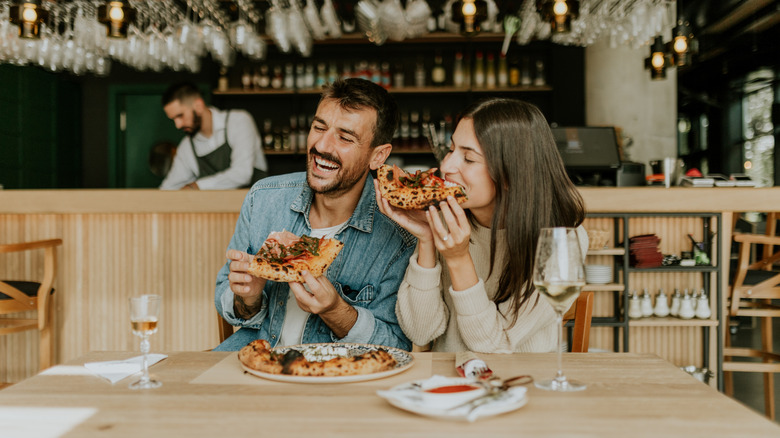
What makes a good customer today? According to these experts, it's someone that supports restaurants even on a Tuesday night. Date night doesn't have to be on the weekends. The midweek lull creates a business model that functions on high-highs and low-lows. "Being a small restaurant, we are happy to please," says Justin Yip. "Also, it's important to support small restaurants during the weekdays. That is what sustains us in the long term."
A good customer brings curiosity and energy. Yip adds, "I think a restaurateur or staff match the energy you (the customer) bring when you come in. If you are interested in the cuisine, we love that and we want to chat about it." A good customer alerts a staff member when they have a problem with the service or the food. They don't suffer in silence and write a bad review in the shadows of the night.
A good customer calls to cancel their reservation, even if it's just an hour before. A good restaurant wants to see you at its tables, on Monday or Friday. It aims to make you happy and feed you well, with glasses clinking in a well-choreographed service. But a good audience must also applaud its performers.