

Remove The Fishy Smell From Canned Crab With A Brief Soak In This Liquid
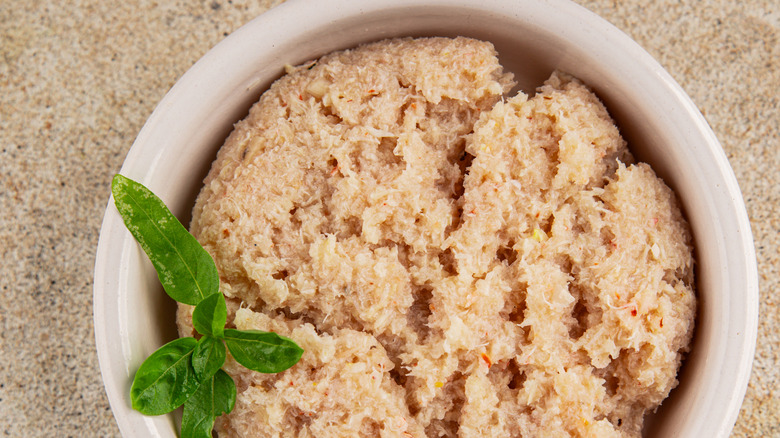
Seafood lovers with tight belts or light wallets will probably be aware that canned crab is one of the most affordable seafoods out there, and it's delicious, too. Although the canned stuff doesn't taste exactly like fresh crab, the firm, sweet flakes of meat can be used in a huge variety of dishes, from summer cookout-ready crab cake burgers to DIY crab rangoon or rich, gooey crab dip. Canned crab will last for years if you store it correctly in a cool, dry place, but sometimes it doesn't seem that way, as it's not unusual for a newly cracked can of crab meat to have a distinctly fishy smell.
According to chef Matt Gaudet, who works at the Boston branch of seafood restaurant Saltie Girl, this odor may be pungent, but it's nothing to worry about. " ... If you find yourself with a can of crab that has a bit of a smell to it, it isn't bad; it is a chemical reaction," said Gaudet. And he knows exactly how to deal with it.
The chef uses milk to remove the unwanted scent. This works, he explained, because the casein (a protein) in the dairy product clings to the trimethylamine molecules that cause it. Gaudet cautioned that "you must be certain to press out the milk or let it drain fully." He explained, "The milk is taking the odor with it; if it's still 'milky,' it will therefore still be 'stinky.'"
The best kind of milk to choose, and how to use it
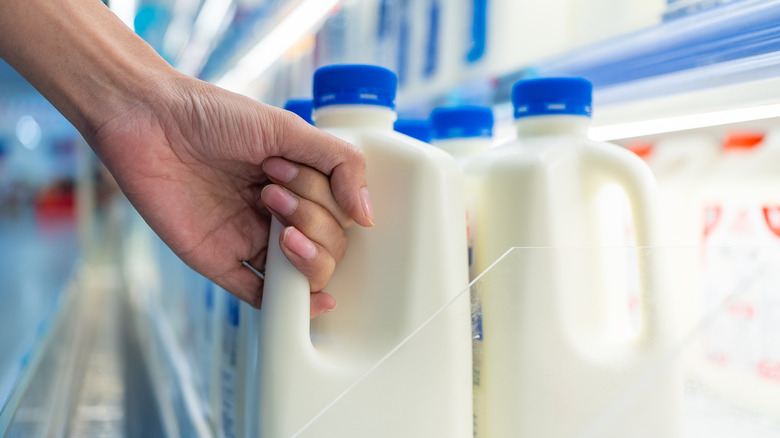
Although any milk that contains casein should work, Matt Guadet said, "I typically only have full-fat cow milk," so he uses that if he has to remove the fishy smell from canned crab. Reduced-fat cow's milk, such as skim and 2%, also contains plenty of casein, though casein levels are high in other edible animal milks, too. Sheep's milk actually contains more casein than cows' milk. However, Gaudet cautioned, "A plant-based milk won't do the trick," as it doesn't contain any casein.
The process for removing trimethylamine is very simple. Just submerge your crabmeat in the liquid, cover it, stick it in the refrigerator, and leave it for 15 to 20 minutes. If you're using your crab pretty much as is, let the meat drain completely. If you're going to break it up further or cook it, you can speed things up by squeezing out the milk. Apart from remembering to throw out that fishy milk ASAP, you'll be done once the crab is dry, and, as Guadet puts it, "you are free to create your favorite crab recipes."
How to tell if your canned crab has actually gone bad
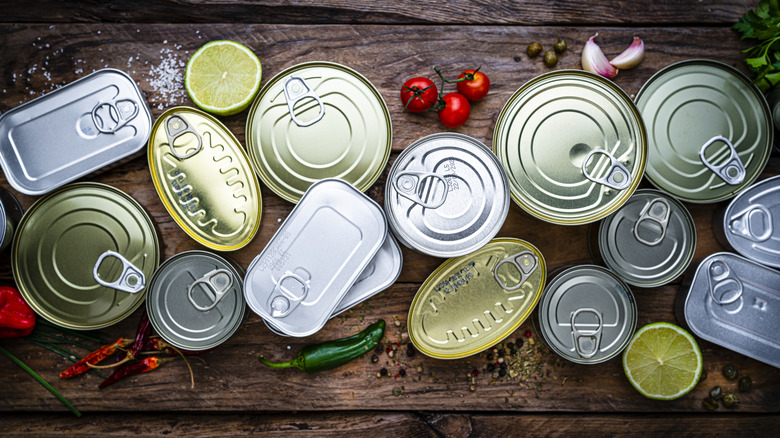
While the smell can be removed if it's just a little trimethylamine in crabmeat that's perfectly edible, you can't fix crab if it has actually gone bad. As with all canned goods, if you're unsure, it's best to err on the side of caution, even if the use-by date hasn't passed and you think you've avoided all the obvious canned food storage mistakes. Unfortunately, that's slightly tough advice to follow when you're dealing with canned seafood that naturally has a pretty strong smell. Luckily, there are other signs you can rely on.
For example, cans that are swollen, rusted, or badly dented should be thrown away. Any cans that may have accidentally frozen, such as those stored in a cold basement during a very cold winter or in the car overnight, should also be discarded. If a can hisses loudly or spurts its contents all over you once opened, that's a bad sign too. And gross, obviously. The USDA advises against taste-testing and recommends — you guessed it — chucking the can and its contents. If there are bubbles moving upwards inside the can, visible mold, or the crabmeat looks unusually cloudy or gooey, it's probably not edible. Finally, there's a limit to how strongly it should smell. If the odor is extreme or makes you feel ill, get rid of it and grab another can of crab.
Oddly enough, small, clear crystals in canned seafood aren't a sign of anything sinister. Although they've occasionally caused a panic when they were mistaken for shards of plastic or glass, they're just a natural collection of minerals, and the FDA says they're completely safe.