

Why You Should Be Buying Olive Oil From Palestinian Farmers
When selecting olive oil, there are a lot of options. Though many may not think of it at first, you should probably be buying your olive oil from Palestinian farmers. The Takeout had the opportunity to chat with Bilal Othman of Huwa olive oil to gain insight into what sets Palestinian olive oil apart from the rest.
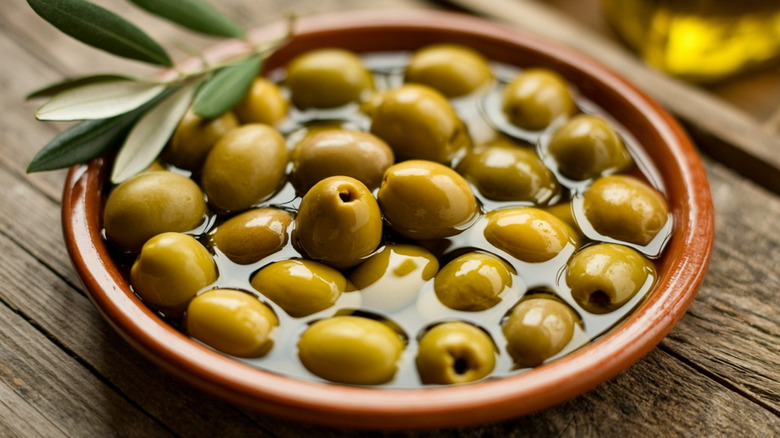
According to Othman, part of what makes olive oil from Palestinian farmers so unique is the olives specific to the area. "There's certain species of olives that are really just kind of mostly found in Palestine in the Levant region. So the actual flavors of the olives are a little less fruity upfront and a lot more peppery in the back." Nabali and Souri olives are examples of olives grown in Palestine that have a unique, bold, peppery flavor not found in other olives, perfect for either eating whole or pressing into oil. Bilal also notes that the olives are harvested in October rather than February, like many olives. Harvesting in October ensures the olives are packed with more flavor, whereas harvesting in February allows for the rainy season to hit, making the olives more watered down with less impactful flavor.
Many people picture countries like Italy when they think about olive oil, which is understandable since Italy is the third-highest producer of it in the world (Spain produces the most). However, olive oil from Palestine is made in small batches, and the olives themselves are handpicked. As Othman points out, "Palestine is very unique where you have basically large quantities of small batch production, which you can see in parts of Italy, but Italy also will have this massive industry that is attached to it that does it at a very industrial scale." Olive oil from Palestine is almost guaranteed to be a handcrafted artisanal product.
Palestinian olive oil is a community and multi-generational craft
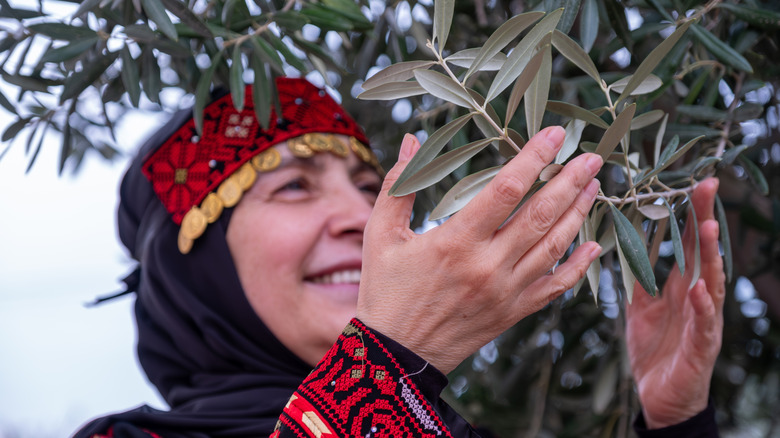
Olives are farmed and harvested on the West Bank of Palestine. The harvest itself, from the picking to the pressing, is a community affair. Per Bilal Othman, "Every village would go down in October, and the whole community would go down and handpick the olives. You then take those olives, and you take them down to the community press." Small batch, community harvest and preparation is something that's become less common in the world today, and because the olives are handpicked, only the ripest olives are selected as opposed to a shaker on a tractor that harvests any olives that fall from the tree. This ensures high quality, better-tasting olive oil because the best olives are used to make it.
Another reason Othman believes the olive oil from Palestine is unique is that the trees themselves are old. "I think older trees tend to produce better, at least it's what the elders tell us ... the roots are deeper. So the deeper the roots of the tree, the more nutrients are within the tree." The older trees receive consistent care from multiple generations of farmers. As Othman stated, "You're talking about trees that generationally have been looked after by the same 40 people. And it's like if your great-great-grandpa planted a tree, he kind of has his own dynamic with that tree, your grandpa tells your dad, the cycle kind of continues."