

14 Anheuser-Busch Beers, Ranked
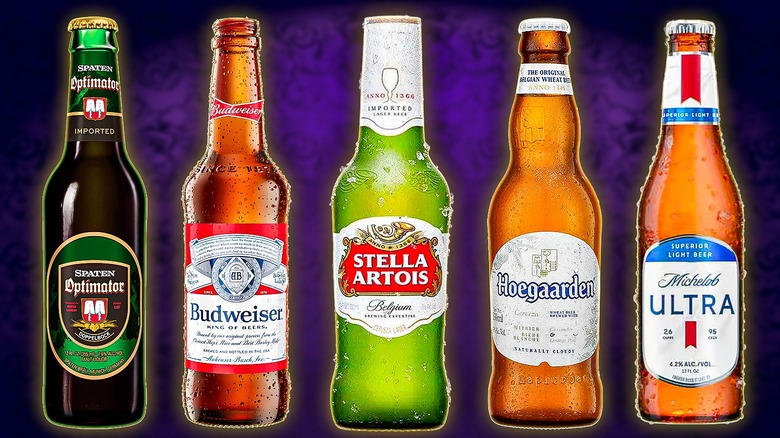
For Americans, the name Anheuser-Busch likely conjures images of bow ties, the Budweiser Clydesdales, and other red-tinged nostalgia. However, when the company merged with Belgian brewing giant InBev in 2008 to form Anheuser-Busch InBev SA/NV (commonly AB InBev), it became much more than just an American brand. Yes, it still features iconic labels such as Budweiser and Michelob, but now it also includes European giants like Beck's and Stella Artois.
While this concept may rankle the most traditional American beer fans, it actually opens up a new world of interesting styles beyond standard American lagers. From hefeweizen to doppelbock, with recipes from some of the world's oldest and most vaunted breweries, AB InBev now offers an incredible plethora of choices. Taking that all into consideration, let's look at how a few beloved American standards stack up against their European counterparts. Our ranking method is at the end of the article.
14. Natural Light
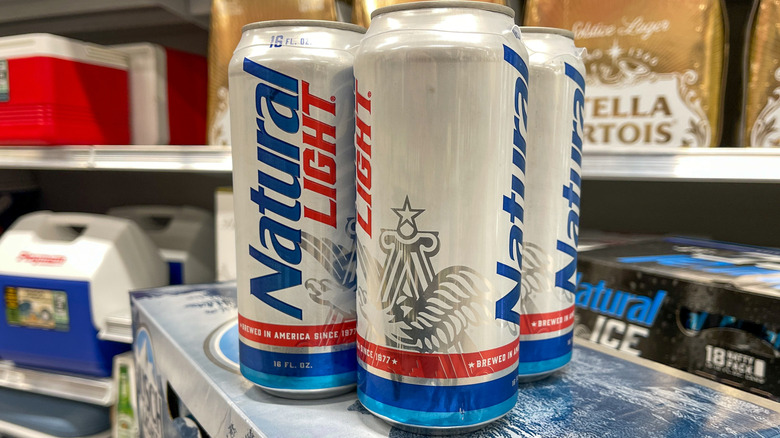
Though it comes deservedly last here, "Natty Light" remains significant in the American scene — particularly as a rite of passage, and certainly as a college party staple. It's an easy-drinking, low-calorie beer that doesn't offer anything positive from a flavor standpoint, but goes down quickly and leaves the wallet heavy. "Yes, everything about Natty light is awful, disgusting and pure absolute and honest garbage," wrote one reviewer, not pulling any punches. "I've had much worse," wrote another, perhaps pulling a few.
First introduced in 1977, Natural Light was initially a premium option, priced similarly to Budweiser. It was actually Anheuser-Busch's first foray into light beer, used to test the market without risking the Bud brand. Once it showed success, however, the company's focus shifted to Bud Light, and Natural Light was relegated to the bargain aisle. Despite this, the brand has demonstrated impressive staying power, becoming especially popular with college kids in the late 20th century. More recently, it has leaned into the "Natty" moniker, releasing Natty Daddy, a higher-alcohol (8% ABV) option, and Naturdays, a strawberry-lemonade radler.
13. Bud Light
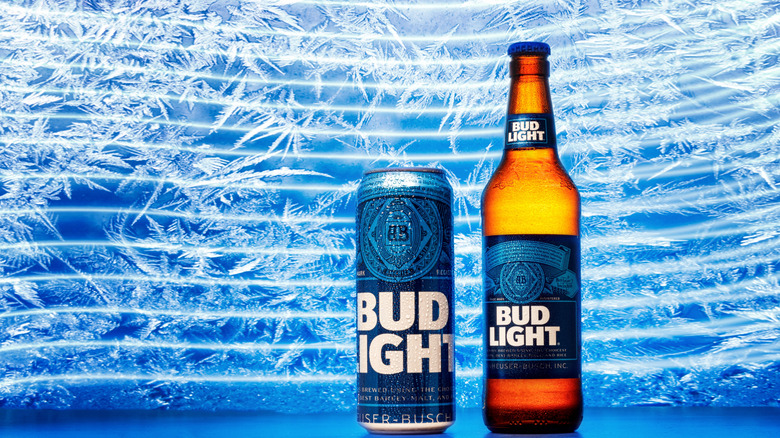
Another beer that relies on its lack of distinguishing flavor to drive popularity, Bud Light offers little to the discerning drinker. While fans call it "super smooth and drinkable" (i.e., bland), others are less charitable, declaring it, for example, "dead awful ... drab ... and forgettable." All that said, the real story of Bud Light is more about marketing than taste. In the 1970s, Miller redefined the American beer market with the release of Lite, the first successful mass-market light beer. Budweiser Light entered the market almost a decade later in 1982, which made toppling Miller's dominance an uphill battle. The new beer was especially overlooked in bars, where generically ordering "a light" was already firmly associated with Miller.
In the mid-1980s, Budweiser introduced its "gimme a light" ad campaign, in which someone would ask the bartender for a light and then be given a lamp or a blowtorch, not a beer. At this point, the confused consumer would clarify that they wanted a Bud Light. In addition to establishing a new moniker — it would never be Budweiser Light again — these clever commercials established that Bud Light would become a major player through innovative advertising. As such, despite its lack of compelling flavor and consistently low rating among online reviewers, it eventually became the world's best-selling beer.
12. Busch Beer
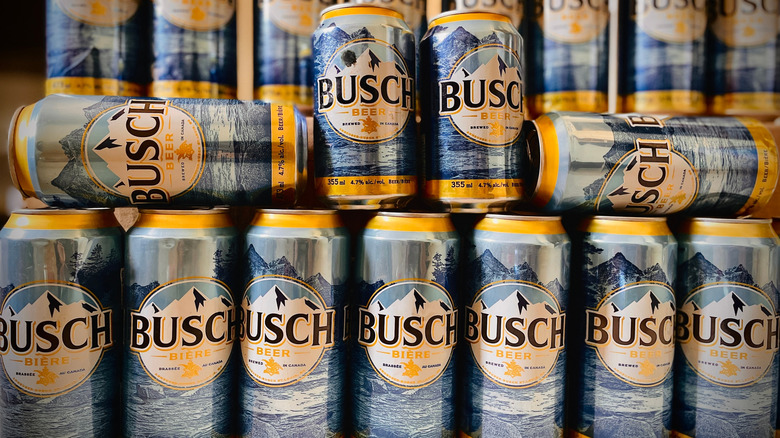
Introduced as a quasi-light beer before the aforementioned ones were market mainstays, Busch was first sold in 1955 as Busch Bavarian, a value-driven companion to Budweiser that was lower in alcohol (4.3% vs. 5%) and lighter in flavor, promoted in warmer climates and other thirst-quenching contexts. An adjunct lager, Busch is brewed with corn in addition to barley, which contributes to its mildness. Though slightly more interesting than most lights, Busch is known more for its price than quality. "It's cheap and easy to get at your local gas station," wrote one reviewer, succinctly summing up the beer's appeal.
The name Busch, according to legend, arose from a dispute between Anheuser-Busch and Major League Baseball over stadium naming rights. In 1953, after purchasing the St. Louis Cardinals, August Busch Jr. wanted to rename the team's Sportsman's Park to Budweiser Stadium. MLB, however, was hesitant to allow stadium branding at the time, especially when associated with alcohol. As such, Busch instead named the stadium after his family, and, the story goes, shortly thereafter released a beer named Busch, out of spite. (This story is almost certainly apocryphal.)
11. Michelob Ultra
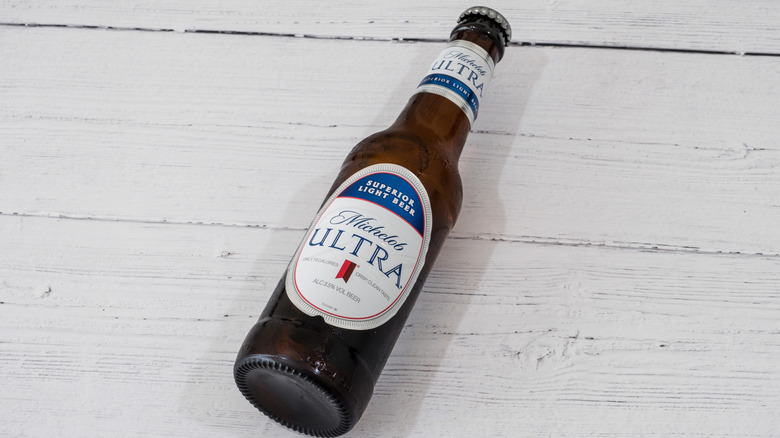
Introduced during the low-carb craze of the early 2000s, Michelob Ultra redefined light beers by focusing on consumers with active lifestyles and health-conscious consumption habits. Initially, Anheuser-Busch envisioned this beer as a product for baby boomers who were following Atkins, or any of the myriad low-carb diets of the day. Ultra, however, had other ideas and quickly became associated with a younger, more athletic crowd, targeting socially and physically active drinkers. It became the country's top-selling beer in 2025.
Michelob Ultra's taste, it seems, is besides the point. This beer is akin to a sports drink — like flavored water — meant to quench one's thirst while only slightly delving into the realms of barley and hops. Perusing online reviews, it is common to find comparisons to straight water. "Little to no taste," read one, while another called it "a mix between a light beer and a sparkling water." Despite this lack of distinguishing features, Ultra still ranks at the top of the American light lagers here, mainly because it won't offend, and is relatively clean and easy to drink.
10. Budweiser
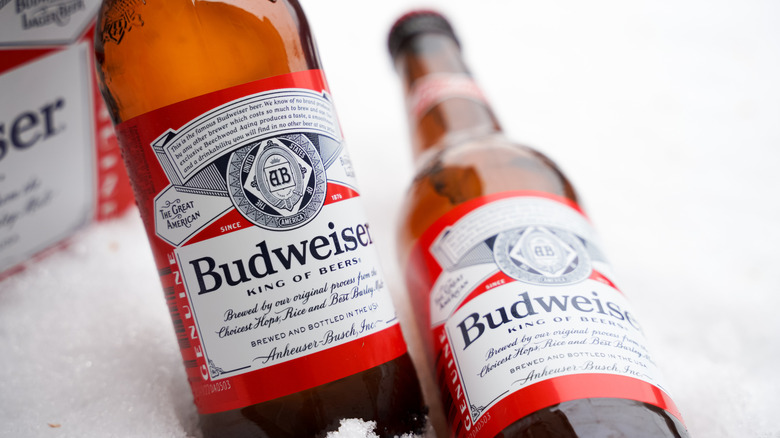
Known internationally as "the king of beers," Budweiser is as much an American symbol as Coca-Cola or McDonald's. That said, it gets a bad rap in today's crowded craft beer marketplace, mostly because it's an American adjunct lager, or beer made with grains other than barley — in this case, rice — giving it a more subtle flavor and crisp finish.
In an industry where emphasis is now placed on high-quality ingredients and interesting flavors, the use of adjuncts like rice or corn has become more associated with cost-cutting than quality. That said, Budweiser's decision to add rice to its recipe was initially driven by flavor. In 1876, rice was chosen specifically because it would create a lighter, brighter lager that was more refreshing. Another innovation at that time was fermenting with beechwood chips, which helped to spread out the yeast and ultimately led to a smoother finish.
Aside from some slight tweaks along the way to allow for modern techniques, the recipe hasn't really changed since then. As such, Bud remains an American classic and a fascinating view into the history of brewing in this country. That said, the recent explosion of beers that are not only drinkable but also complex and interesting makes it less compelling than perhaps it once was.
9. Rolling Rock Extra Pale
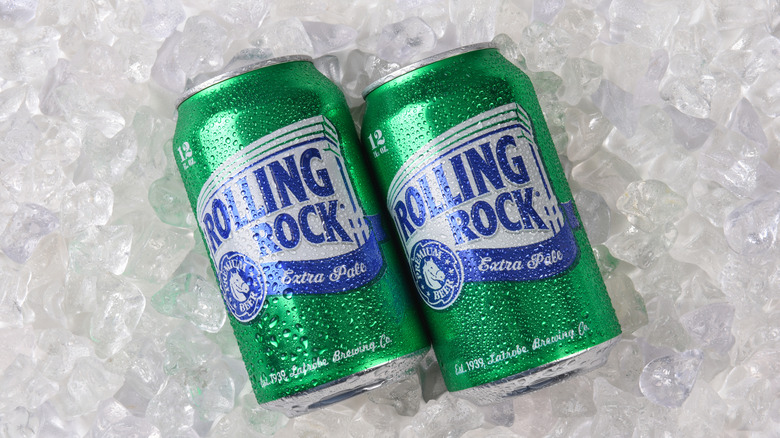
"This ain't your father's Rolling Rock" is an apropos statement when it comes to modern Rolling Rock, purchased by Anheuser-Busch in 2006. Crafting beer since 1939 in Latrobe, Pennsylvania, the brand became a popular regional beer and an icon of the Commonwealth. Though rated slightly higher than Budweiser among reviewers, it's difficult to make a clear case for one over the other. They're both pedestrian adjunct lagers, crisp and smooth, but lacking in terms of flavor or intrigue.
In the past, Rolling Rock's distinct taste supposedly came from the use of local spring water; it was even believed that sediments in these streams caused the flavor to change slightly, batch to batch. After acquiring the brewery, however, Anheuser-Busch closed the Latrobe facility and moved production to other locations, essentially removing the elements that made Rolling Rock unique. "Anheuser-Busch is committed to and we continue to achieve Rolling Rock's original profile," a company spokesperson said of the brewing changes. "These exacting standards ensure that Rolling Rock beer drinkers will receive the same premium extra-pale lager they expect."
8. Beck's
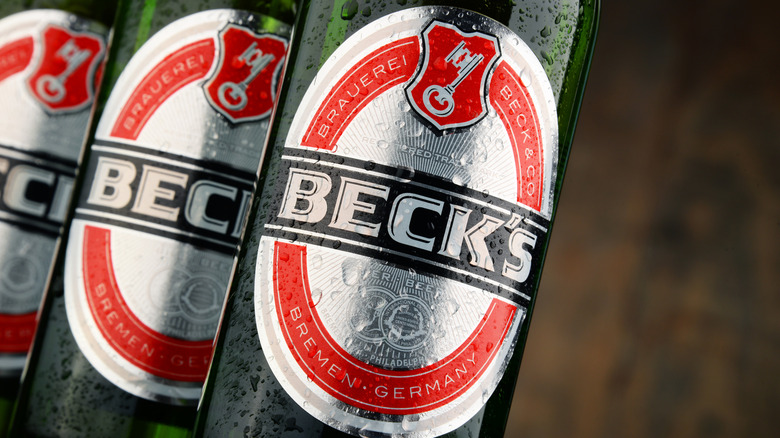
Founded in 1873 to adhere to Germany's Reinheitsgebot — the purity law that limits beer ingredients to barley, hops, water, and yeast — Beck's achieved phenomenal success in the American market starting in the 1950s. Today, however, in a crowded craft beer market, Beck's is far less exciting, more of a reliable standard than something exotic or interesting. As one reviewer put it, perfectly explaining Beck's ranking at the center of our list, "the most middle-of-the-road, serviceable beer that I can think of ... it's not bad, but not great either."
Technically a Pilsner, Beck's flagship lager is lightly hopped, medium-bodied, and balanced by the slight sweetness of lightly roasted malt. Iconic green bottles — once the symbol of quality imports, but today recognized as a glass type that does not adequately protect the beer during storage and transport — also impart a slight skunkiness to all but the freshest of bottles.
7. Michelob AmberBock
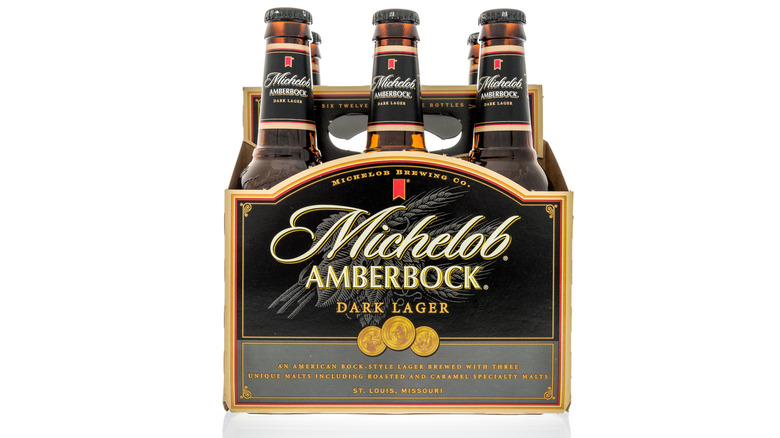
At number 7 on our list, AmberBock kicks off the transition from obviously mass-market beers to craft-styled, premium-positioned ones (even if the latter are still mass-produced). In fact, AmberBock was introduced in the mid-1990s to counteract the rising popularity of darker-colored, malt-forward beers such as Pete's Wicked Ale, Killian's Irish Red, and countless other microbrews of that decade. It was also key in the company's strategy to produce faux microbrews appealing to consumers tempted by that market, and likely to encourage regional distributors to grant Anheuser-Busch shelf space over upstarts. AmberBock was later converted to an all-malt recipe (removing any adjuncts) in a further attempt to position it as a macro alternative to craft beer.
With Michelob Ultra's rise, however, AB InBev has de-prioritized older Michelob labels. As such, AmberBock is rarely promoted, kept around mainly for nostalgia and its longstanding partnership with Texas Roadhouse. That said, drinkers praise AmberBock for its rich, malty flavor and smooth finish. Though certainly sweeter than any beer mentioned thus far, this depth is prized by fans. From its early success winning bronze at the World Beer Cup in 1998 to its cult status today — scoring higher than the average macro on sites like BeerAdvocate and Untappd — AmberBock remains a unique and worthy dark lager.
6. Stella Artois
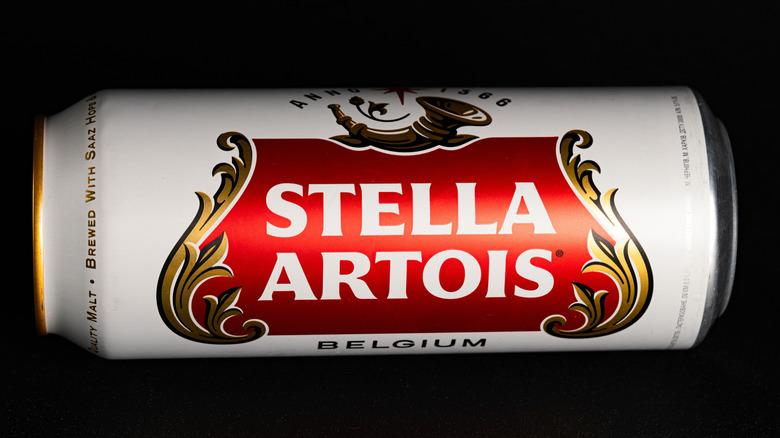
Also an adjunct lager, Stella's higher ranking stems from brewing decisions that provide superior balance and drinkability. Yes, Stella uses corn alongside barley, but the former's inclusion is subtle, allowing for a malt-forward flavor that tastes more European. Stella also uses noble hops such as Saaz, which give it a clean, snappy bitterness that feels more prevalent than the IBU suggests. Lastly, its slightly higher carbonation contributes to a crisp, refined finish. Though these factors make it the obvious champion of AB InBev's adjunct lager category, the fact that Stella is still an adjunct lager also means it lacks the complexity or nuance to trigger further mobility on our list.
The history of Stella Artois begins in Leuven, Belgium, with the opening of the Den Hoorn brewery in 1366. A few centuries later, Sebastien Artois became the head brewmaster, then owner, eventually changing the name to Brouwerij Artois. Then, in 1926, Artois created a special Christmas beer named "Stella" after the seasonally-appropriate star symbol. Though initially it was only available in the winter, it became a year-round release by 1930. In 1988, Artois was a founding member of the new company Interbrew, which would later become InBev, and then finally AB InBev.
5. Boddington's Pub Ale
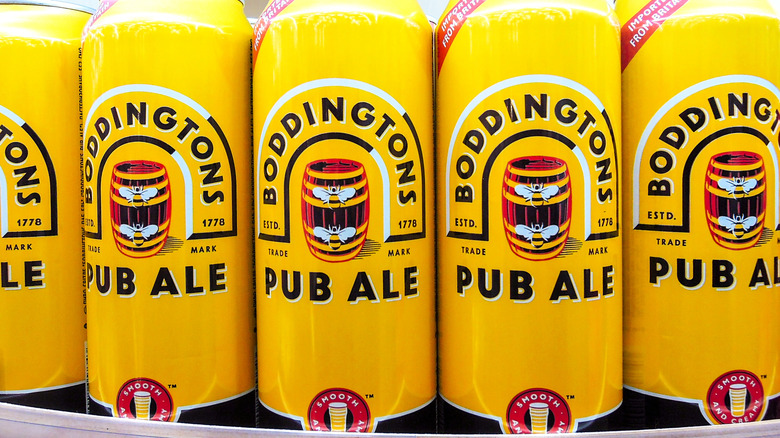
While Guinness is the most recognizable nitro beer — one that's infused with nitrogen gas to create a creamy texture and cascading pour — Boddington's is the rare golden ale that also utilizes this technique. As such, it features a uniquely smooth mouthfeel, creamy head, and signature cascade, making it more notable and interesting than the many light-colored beers mentioned above. Online reviewers also praise its pronounced, bready sweetness. Pub Ale cans also feature a similar "widget" as Guinness cans, which allows nitrogen to be infused as the beer pours.
Boddington's history dates to 1778, when the Strangeways Brewery opened in Manchester, England. In the following century, Henry Boddington would become the owner and namesake. In the 1990s, Boddington's production increased almost four times after being acquired by Whitbread. Notably, it was one of the first breweries to add nitro widgets to cans, marketing the UK version — Boddington's Bitter — as the "Cream of Manchester." This success led to international distribution and the creation of Pub Ale, an export version of Bitter with higher ABV (4.7% vs. 3.8%).
4. Hoegaarden Witbier
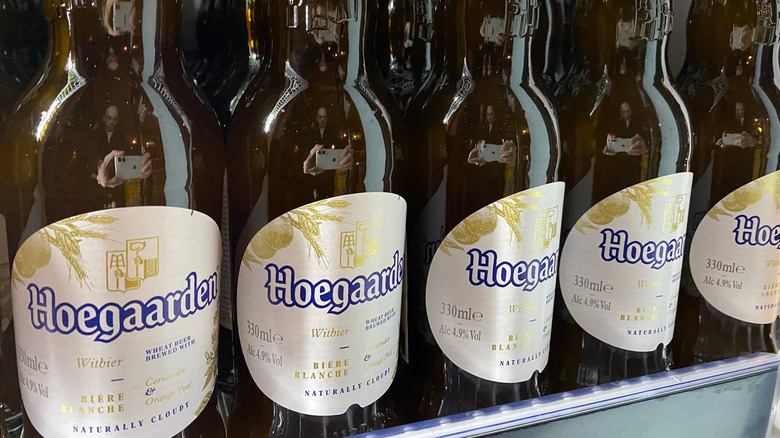
While wheat beer is often discussed as a singular style, there are in fact several distinct preparations. Two are represented in this list, and one — Belgian witbier, or white beer — has a long, historic connection to the Hoegaarden brand. Known for its cloudy, somewhat white appearance from unmalted wheat, witbier also prominently includes orange peel and coriander. First added in 1445 by the monks of Hoegaarden (a town in Flanders, Belgium), these spices were intended to offset the wheat's sourness, but also imparted a remarkable sophistication that carries through to the Hoegaarden of today. This beer manages to embrace the complexity of these unique additions, yet remains eminently refreshing. "What truly takes it over the top," noted one contemporary fan, "is the 'spice' the coriander brings."
Not surprisingly, the modern Hoegaarden brand is quick to claim OG status, though this is not technically true. Over time, breweries of Hoegaarden (the town) slowly died out, with the last closing in 1957. About a decade later, Pierre Celis — a local fan of the style — revived the brew with his new take on Hoegaarden beer. This reboot eventually grew popular enough to attract the attention of Interbrew, which first invested in Celis' brewery and later purchased it outright. Today, though it perhaps cannot claim direct connection to those monks, Hoegaarden witbier nonetheless remains a notable, widely available example of this delicious and elegant style.
3. Leffe Blonde
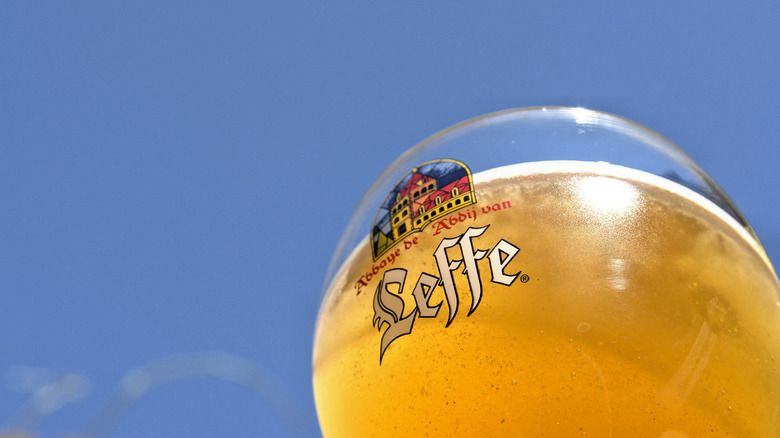
Similar to Hoegaarden, the modern Leffe brand indirectly carries on a tradition from the Middle Ages. In this case, it's from Notre-Dame de Leffe, an abbey of Premonstratensian canons that originated in 1152 and began brewing beer in 1240. The practice, however, was abandoned in 1809 and didn't return until 1952. The brand joined the Artois brewery in 1977, which eventually led to its inclusion in the AB InBev portfolio. Though no longer a Trappist beer (where brewing is overseen by abbey monks), the abbey still receives royalties from Leffe sales.
Leffe Blonde is a perfect entry into the world of Belgian beers, offering some of the trademark flavors that distinguish the country's beer styles in an easy, approachable way. A notable malty sweetness balances out the higher alcohol (6.6% ABV) here, and subtle notes of fruit, vanilla, clove, and white pepper add complexity without overwhelming the palate. Considering these elements together, when compared to other golden-hued beers on this list, Leffe Blonde offers more flavor, intricacy, and even mystery that's sure to delight beer drinkers with a wide range of palates.
2. Franziskaner Premium Weissbier
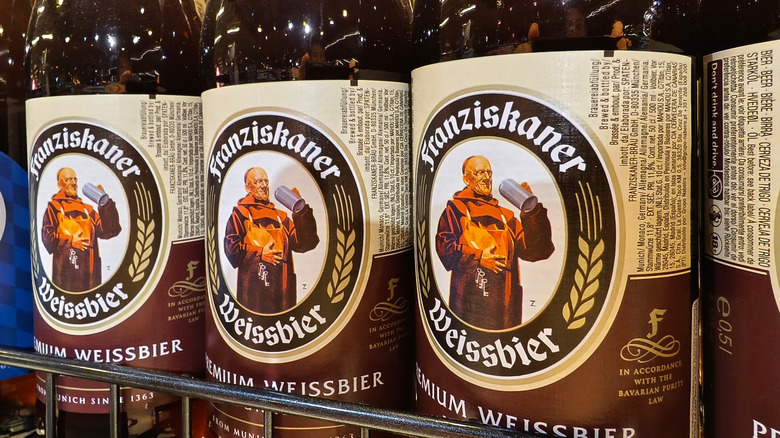
A classic Hefeweizen — a German style of wheat beer that uses malted wheat — Franziskaner Premium Weissbier is known for its multifaceted onslaught of banana, citrus, clove, and bread. Unlike the aforementioned Belgian style of wheat beer, which adds spices for flavor, these notes derive from the wheat itself, as well as the fermentation process. Compared to Hoegaarden, Franziskaner's slightly higher scores might be attributed to stylistic preferences, as both execute well within their respective categories. In this case, the use of malted wheat provides a bready richness that unmalted wheat simply cannot.
While the original Franziskaner brewery dates all the way back to 1363, its now-famous weissbier did not debut until 1964, originally under the name Spaten Champagner Weissbier (by then, the brewery had merged with Spaten). "An essential hefeweizen," described one reviewer, who added that it is the "platonic ideal of a German Hefeweizen." It features, they continued, a "beautiful banana like aroma," and is "not overly effervescent or fruity, yet [is] still refreshing with a pleasant complexity. If you don't like this style, this beer will make you a fan of this style."
1. Spaten Optimator
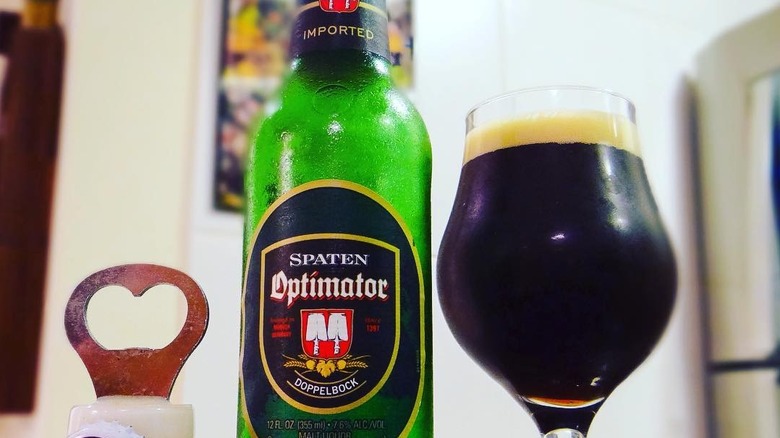
Though German Doppelbock lager is not particularly popular in the United States — especially compared to the light lagers discussed above — it's nonetheless a classic style worthy of consideration, as evidenced by high scores from reviewers. Spaten Optimator, it turns out, makes up for its lack of popularity with deliciousness, offering a malt-forward flavor featuring nuances of caramel, dark fruits, and a subtle earthiness. Of all the beers on this list, Optimator is the most likely to be confused for a craft beer.
Doppel, or in English, "double," refers to the fact that the malt is used twice, creating more sugars in the brewing process. In practical terms, this means higher alcohol content — in this case, 7.6% ABV — along with a darker color and sweeter flavor. It's by no means a lawnmower beer, but it is lovely to sip on a chilly evening.
Spaten is one of the six breweries that comprise the Club of Munich Brewers, which are permitted to sell Märzenbier, the official brew of Oktoberfest. The brewery dates to 1397, but over time it merged with Franziskaner, then Lowenbrau, and eventually became part of AB InBev.
Methodology
AB InBev obviously produces more than 14 beers, so we had to select a subset to feature. As such, we included a mix of both popular beers on the U.S. market as well as interesting beers worthy of discussion. In addition, we endeavored to represent each of the key countries featured in the AB InBev portfolio, including the U.S. and Germany — which have very different styles of beer – as well as Belgium and England.
For ranking, we averaged every rating posted on popular beer review sites Untappd and BeerAdvocate as of early January 2026, calculating a singular score for each beer to use for ordering. For commentary, we looked at the text of online reviews on the aforementioned sites and incorporated personal experience.