

For The Most Nutritious Potatoes Always Look For This One Sign
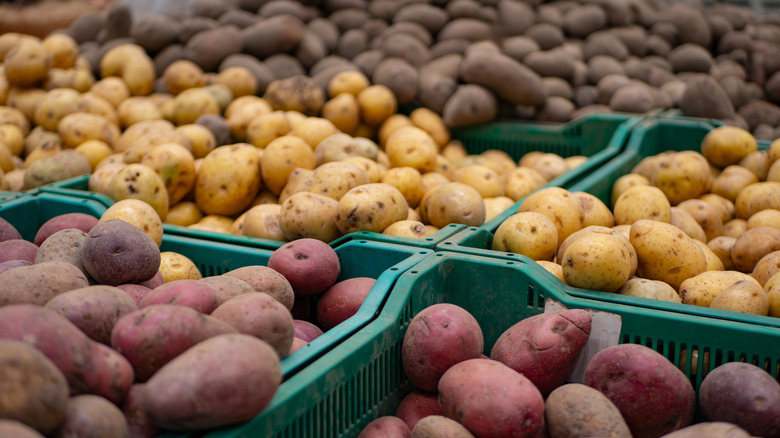
Are potatoes healthy or aren't they? They may have been demonized by the low-carb crowd, but they actually have quite a bit to offer nutritionally — vitamins, minerals, carbohydrates, fiber, and antioxidants. "Potatoes have been linked to a number of health benefits, including cardiovascular health, blood pressure reduction, improved lipid (cholesterol) profiles, higher nutrient intake, and decreased inflammatory markers," said Avery Zenker, a registered dietitian who writes for MyCrohnsAndColitisTeam. Not all potatoes, however, are created equal. One sign that some potatoes are healthier than others is the color of their flesh.
As a general rule, Zenke explained, "Store-bought potatoes vary in nutritional content based on flesh color and variety, with yellow- and purple-fleshed potatoes generally offering higher levels of certain beneficial compounds compared to white-fleshed varieties." However, Zenker says it's difficult to rank potatoes by nutritional values because some varieties will have more of one nutrient, while others will be rich in another. Plus, no matter which type you pick up at the store, you'll get some health benefits – starchy tubers have more potassium than bananas, more fiber than a slice of whole wheat bread, and as much vitamin C as a mandarin orange, she says. But if you want to get the most nutritional impact out of your spud, Zenker says the paler the potato flesh, the less nutritious it's likely to be.
Purple potatoes are super healthy
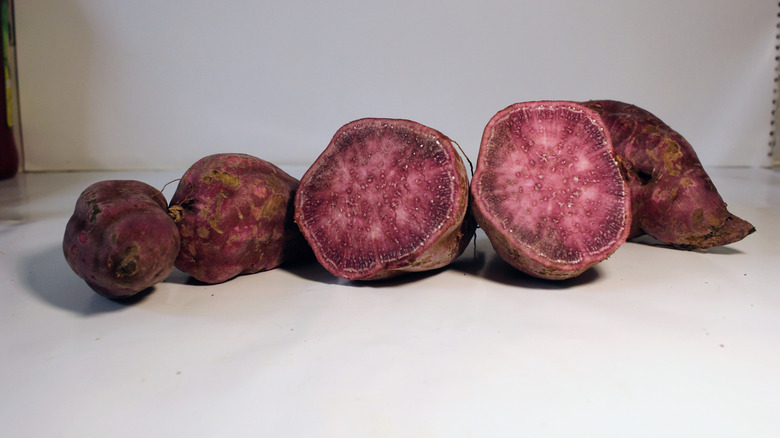
"Purple potatoes have the highest content of polyphenols and antioxidants, particularly anthocyanins," Avery Zenker said. "Purple potatoes contain similar vitamins and minerals to other potato varieties, but they're usually higher in antioxidants." In fact, a Colorado State University study published in the Journal of Food Processing & Technology found that purple potatoes have similar antioxidant levels to both blueberries and pomegranates. These purple and red foods, along with blood oranges, cherries, plums, eggplants, red cabbage, red onions, radishes, and black beans, are rich in anthocyanins that can support heart, brain, and gut health.
Among the purple potato varieties are All Blue, Purple Majesty, Purple Peruvian, Violet Queen, and Vitelotte. They tend to be in the medium-starchy range, similar to Yukon Golds, and as such, can be used to make fluffy mashed potatoes. If you go rustic-style and leave the skins on, you'll not only maximize the nutritional benefits, but also add extra color and texture to an otherwise monochromatic side dish. They also work well in home fries, although they're not quite starchy enough for gnocchi or latkes.
Other potato colors are no slouches, either
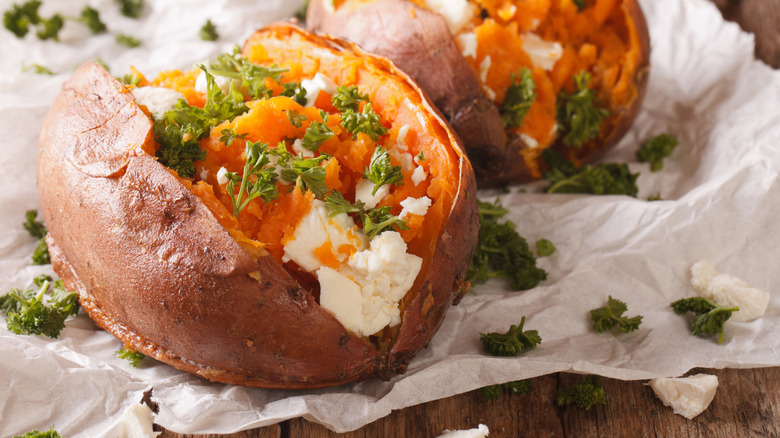
Red potatoes, such as Highland Burgundy Red, Morada, and Mountain Rose, also contain anthocyanins, and, according to Avery Zenker, "The red color of red-fleshed potatoes indicates a high concentration of polyphenols, particularly carotenoids. These polyphenols have antioxidant properties that can promote health by reducing inflammation." Some red potatoes are also among the best varieties for holding their shape in soup due to being more waxy than starchy. Orange-fleshed varieties — sweet potatoes or yams — are high in vitamin A, with one potato providing nearly twice the amount recommended daily. "Sweet potatoes are lower in starches and higher in sugars than other types of potatoes," she said. "They also tend to be higher in soluble fiber."
Yellow potatoes such as Mayan Gold and Yukon Gold have a lower level of polyphenols than purple, red, and orange varieties, but they're still higher in these nutrients than white potatoes — and they contain more vitamin C. Even the palest potatoes have their benefits, though. "White potatoes contain more chlorogenic acids (a type of polyphenol) than a cup of coffee, which is known for its high concentration of this antioxidant," Zenker said. "Chlorogenic acid has been linked to health benefits such as reduced risk of cancer, cardiovascular disease, high blood pressure, stroke, Alzheimer's, and Parkinson's." They also contain decent amounts of potassium and magnesium. What's more, Russets, a popular type of white potato, are the best variety for making french fries. (Even if Zenker, in her duty as a dietitian, did point out: "Deep-frying is considered the least nutritious preparation method.")