

The Affordable Costco Butter That Rivals Kerrygold
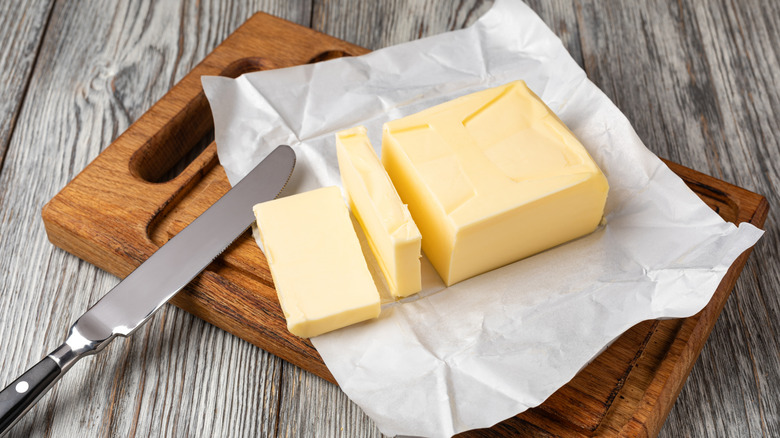
Costco is king when it comes to cupboard staples, with everything from Kirkland brand seasonings to frozen essentials offering amazing quality at bargain prices. But there are a few items that I usually don't like to take a risk on. If there's an expensive version I love, I'll stick to it. One of these is butter. As a real salted-butterhead, you can claw my Lurpak Slightly Salted and pricey, imported Kerrygold butter from my cold dead hands. Or, that used to be the case, anyway. Because after sampling Costco Kirkland Signature Grass-Fed Butter, I just might be a convert.
I'm not the only person to find themselves wooed by Costco's premium offering, either. Dairy debates abound on Reddit, with many users comparing Kirkland Grass-Fed to Kerrygold and other butters; and either declaring a near-draw, or announcing Kirkland as the winner. One Redditor compared the two butters side by side, finding, "The Kirkland was a noticeably deeper yellow color and tasted richer to me," while another claimed that after years of eating Kerrygold, one box of Kirkland Grass-Fed converted them due to its "superior creaminess." None of these reviews even mention the price, but it certainly hasn't escaped my butter-hungry notice that Kirkland Grass-Fed Butter is considerably cheaper than Kerrygold, at around $12 to $15 for four eight-ounce sticks compared to Kerrygold's not inconsiderable $17 to roughly $19 for the same weight. While specific prices vary depending on your location, Kirkland Grass-Fed almost always costs several dollars less than Kerrygold.
Comparing Kerrygold and Kirkland Grass-Fed Butter stats
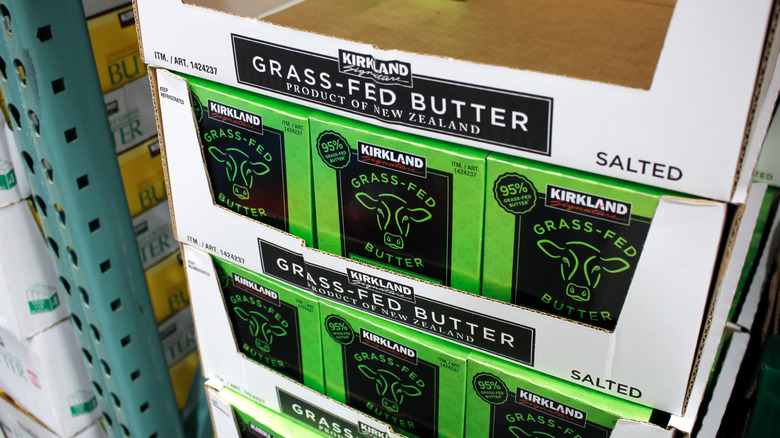
For those who are serious about making the swap, we need to compare more than just the price of these two butters. Unsurprisingly, they're nutritionally very similar, with 11 grams of fat per one-tablespoon (14-gram) serving. Of those 11 grams, Kirkland butter has seven grams of saturated fat, while Kerrygold has 8 grams. The products do differ in sodium content, which makes sense, as Kerrygold tastes noticeably saltier, in line with its 100 milligrams of sodium versus Kirkland's 75 milligrams. Kerrygold does offer an unsalted version while Kirkland doesn't appear to, so you can mix and match your Kerrygold butters if you want less sodium on occasion.
While Costco has avoided copycat packaging for its high-end butter, there are similarities. Like Kerrygold, Kirkland Grass-Fed is wrapped in shiny paper featuring a cow, and its green and black label features the butter's country of origin. But it's not Ireland. Instead, Costco sources its grass-fed butter from New Zealand, a country with a similar climate to Ireland and a reputation for rich, golden butter like the beloved Anchor Pure New Zealand Butter. So, while these battling butters' origins aren't the same, they both come with a pedigree. Likewise, both Kirkland Signature Grass-Fed Butter and Kerrygold are made with milk from cows that eat mostly grass, producing a product that's not only superior in flavor to standard butter, but also potentially higher in some vitamins, minerals, and omega-3s. Overall, these two products are similar enough by the numbers that it has to come down to taste, versatility, and of course that notable difference in price.
How the two butter brands hold up for eating and baking
I'm one of those butter-on-the-counter people — sorry. And, since Kerrygold comes in large, European-style blocks, I usually cut about a quarter to leave out. Costco's butter imitates this Old World-style portioning, so I gave it the same treatment. Often, cheaper, store-bought butters, and even U.S. classics like Ina Garten's favorite Cabot Creamery butter, develop an oily texture and lose flavor if they sit out for more than 24 hours. This doesn't happen with Kerrygold, and Kirkland Grass-Fed held up just as well.
Kerrygold usually ranks as one of the best butters according to professional bakers, but those bakers may be sleeping on Kirkland Grass-Fed. I used it for shortbread and pastry, both of which came out with the same nutty, rich flavor I usually get with Kerrygold Unsalted. Since Kirkland Grass-Fed is less salty than Kerrygold, using salted butter wasn't an issue, and I just cut the "pinch of salt" from my recipes. For more complex or precision baking tasks, however, the lack of an unsalted option might be a sticking point.
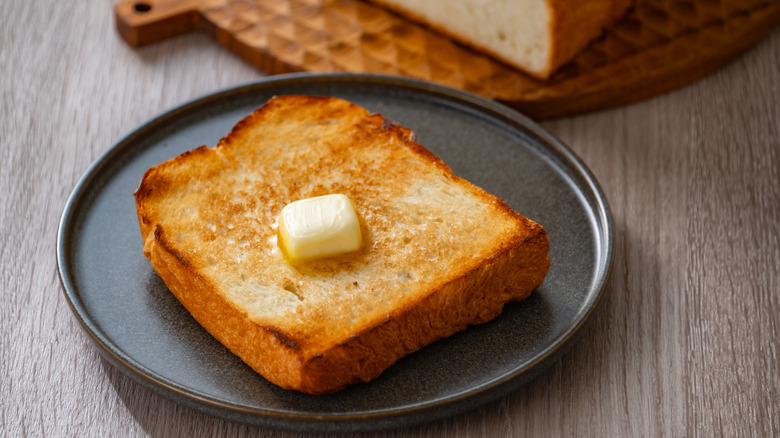
I had the opposite experience when spreading Costco's butter on toast. It wasn't quite salty enough for me. But it's easier to sprinkle a little additional salt onto toast than it is to remove it from a butter that's saltier than you like, so it's not an issue that would stop me buying Kirkland Grass-Fed again. The butter held up in a starring role (spread thick, on white toast), and didn't split or feel thin and greasy when it melted. So, while taste is a personal thing, it seems like these two products are of genuinely comparable quality, making Kirkland's offering a massive bargain. All Costco needs now is an unsalted grass-fed option.