

The Common Cold Dish You'd Likely Be Served On An Airplane In The 1930s
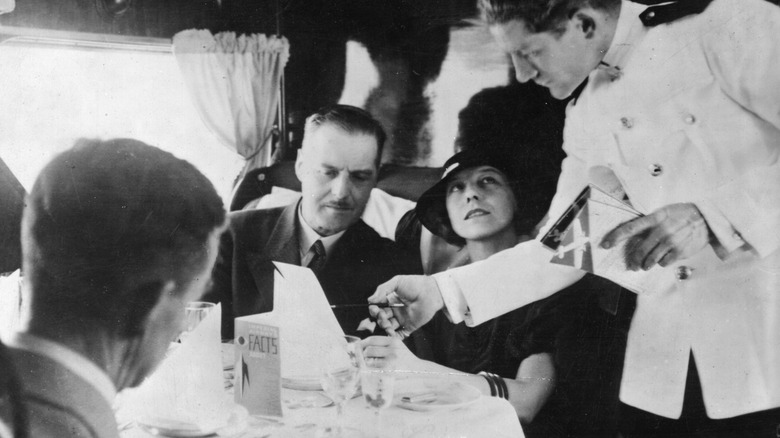
The phrase "food served on an airplane in the 1930s" brings to mind some extreme visuals: primitive food, like salt pork or a bowl of gruel, befitting an industry in its infancy. That's far from the truth. In fact, the first recorded in-flight meal, served aboard a French Air Union flight in 1927, featured lobster salad, cold chicken, and salad niçoise, with the choice of champagne, wine, or mineral water to wash it down.
However, most airline food options during the 1930s weren't that extravagant (and in fact, Air Union nixed that service just two years later). Air travel during the early part of the decade was a trial — even more than it is today — with passenger planes only reaching speeds of 120 miles per hour and cross-country flights taking over 24 hours with frequent stops.
Food served aboard these flights was no-frills and designed largely to distract passengers from the turbulence and accompanying air sickness that were commonplace on such grueling early airplane trips. Cold fried chicken and sandwiches were often handed out in picnic baskets by co-pilots (flight attendants wouldn't become an industry standard until the middle of the decade) to passengers as they boarded the plane. Cold fried chicken was certainly no lobster salad, but it's also not the mystery meals that have many travelers wondering what the deal is with airline food.
The evolution of airline food
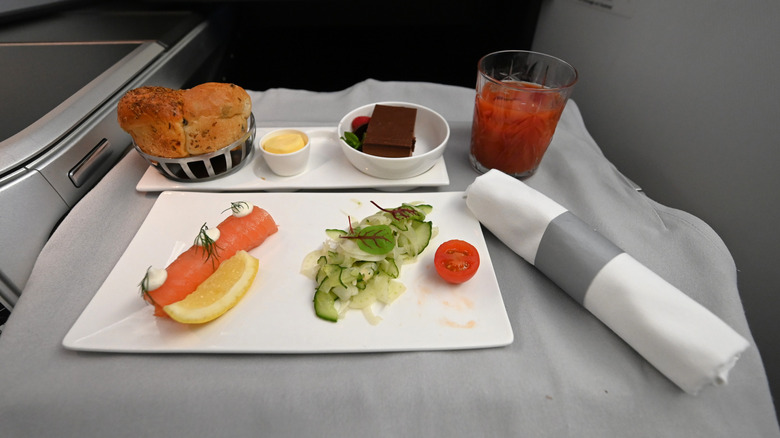
Innovation helped airline dining take off from this Yogi Bear-like stage, within a few years. As flight attendants assumed the role of delivering food to passengers in the mid-1930s, larger planes like the DC-3 allowed United Airlines to install in-flight kitchens, which could serve both cold and hot food, in 1936 (today, staff prepare in-flight meals in kitchens on the ground, which is then kept warm in convection ovens on board the plane). Frozen food was introduced to airline dining in the 1940s, while companies like American, TWA, and United added a touch of class with flatware, china plates, and menus designed by European chefs. By the 1950s, Pan Am travelers could dine on roast beef carved on a rolling tray, while those in first class could nosh on caviar.
What brought airline dining to its current, less-than-desirable state? The simple answer is money. The Airline Deregulation Act of 1978 allowed airlines to set their own fares. In the scramble to win the favor of passengers, major commercial airlines reduced ticket prices, which they offset by eliminating amenities like free, high-quality on board dining. Some airlines dropped meal service altogether, though mostly for economy class passengers on domestic flights. First class travel and international flights, as well as flights through international carriers, however, have remained largely untouched; the snack list alone on airlines like Singapore or Emirates may make you want to renounce your U.S. citizenship. So the era of dining in "Mad Men"-like splendor and extravagance isn't entirely over — you just have to pay a lot more for it.