

The Case For Buying Frozen Blueberries Over Fresh
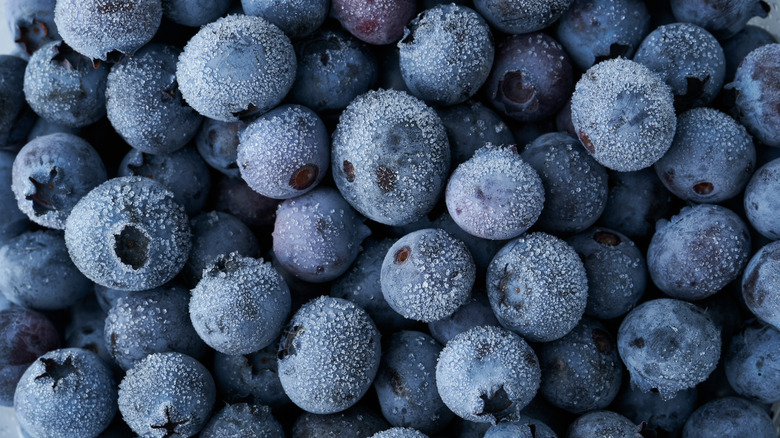
Don't believe the lies of the Fresh Fruit Mafia! It is fake news that fresh is always best, particularly when it comes to frozen blueberries. Not only are there times when the frozen product is as good as its fresh counterpart — there are actually instances when the iced berries are preferable.
The Takeout spoke to Inez Be, director of marketing at the U.S. Highbush Blueberry Council, and Devon Golem, PhD, RD, LDN, a registered dietician providing food and nutrition education. These experts shared all the reasons why you should keep a stock of blueberries in your freezer.
First, and perhaps most importantly, frozen blueberries just taste good. "Frozen blueberries are specially picked for ripeness and frozen at the peak of freshness, straight from the farm," Be explained. "They're reliable and affordable, consistent in quality and taste, and easy to keep on hand and enjoy whenever you need them for a recipe."
Are frozen blueberries as healthy as fresh?
When asked about the nutrition of frozen blueberries, Inez Be had a clear answer: "They have excellent nutritional value." Devon Golem shared, "Research shows that blueberries can be frozen for up to three months without a decrease in antioxidants." This means they have the same antioxidant content as fresh berries. They'll largely maintain their quality, as well as their fiber, vitamin, and mineral content, for up to a year in the freezer. In fact, "Freezing actually makes the powerful antioxidants more available to our bodies because ice crystals break down the berry's cell structure, making it easier to access the antioxidants in the skin," Golem explained — this is according to research out of South Dakota State University (via Science Daily).
"They're a great way to get a healthy serving of fruit, especially for those days when your grocery supply is running low," Be said, making them a comparatively affordable source of vitamins A, B6, C, E, and K. "They are much cheaper than fresh ones since they are shelf-stable for longer. There's also no waste from berries going bad in the fridge," Golem added, providing an important explanation as to why overlooking frozen produce at the grocery store is really costing you.
The best ways to use frozen blueberries
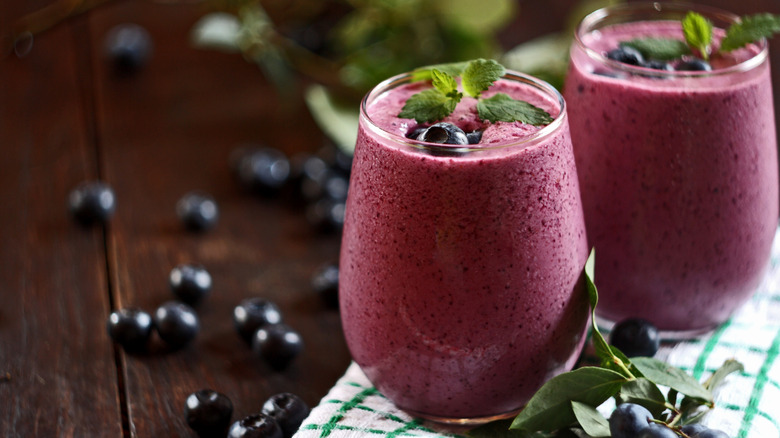
These are the dishes best suited for frozen blueberries, according to Devon Golem: "For everything that gets cooked or blended — smoothies, muffins, pies, sauces — frozen works perfectly and may even be better!" Inez Be echoed the suggestion of smoothies, adding, "They're also the ideal berry for smoothies because of their sweetness and appetizing vibrant purple hue — your smoothie will stay colder and purple for longer."
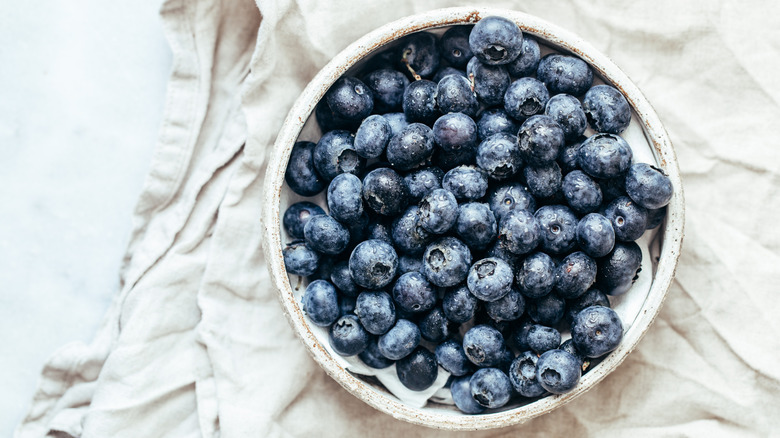
"Frozen and fresh can be used interchangeably in most cases, though fresh blueberries are a little easier to take with you on the go as a snack," Be shared. "The freezing process changes the berry's texture, making them softer when thawed," Golem explained, which accounts for why they aren't ideal for straight-up snacking.
Save the fresh blueberries for when you want that snappy, juicy texture, like in salads or on top of a bowl of rich and silky oatmeal. In other words, "Use fresh when the berries will be uncooked and visible," Golem advised. "Think garnishes, parfait toppings, or fresh fruit tarts."