

How Dry Aging Works To Enhance The Flavor Of Meat
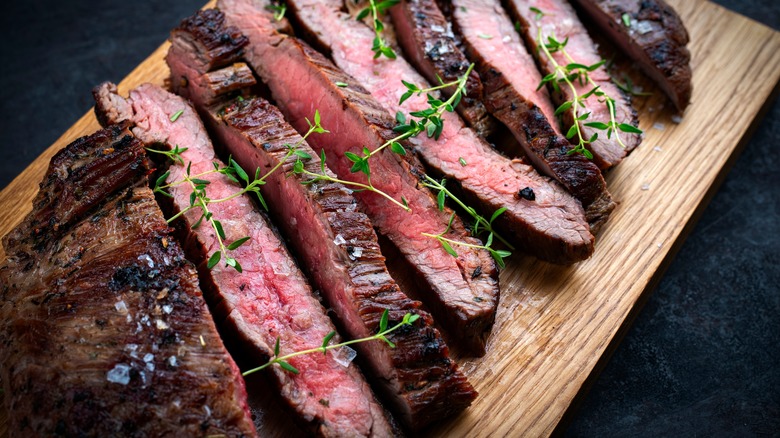
Perhaps you've heard of dry-aging before, a process which involves letting a cut of meat sit by itself for weeks. This usually involves beef but you can dry-age fish, it's just much trickier. There's a fine line between dry-aging meat and letting it spoil. If you safely dry-age meat at home, the beef will ideally be kept in a low-moisture environment like a separate mini-fridge, which makes it harder for harmful bacteria to grow. This keeps the beef from spoiling while it ages. Its flavor can change a lot, too. But what exactly is happening to your meat in there? For a more in-depth answer, we spoke to Joonas Jokiniemi, chef and founder of Grill Smoke Love.
Jokiniemi has a straightforward way of describing how dry-aging works: "You're giving beef a controlled 'rest' in the cold with airflow, and you're letting time do two jobs. First, the meat loses moisture, so everything tastes more concentrated — like reducing a sauce. Second, the meat's natural enzymes start breaking down proteins, which improves tenderness and builds that deeper, nutty, steakhouse-y aroma." When done right, the least flavorful parts of a steak (the water inside it) will be gone and the fatty parts of the steak will stay tender. You should still trim the thick, dried out edges afterward. The longer you dry age a cut of meat, the more intense that flavor will be and you'll notice a strong, concentrated aroma as well.
Aging without moisture intensifies beef's flavor
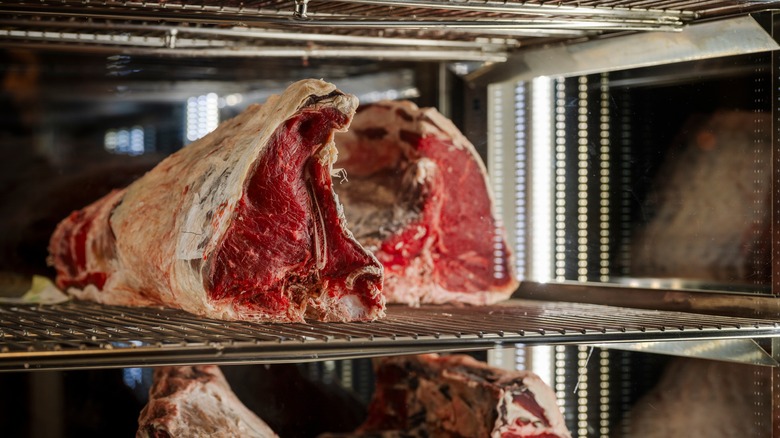
Jokiniemi explains that there's no exact formula for how long to dry-age beef to achieve the desired taste. Instead, he provided some benchmark dry-aging times: "For most people, 21–28 days is the best balance; you get that richer dry-aged character without going into 'funky' territory. Around 14 days you'll notice a difference, but it's still pretty classic steak." It's not recommended for everyone, but past 28 days is when the beef takes on a tenderness and pungency that dry-aging aficionados seem to love. Once you've eaten it enough, it might be hard to notice any flavor in a steak which hasn't aged past a month.
To address one final point, is dry-aging better suited for leaner or fattier cuts of steak? Jokiniemi prefers to use fattier, marbled cuts like ribeye, strip steak, and porterhouse, saying cuts like these seem "built for it." According to him, "They're big enough that trimming loss doesn't wreck the value, and the fat helps keep things lush after cooking." The marbling and fat will absorb the concentrated flavor better, whereas a lean cut will be drier and tend to shrivel up. No matter what cut you use and how long you leave it, once it's removed from its aging chamber a dry aged steak should only stay in the fridge for a few days, so eat it soon.