

11 Foods You'll Find Served In Federal Prisons
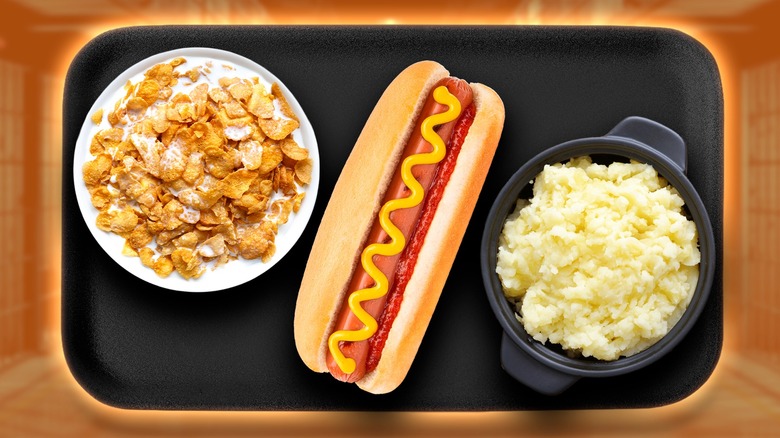
Prison fare (and why prisons really need better food) has been a hot topic for decades, the subject matter of jokes, rumors, and even pop-culture caricatures depicted on award-winning TV shows (looking at you, "Orange is the New Black"). But the reality of what's actually served in federal prisons is often far different. Prison meals are designed around cost, efficiency, and the ability to be prepared in large quantities, so menus tend to rely heavily on refined carbohydrates (think white bread, pasta, rice, and mashed potatoes), which are both inexpensive and filling.
While some type of protein is typically included at each meal, it's often served in processed or budget-conscious forms (think ground meats, patties, or loaf-style dishes). Vegetables also appear on prison trays, but they're commonly canned. Fresh produce isn't entirely absent, but it's not usually the centerpiece of the meal (or the freshest or highest quality). Meals are nutritionally adequate, but often repetitive, with menus recycling the same ingredients (albeit prepared in slightly different ways). Suffice to say, taste and variety noticeably take a back seat to practicality.
The foods featured in this article are based on publicly available information, plus firsthand anecdotes shared online from users who claim to have personally spent time in federal prison. While these accounts can't be independently verified, they consistently describe similar meals served across different federal facilities. Join us as we (prison) break down 11 foods that are commonly reported to appear on federal prison menus.
1. Hot or cold cereal

Cereal is one of the most frequently served items on federal prison menus, but it's not the popular breakfast cereals people would recognize as a treat (Cap'n Crunch is not serving time here). Based on nationally posted official menu calendars and repeated commentary from people who claim to have spent time in federal prison, cereal is typically hot or cold, generic, and unsweetened. Cold options are most often corn flakes or bran flakes (one alleged former inmate called them "cardboard flakes"). Hot cereal usually means oatmeal or grits cooked in bulk and portioned out frugally (no all-you-can-eat buffets behind bars).
Cereal probably appears so often because it checks every institutional box (inexpensive, shelf-stable, easy to store, fast to serve to large numbers). From a nutritional perspective, it delivers carbohydrates, albeit usually lacking fiber or fresh ingredients. Multiple (unverified) firsthand accounts online mention cereal as one of the most repetitive, mainstay items on the prison breakfast menu, sometimes served several days a week with little variation. Texture and consistency can vary depending on preparation (with hot cereals especially), but across the board, inmate expectations remain low surrounding this breakfast staple.
Clearly, this isn't your best breakfast cereal ever, Fruity Pebbles feast in front of Saturday morning cartoons situation. This is functional fuel, and a core reflection of how prison food prioritizes practicality over taste.
2. Milk
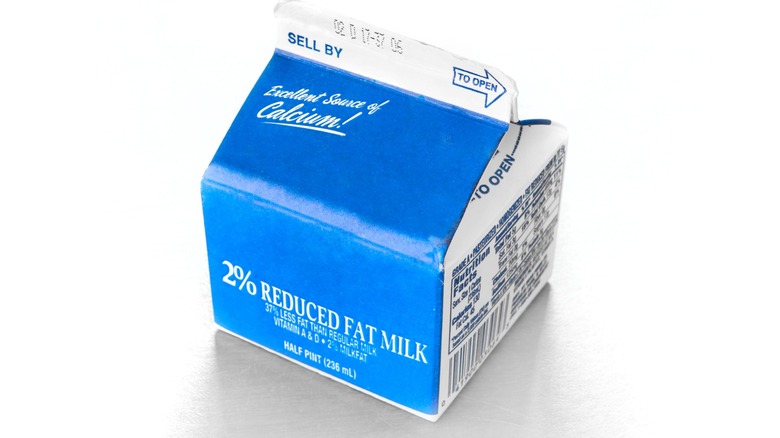
Milk (mostly skim) makes a regular appearance on federal prison menus, most often seen at breakfast, and sometimes only offered once per day. According to official menu calendars and unconfirmed but repeated accounts from various individuals who claim to have been incarcerated in federal facilities, milk is provided in small portions and in formats that can vary by institution.
Some facilities are said to distribute milk in individual small cartons (similar to the ones we would see at a school cafeteria, for example). Some other facilities reportedly use plastic bags or bulk-dispensed servings. There are also accounts claiming milk comes from prison-operated or nearby farms, though sourcing and quality appear inconsistent across locations. Temperature and freshness are frequent causes of complaint, with reports describing milk served past its expiration date. This makes sense, as refrigeration limitations and large-scale distribution would make consistency difficult (hello, soured milk), especially in older facilities (most prisons are no spring chickens).
Nutritionally, milk serves a functional role, providing protein and calcium, and helping bolster otherwise pretty bare-bones breakfasts largely dominated by refined carbohydrates. But portion sizes are small, and refills or second helpings are not typical. Across many unverified personal accounts, milk is described less as a beverage and more as a regulated component of the meal. Much like most prison food, it appears to be there simply to meet requirements, not to cater to inmate preferences.
3. Cold pastries or breakfast cake

Despite the word "cake," breakfast pastries in federal prison are not nice desserts in any traditional sense. Based on official menu calendars and consistent anecdotal reports from people who claim to have spent time in federal prison, these breakfast items are cheap, processed baked goods designed to boost calorie counts more than bring comfort (think more vending machine square versus a slice of grandma's made-from-scratch pound cake).
Most often described as breakfast cake or coffee cake, these pastries are served cold and pre-made in bulk. They're dense, dry, and high in refined carbohydrates, with little nutritional value beyond the necessary calories they provide. Freshness varies, but many accounts mention staleness. Prison pastries exist largely to meet energy requirements, without increasing cost or preparation time. They're easy to store, don't require reheating, and can be distributed quickly during short breakfast windows. And while they may technically be sweet (some past inmates even mention icing), multiple firsthand accounts opine that the flavor is definitely nothing to write home about.
It would make sense that because prison breakfasts are often light, basic pastries like these could help fill space on the tray (and in inmate tummies). Still, they're frequently described as one of the more disappointing items on the menu, especially given how the word "cake" could set expectations that (clearly) aren't being met. Shame on this cake, the incarceration tease.
4. Powdered eggs
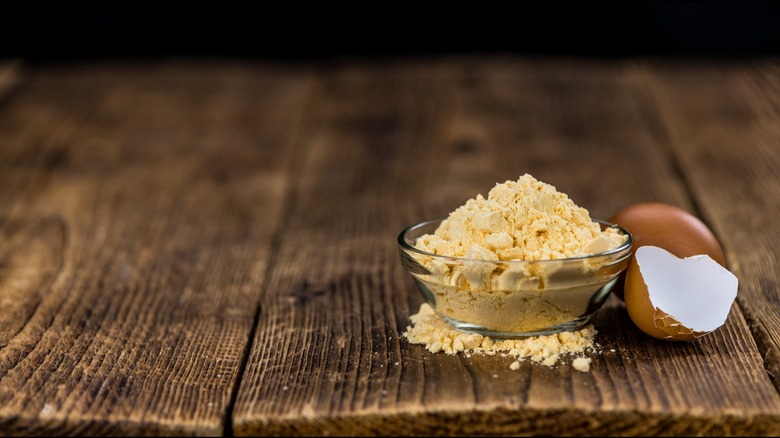
Americans everywhere have the American Egg Board (AEB) to thank for famously putting visions into our heads of "The Incredible Edible Egg" with its catchy sing-song slogan. But in federal prison, only one of these two promises is realized. Prison eggs may be edible (barely), but they definitely don't sound incredible. In fact, according to official menu listings and multiple online accounts from individuals who have attested to having been incarcerated, what may appear to be real eggs scrambled on a tray are often powdered or liquid eggs in disguise.
It would make sense that these types of eggs (which are reconstituted and cooked in large batches) would be served in a federal lockup. As for the taste? Reports slam seasoning (or lack thereof) as being bare minimum, or even nonexistent, with the eggs typically served only on weekends with pairings like bread or potatoes. Many firsthand accounts also describe the eggs as watery, runny, or oddly textured, depending on preparation.
It makes sense that powdered eggs would be favored by the federal system, because they're shelf-stable, cost-effective, and a staple item that is safe to store long-term. These characteristics are basically gold for institutional kitchens serving hundreds or thousands of people, not only because they help to reduce food safety risks, but also because they simplify inventory management. While not eggs-actly Michelin-worthy, anything that makes federal prisons more economically feasible and easier to manage is going to be a yes.
5. Hamburgers
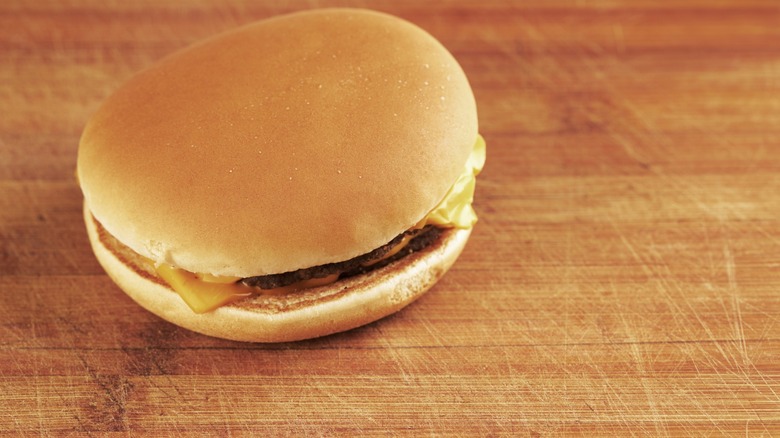
Famous fast-food hamburger slogans throughout the years have won us over by highlighting the quality, value, and customization possibilities of their iconic beef-between-bun offerings. Wendy's "Where's the Beef?," Burger King's "Have It Your Way," and McDonald's "I'm Lovin' It," all instantly come to mind. But when it comes to hamburgers served in federal prison (a common mainstay seen on the standard menu), these slogans don't hit quite the same way. "Where's the Beef" is a real question behind bars (these protein slices are quite thin, many made of fillers, including a lot of soy, masquerading as the OG moo ingredient of classic patties.
Suffice to say, federal prison burgers bear little resemblance to what most people think of as a hamburger. As for "Having It Your Way," federal inmates have it whatever way they get it (usually heavily processed patties cooked in bulk). Many accounts describe them as dry and bland, with buns being plain bread rolls, and toppings, if any, being scarce. Actual fresh veggies (think lettuce or tomato) are rarely present or limited when they are, and condiments may be rationed, if available at all.
While hamburgers do deliver protein and calories efficiently, multiple people claim firsthand experience with them being unremarkable (but not the worst of the worst) menu items in lockup. Inmates are decidedly not "Lovin' It." These patty-bun pairings are made to be filling, quick, and economical ... not adored.
6. Hot dogs

The good old American hot dog is another federal prison regular that pops up on the menu. But before you get excited, this is not your average backyard barbecue dog (think less juicy, loaded ballpark bite and more "Orange Is the New Black" skinny cafeteria faux-frank). Federal hot dog iterations may not be pretty (they aren't), but they are stacked (in the freezer, we mean ... multiples of them, forever). Standard service for these hot dogs is boiled or steamed, then plunked on plain white buns (if you get buns at all) before heading to disappoint inmates via handy tray.
Condiments are a hit or miss. You might get ketchup. Maybe there'll be a dab of mustard. You could just get nothing at all. Depending on the day, the facility, or the fussiness of the supply chain, it's all really a grab bag of mystery here. Speaking of mysteries, the federal prison hot dogs themselves are typically a mystery blend of meats and fillers (let's call them "protein-adjacent," and that's being generous).
Clearly designed with cost, not craving, in mind, they do the bare minimum nutritionally. There are protein and calories, but there is also a heaping helping (or should we say hurting?) of sodium sneakily hiding in those hot dogs. This should come as no surprise, because like most prison fare, hot dogs rely on refined grains and ultra-processed ingredients as their makeup (which makes many want to break up with them altogether).
7. Chicken patties or baked chicken
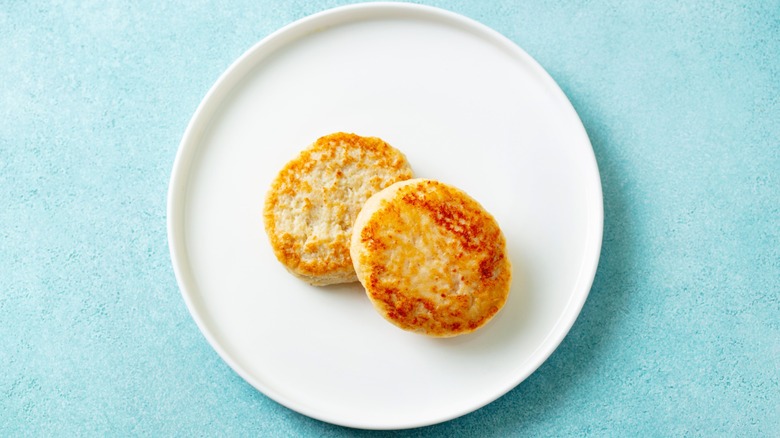
Chicken is one of the most commonly served (actual meat) proteins in federal prisons, usually appearing at least several times per week according to official menu calendars and repeated anecdotal recollections. There is no fried chicken a la KFC feathering this federal nest. Federal prison chicken patties are usually breaded, frozen, and reheated in bulk. Unsurprisingly, their texture and flavor are highly standardized, and seasoning is minimal (are you sensing a pattern yet?). These patties are often served with simple buns or starch-heavy sides (think mashed potatoes).
Baked chicken, when it is offered, is typically a modest portion (as is the standard with all federal prison fare). Quality varies widely. Some accounts from claimed past inmates describe it as dry or under-seasoned, while others seem to find it among the least guilty (on the sheer taste scale of first-time offender to serial offender) protein options available behind bars.
Despite this, there are still reported issues with freshness and consistency. And since the portions are controlled (translation: scant for some), and repeat appearances make the meals feel monotonous, seeing poultry once again makes the clucker near instantly lose its lustre. So, while inmates may call foul at the repetitive nature of this fowl, chicken is a win with the federal pen, thanks to its reliability, affordability, and versatility to be incorporated into near-endless recipes (and it is).
8. Spaghetti

It's spaghetti night in federal prison, and if you're imagining a steaming bowl of cacio e pepe or a forkful of Bolognese, you've clearly never seen a government-issued chow tray. This pasta is decidedly a dish designed by government bureaucrats, not executive chefs. According to accounts, in the federal penal system, "al dente" is not only a foreign word, it really is a foreign concept, too. The noodles are boiled in large vats, and by the time they hit an inmate's tray, these pasta sticks have either been barely cooked (so still lowkey crunchy) or have cooked so long they've reached institutional mush mode.
The sauce (officially listed on the BOP National Menu) could be considered a thin, crimson casualty by culinary standards (highly processed and savagely salty, with no fresh ingredients to be seen for a country mile). No fresh herbs or sun-ripened tomatoes, and if there is meat (big if), chances are it's a minuscule amount of "mystery protein" that is stretched further than a white lie on a Sunday at confession.
Spaghetti night doesn't have to be announced with an invitation, because everyone knows it's coming (it's on constant rotation behind those bars). While these pasta strings won't win any taste tests anytime soon, spaghetti could be considered the logistical dream of a system tasked with feeding thousands on a fixed budget.
9. PB&J or bologna sandwiches

Cold sandwiches are a familiar sight in federal prisons, especially in sack lunch form. Official menu calendars and repeated firsthand recollections describe lunches built around a single, pre-assembled sandwich (most often PB&J or bologna) wrapped up and handed out cold, no other choices offered (and definitely no customizations to consider).
But this is not your ideal PB&J sandwich. As with everything else in the government lockups, the construction of this rudimentary sammie is simple by design. This PB&J usually means white bread with thin layers of peanut butter and jelly, while bologna sandwiches are stripped down to a single slice of processed meat (cheese if you are lucky) between bread (often without condiments, lettuce, or anything resembling a fresh add). Suffice to say, if Martha Stewart ever considered herself having "elevating" prison food during her "Camp Cupcake" stint, this is not where it happened. From an operations standpoint, sack lunches are cherry. They can be assembled in advance, stored easily, and distributed quickly in times of necessity without the need for reheating or any special equipment.
On the nutrition front, all we can see is a stacked smattering of refined carbohydrates and fats in sammie form. While these makeshift, mobile "meals" seem to meet basic calorie requirements, they do little to satisfy or sustain. People who've described these lunches often mention how repetitive they feel, especially when served multiple days in a row (and they often are).
10. Powdered drinks (sometimes fortified)

Powdered drink mixes are a set fixture in federal prison mess halls, appearing like clockwork at lunch and dinner (sometimes even breakfast) with the same institutional charm (we speak in jest) and monotonous reliability as the drab, nondescript trays they're perched upon. Official menus and alleged firsthand reports recall these beverages being the standard alternatives to water (forums filled with mentions of brightly colored liquids made from a mix of industrial powders and served chilled — at least you hope — on a good day).
Essentially a generic version of Kool-Aid (though many former prisoners call this neon libation by the brand name, we highly doubt Uncle Sam stepped up to foot the bill to fund a single extra penny to go "gourmet" here). So let's just call them powdered drinks, with a taste described as artificial or chemical. Despite the yuck factor of flavor, many of these powdered drinks serve a vital function beyond simple hydration. Because prison diets are notoriously lacking in fresh fruits and vegetables, these Kool-Aid-esque concoctions are fortified with essential vitamins and minerals. In this way, the drink goes rogue in a way, fulfilling an unexpected role of supplementing nutrients woefully lacking in the federal prison sea of processed foods.
While inmates may not favor the liquid mystery mixes, they might want to thank them ... because they seem to be doing the most behind the scenes (bars?) to prevent malnutrition among inmates.
11. Mashed potatoes
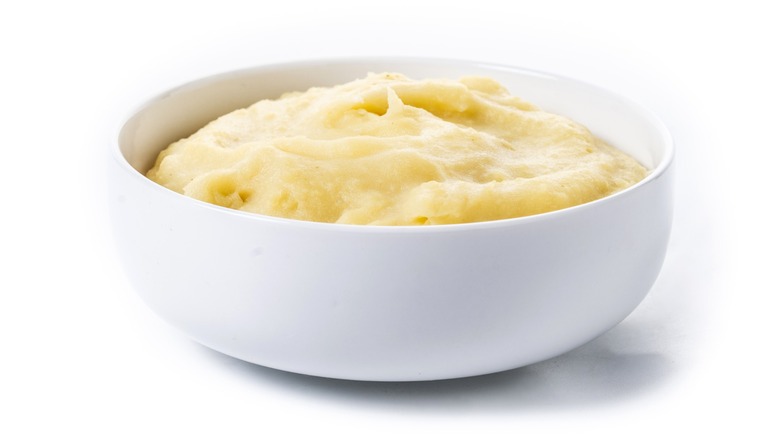
Mashed potatoes (mountains of them) are one of the most frequently mentioned side dishes in discussions of federal prison food. Official menu calendars confirm their regular presence in the prison meal Rolodex, and countless alleged firsthand accounts from people who claim to have served time describe the starchy mounds as nearly constant companions to most every mess hall meal. Often made from flakes or dehydrated potato mixes, these mashed potatoes are prepared in large batches and portioned out modestly (miserly?). The texture is typically soft and uniform, with little variation.
The flavor on its own is said to be minimal (surprise, surprise). To compensate for this lack of spice and a real zero ZING situation, gravy is frequently added. In fact, many online commenters self-ascribing as past federal inmates mention potatoes slathered in gravy. This dish's appearance as a mainstay on federal mess hall menus should come as no real surprise, since mashed potatoes are a popular staple in most institutional settings. This popularity stems from their being cheap, filling, and easy to whip up in large amounts to feed equally large numbers.
These spuds (albeit pretty bland and boring) are owed further props since they can be easily paired with nearly any protein ... or anything else for that matter. Nutritionally speaking (or sighing in this case), while mashed potatoes provide calories, since fresh vegetables rarely accompany them, they just shine a brighter spotlight on the heavy reliance on starches across federal prison menus.