

Drink From Plastic Bottles? Here's How Many Extra Microplastics You Consume Every Year
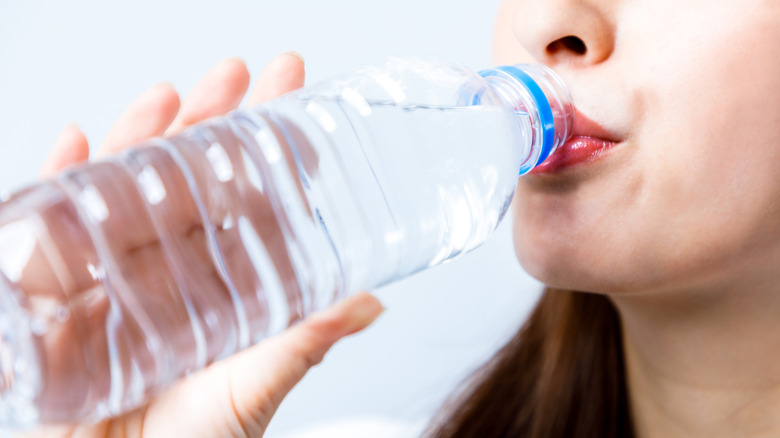
While bottled water is convenient, especially when safe drinking water is unavailable, numerous studies have revealed that it might be wise to hold off on drinking it, if you can. Research on microplastics, which are small plastic particles less than five millimeters in size that break down from larger plastics, have revealed that, on average, people consume a range of 39,000 to 52,000 microplastics from food and drinking water, but those who drink daily from single-use plastic water bottles consume an additional 90,000 microplastics every year.
To put that amount into perspective, a single microplastic particle can range in size from one nanometer, which is undetectable to the naked eye, to five millimeters, which is the size of a pencil-top eraser. Multiply either by 90,000 and that gives a visual idea of the annual amount of plastic ingested from water bottles. And most of the microplastics in bottled water don't come from the bottle itself: They are also released from the filtration system used by beverage companies.
Aside from the alarming amount of plastic you could be consuming from microplastics, the chronic health risks associated with them may be even more concerning. Microplastics can enter the bloodstream and disrupt the immune, endocrine, and nervous systems, which can lead to hormonal imbalances, reproductive issues, and impaired cognitive function. The accumulation of microplastics in vital organs can also contribute to cell mutations that increase the risk of cancer.
Ditch you daily single-use water bottles and their microplastic load
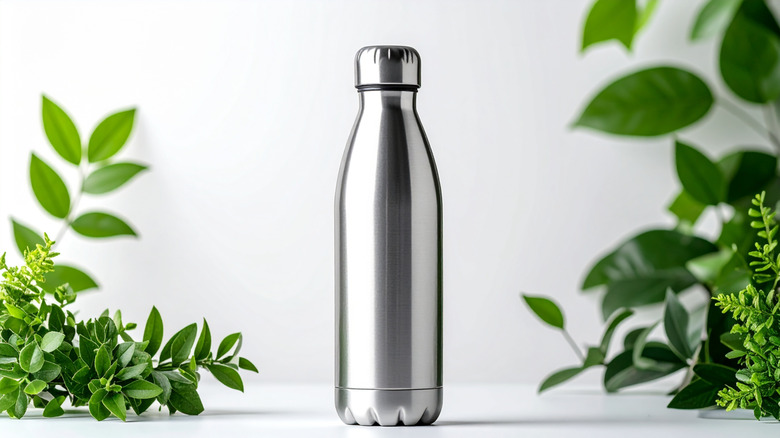
If learning about microplastics makes you want to leave the daily single-use plastic water bottle club, there are plenty of safe and convenient alternatives. First and foremost, find yourself a reusable water bottle made from stainless steel or glass and carry it everywhere with you (don't forget how often your reusable bottle needs to be washed). You can fill it with filtered tap water or water at refill stations, if available.
If you happen to forget your reusable water bottle while traveling, opt for water or other beverages that are packaged in glass bottles. While beverages in aluminum cans may seem like acceptable alternatives, nearly all aluminum cans actually contain a plastic liner. While the liner doesn't have the same amount of plastic as a single-use plastic bottle, microplastics may still be consumed.
If drinking from a single-use plastic water bottle is your only option in a given situation, it's not likely that it will contribute to the same amount of microplastic exposure as habitual drinking from bottled water. To reduce the release of microplastics, avoid squeezing or freezing the bottle, or exposing it to sunlight. Also, try to uncap the bottle as few times as possible.