

The Side Of Steak You Should Cook First Looks Exactly Like This
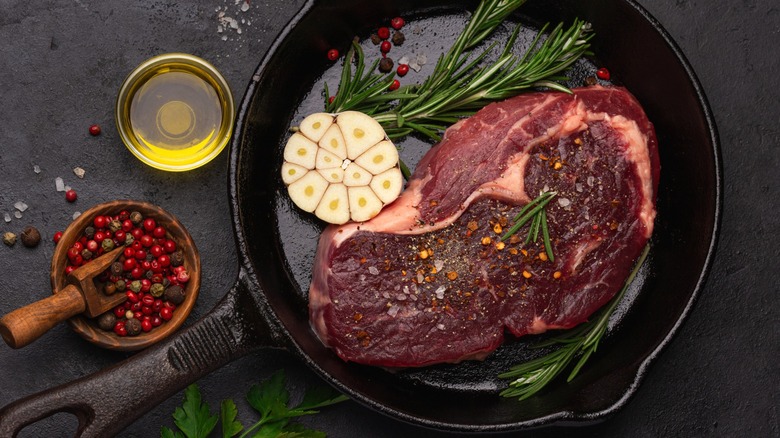
Many people probably never consider which side of a steak should hit the heat first when envisioning a succulent piece of meat for dinner. If anything, folks opt to go with whichever looks like it would present best. It's not as if it will affect the way the steak tastes, right? Wrong, according to Joonas Jokiniemi. When The Takeout spoke with Jokiniemi, the chef and founder of Grill Smoke Love, he emphasized the importance of prioritizing the fattiest side over the other.
While his advice may not apply as much to leaner cuts that people enjoy rare, well-marbled steaks benefit from being cooked fat side first. "That's the part I want to give a head start so it renders instead of staying waxy," Jokiniemi said. As any meat lover is well aware, there's nothing worse than biting into a juicy steak only to end up with chewy, unrendered fat mushing around in your mouth. Cooking the surface with more marbling early helps prevent that tragedy.
With some cuts of steak, it's easy to determine which part should go down first. "On ribeyes, it's usually obvious where the fat seams are heavier," Jokiniemi said. Still, with some more budget-friendly cuts of steak, like sirloin, the correct side can be more challenging to identify. Yet, upon close inspection, you'll often find more white bands of tissue meandering through the beef on one side or the other. Getting that section in the pan first gives it the best chance to render completely and send that juicy, fatty flavor coursing through the meat.
Some steaks have a third, even fattier side
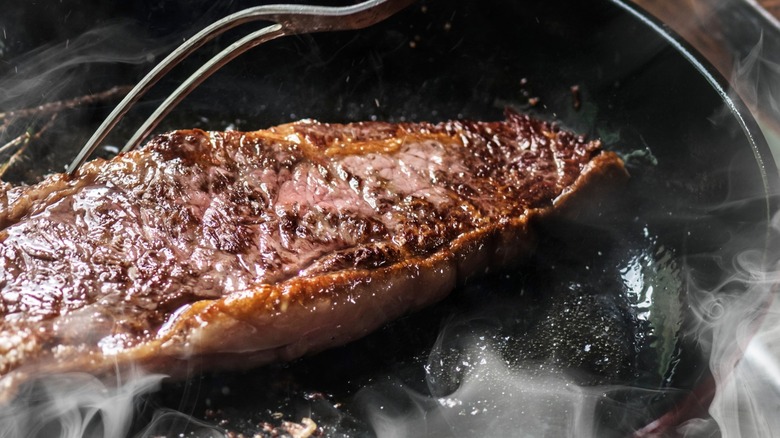
Joonas Jokiniemi noted that he surveys two areas of a steak before deciding which side he cooks first. He said, "I look for the thickest white fat band on the edge, plus the side with heavier marbling." Many cuts of steak will be devoid of a fat cap, in which case you would just start with the surface displaying more white streaks throughout. However, on others, like a strip steak, there is a glaring ivory section adjoined to the beef that should be addressed before anything else.
"If a steak has a real fat cap, I like to render it early," Jokiniemi said. "I'll stand the steak on its fat edge for 30 to 60 seconds, or start fat-side down briefly, just to get that fat softening and melting." Along with strip steak, T-bones, porterhouses, and the cut you must try when visiting a Brazilian steakhouse, the picanha has notoriously sizable fat bands skirting the meat. Not only does beginning your cook by attending to that area first give it the best chance of melting in your mouth when you dig in, but it also allows the beef to cook in its own flavorful juices, making every bite tender and juicy.