

12 Grocery Store Chains With The Best Wine Selection
We may receive a commission on purchases made from links.
We all know the best wine shops are those tiny, hole-in-the-wall type places with passionate, nerdy — sometimes even borderline snobby — clerks. The ones who know every bottle in the shop like the back of their hand. Those geeks who can recommend a sure-to-please grower Champagne or unpronounceable Italian variety without breaking a sweat. But, let's face it, we don't always have the time, money, or, quite frankly, the patience to shop in places like that.
So, the question then becomes, when you find yourself in the supermarket with a desperate need for a decent bottle (or three) of wine, are you going to be facing a wall of mass-produced, industrial, mystery-grape and mystery-region wines? Or, will you instead find a thoughtfully curated selection of international options that actually hit the spot? It all depends, it turns out, on the store.
To discover which grocery store chains had the best wine selection, we considered a number of factors, ranging from personal experience to online reviews. For more information on the methodology used to curate this list, read to the end of this article. In the meantime, here are 12 options that will never let you down.
Trader Joe's
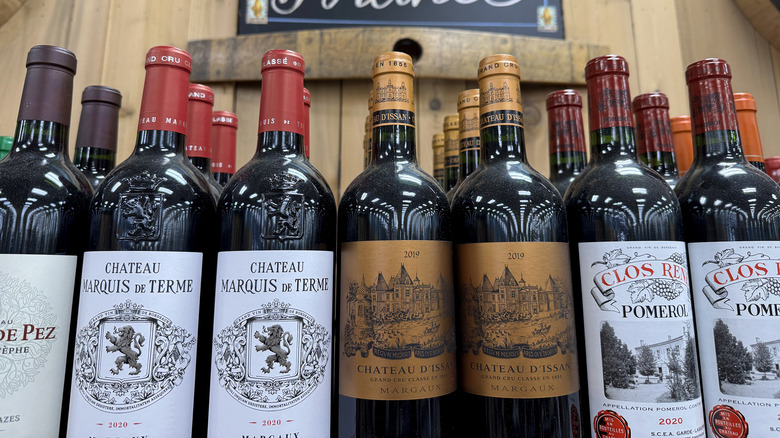
Most widely known for its famous Two Buck Chuck — a $2 wine that's now usually more expensive, but retains the nickname — Trader Joe's has actually built a reputation for offering high-quality wines at varying price ranges. In fact, it often sells premium wines upward of $100 per bottle. Aside from its price, Two Buck Chuck itself is certainly nothing special; no more than an industrially-made wine akin to junk food. Trader Joe's tiered, private reserve program, on the other hand, offers many intriguing possibilities, from the petite reserves, which are all under $10, up to the diamond reserves at $19.99. The very best of these, according to Chris Condit, Trader Joe's wine category manager — even when compared to the aforementioned premium choices — are "literally, the best wines in the store, regardless of any price point."
About one platinum reserve, an Eola Springs Vineyard Pinot Noir, one Reddit user wrote, "I picked up a couple of bottles and wow. This is delicious and I guarantee it won't be around for long." About a diamond reserve Cabernet Sauvignon, a second online commenter wrote, "for $19, this is astonishingly good." Another person agreed, adding there are "tons of great daily drinker wines for under $20 at TJs." Another of the best wines to buy at Trader Joe's is the Espiral Vinho Verde, which is described as "bright, brilliantly refreshing, and ever so slightly effervescent," by San Diego sommelier, Joe Baumgardner, and is an absolute steal at $4.99.
Wegmans
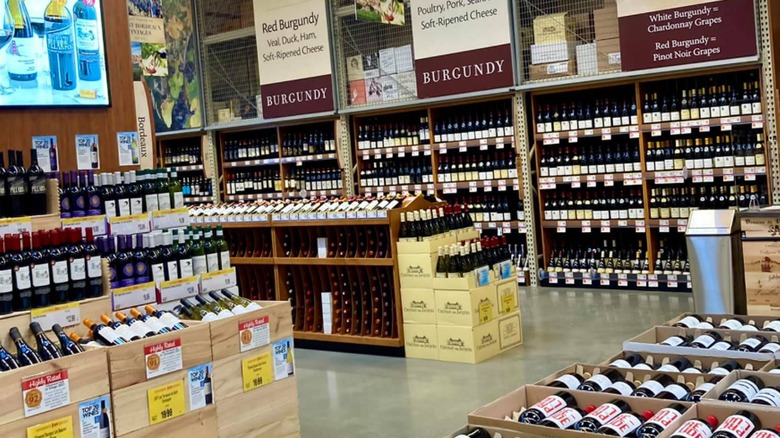
As a grocery store that is commonly found at or near the top of customer satisfaction ratings overall, it's no surprise that Wegmans also features an outstanding wine department. In particular, the store is known for its high level of curation and selection, offering high-quality wines from around the world that are often not found elsewhere. This is led by its Partner Selects private label program as well as its commitment to featuring local wineries, a particularly commendable task considering most of its stores are in the Northeast and the Mid-Atlantic United States.
Wegmans has "a great selection, high-end room, and some knowledgeable staff," wrote one online reviewer. "The selection is amazing and all the staff are professional and helpful," wrote another, who also expressed incredulity that the retailer carried high-end brands, like Lynch Bages and Dolce Far Niente. Yet another bragged about finding library releases from Burgundy giant Remoissenet Père et Fils, adding that "Wegmans has enough [wine] for years of exploring."
Costco
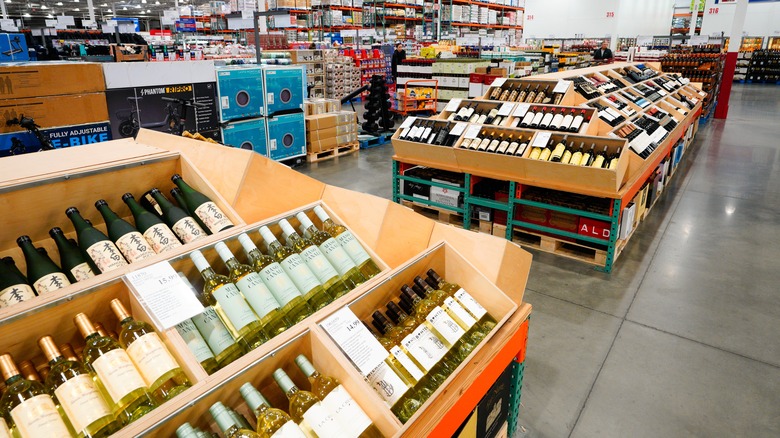
Costco is particularly well-known for its high-quality wine selection from well-respected producers and regions at exceptionally low prices. While some Costco stores require a membership to shop wine, not all do. In particular, the chain's Kirkland Signature private label has developed a reputation for outstanding quality at a cost that averages between $6.99 and $21.99, depending on location. What's particularly notable about Kirkland Signature is that unlike most private labels, Costco actually lists the name of the winemaker and region on its bottles, meaning that wine lovers can indeed trace these wines to an actual, reputable producer and place. As one astonishing example from 2025 illustrates, the Kirkland Signature Toscana red blend was offered at $14.99, yet this wine is produced by Tuscan winery Caiarossa, whose name-branded Toscana blend costs nearly $60 at other retailers.
Another stellar option to consider, according to sommelier and wine writer Warner Boin Dowlearn, is the Kirkland Signature Gigondas. An absolute bargain at $14, this bold red from the Southern Rhône region is often compared to nearby Châteauneuf-du-Pape and features a lovely flavor of red berries that's balanced by herbes de Provence and subtle earthiness. Not surprisingly, online reviewers also rave about Costco's incredible prices. I got "baby Bordeaux for $18," wrote one, that shows "legit regional character." "I can't get enough of the Kirkland Signature Friuli Grave Pinot Grigio," wrote another, and "the Kirkland Signature Malbec Mendoza is amazing too! Both combined are about $12, can't go wrong with these!"
Whole Foods
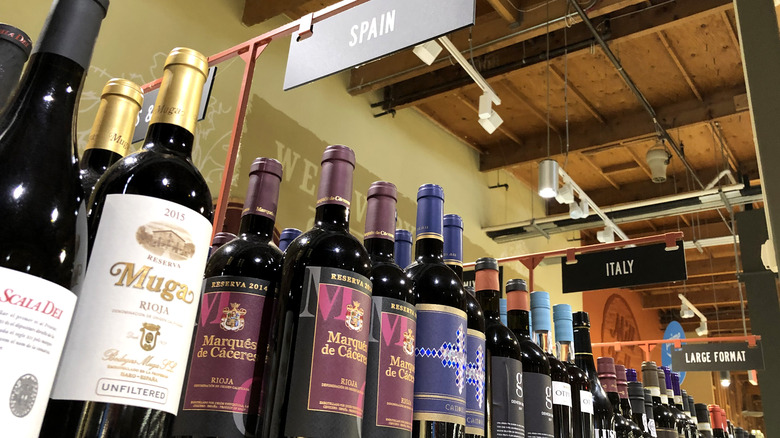
Perhaps not surprisingly, a notable aspect of Whole Foods Market's wine program is its emphasis on organic, biodynamic, and sustainably produced wines. According to one company report, the market regularly offers more than 200 wine choices that are either organic or made with organic grapes. Whole Foods also reports being a founding member of the Sustainable Wine Roundtable (SWR), which is an independent nonprofit platform featuring multiple stakeholders that formed specifically to advance sustainability practices in the wine industry.
Though noting the selection is usually on the smaller side, one Reddit user wrote that they've "never had a bad rec from Whole Foods," highlighting the effectiveness of the store's curation techniques. A New York City shopper added that the wine store at Whole Foods is a "best bet" for reasonably priced bottles, with a large selection in the $8–$16 range. (This, of course, is not a statement to be taken lightly in the Big Apple!) Lastly, don't miss the surprisingly cool Whole Foods bar at locations that offer it, where you can sample a selection of up to 11 wines offered by the retailer.
The Fresh Market
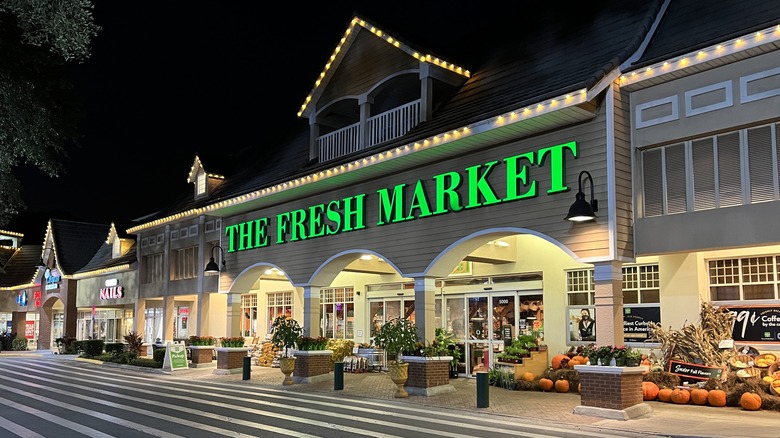
Perhaps the most exciting aspect of The Fresh Market's wine program is its "90 points under $20" promotion, which focuses on offering unique wines that have received high scores from reputable publications, such as Wine Spectator, Wine Enthusiast, or James Suckling. This program allows consumers to discover new and interesting wines that have been vetted by some of the finest tasters in the business. In 2025, The Fresh Market also opened its first standalone Spirits & Wine store, in Ponte Vedra Beach, Florida, focusing on premium wines, as well as spirits and beers, indicating a dedication to expanding its craft beverage program beyond just the supermarket.
"Fresh Market ... has a great selection," wrote one customer. "They have a section of highly rated wines under $20, as well as a weekly special where they'll put a cheaper brand on sale for around $7-$10 ... I have rarely been dissatisfied with their wines." Another shopper called out its nice selection of imports, including wines from France, Italy, and Spain.
H-E-B
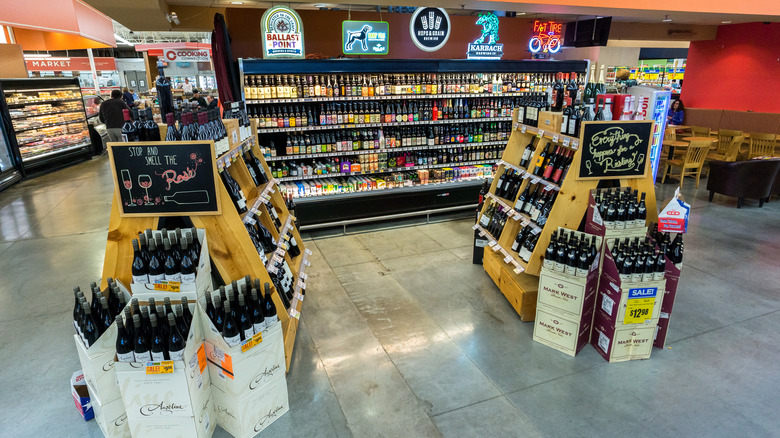
Beloved Texas grocery store chain H-E-B has developed a reputation for having a robust and eclectic wine assortment, stocking a wide variety of products that are tailored to each store's local preferences and regularly rotated to keep offerings fresh. A typical outlet will carry about 1,300 different wines, but this can vary widely depending on location and grow to upward of 2,500 SKUs.
The chain's sweet spot is bargain wines, which are priced low every day. It has, however, also been known to feature limited releases of cult wines from family-owned wineries and small-lot producers, such as Dominus Cabernet Sauvignon or Cristal Champagne, both priced at over $200 a bottle. H-E-B is also the largest seller of local Texas wines, helping the state's growing wine industry find new customers on a regular basis. Though technically a different store, Central Market by H-E-B is a brand-owned specialty shop with 10 Texas locations that focuses on an even more curated and premium wine selection.
Meijer
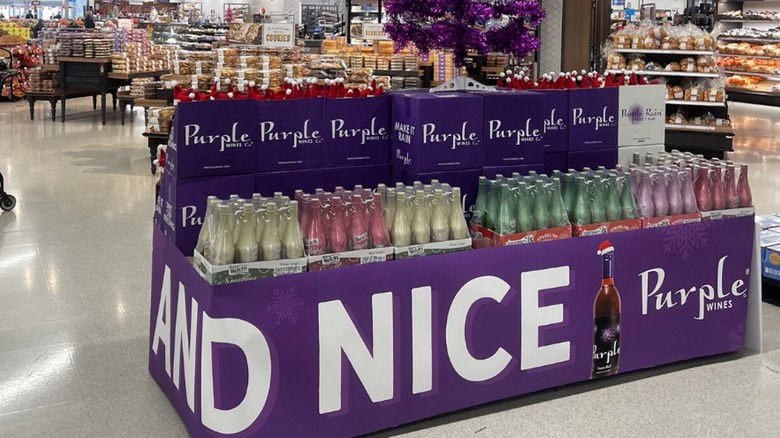
Michigan-based Midwest chain Meijer is particularly notable for its strong focus on regional and local wines, especially those from Michigan, whose wine industry has been growing rapidly in recent years. Meijer was the first major retailer in Michigan to dedicate shelf space in its stores to support Michigan wine — going all the way back to the 1980s — and that support has grown over time, to the point that today roughly 80 different Michigan wines are available in Meijer stores. Meijer even sells Michigan wines in other states, including Ohio, Indiana, Illinois, Wisconsin, and Kentucky, as well as some local choices from those areas. Within Michigan, Meijer's local wine selection is so popular that they even outsell those from Italy and Australia!
"Meijer has a huge selection, good on them to support local," noted one online reviewer. Meanwhile, another added that "local grocery stores usually have a pretty limited stock but this Meijer is both varied and priced reasonably!"
Kroger
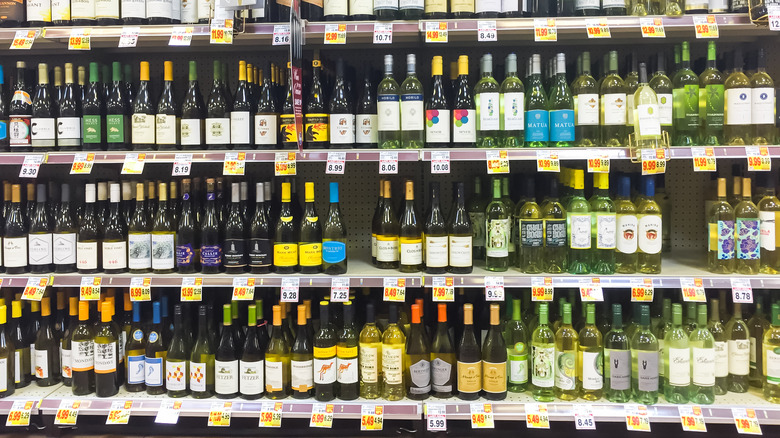
As part of a broader effort at the Kroger family of brands to focus on digital shopping, this major grocer's tech-forward wine program offers a variety of innovative elements such as online delivery, build-your-own packs, curated and seasonal tasting packs, like the Winter Wine Celebration Box, and in-store tasting at the WineStation. The latter is an automated, temperature-controlled, wine dispenser with a built-in preservation system that allows customers to sample wines before they buy or enjoy a glass at the store while they shop.
In an attempt at providing a more user-friendly wine shopping experience, Kroger introduced a revolutionary new digital platform at 600 of its stores in 2025. These interfaces powered by Looma retail media network offer an interactive way for consumers to learn more about wine, from where the grape varieties come from to what flavor notes they might have, ultimately helping to instruct the wine curious among us to select the right bottle every time. Though not entirely predictable from a timing standpoint, Kroger also regularly attracts wine and discount lovers with its 20% off wine sales, offered at varying times throughout the year.
Publix
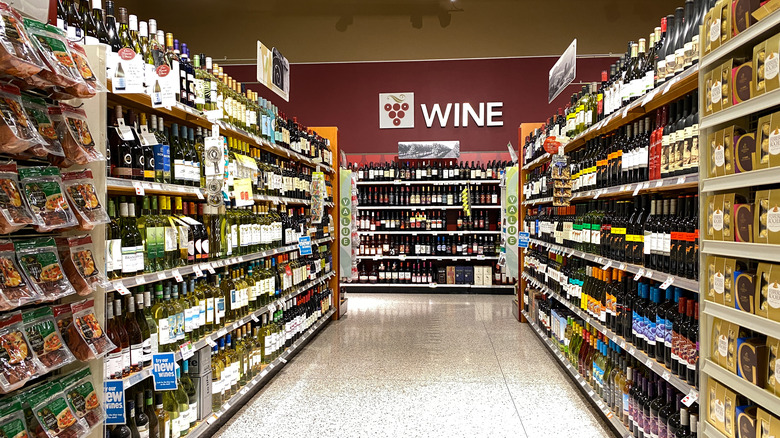
While perhaps less of a place for truly premium wines as one might find at stores like Wegmans or Whole Foods, Publix is known for its extensive selection of approachable, mainstream wines, as well as frequent, standardized discounts. In fact, every day one can save 5% on purchases of four to seven bottles, and 10% on any purchase of eight bottles or more, with no coupons, savings cards, or club memberships required to take advantage of these offers. Publix also offers a private label, the Publix Premium line, which is essentially focused on everyday values from popular grapes such as Cabernet Sauvignon, Chardonnay, and Pinot Noir.
On shelves, Publix also displays a series of icons that it calls Wine Simplified, which are shown to help people better understand what they're getting when they purchase a wine they might not already be familiar with. These simple symbols focus on whether the wine is light, medium, or full-bodied, note common flavor aspects, such as sweet or fruity, and show if the wine is still or sparkling.
Aldi
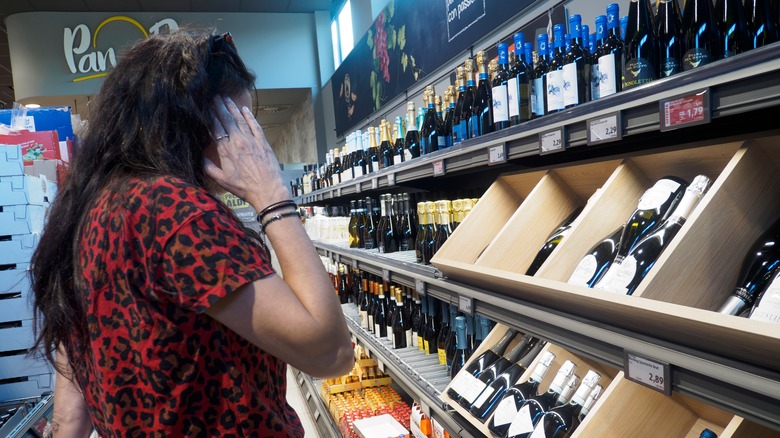
Known for its aggressively low prices across the grocery spectrum, Aldi is attacking the wine industry head on as the self-proclaimed fastest-growing retailer of wine in the United States. Though it is primarily focused on low cost, budget wines, this retailer has been seeing some traction with its Specialty Selected line, which ranges in price from $7.99 all the way up to the splurge-tastic $14.99, the latter of which is actually the highest price of any wine that the store sells (as of 2024). "This is our premium, our over-the-top, best-of-the-best wine from a quality perspective," said Arlin Zajmi, director of national wine buying for the chain. Aldi's Specially Selected Sparkling Brut Rosé, in fact, took home the prize in the 2025 Product of the Year Awards, winning the wine category.
One thing that separates Aldi from other retailers is that every wine it carries is exclusive. It achieves this by working directly with wineries and winemakers, and staying laser-focused on its goal of delivering high-quality wines for less. "It's not leftover juice; it's not leftover wine," said Zajmi. "It's truly developed for us, with us, directly with a winemaker."
"Why people fuss over Trader Joe's when the Aldi wine is just as good is beyond me," wrote one online commenter. Another, however, offered a more mixed review, noting that "their exquisite collection is generally pretty good quality, everything else ... not so much."
Lidl
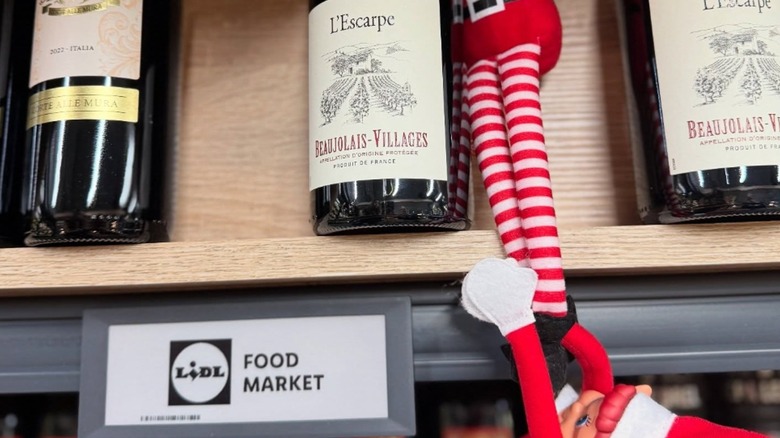
Though not owned by the same company, Aldi and Lidl share some similarities that have sparked rumors to that effect. These include German origins and kindred business practices that extend to impressive wine departments. Lidl slashes prices by offering exclusive private label products across the grocery spectrum, including its wine program. Many of the bottles sold at the retailer are priced under $10. Despite these low costs, Lidl likes to brag that more than 100 of its wines available in the U.S. have won awards, with more than 200 individual awards achieved by that group. As one example, Lidl's Allini Asti Spumante DOCG won gold medals from the Sommeliers Choice Awards and USA Wine Ratings by Beverage Trade Network, receiving 90-point scores from both outlets. It also won a silver medal from the International Wine Challenge.
Of particular note at Lidl is its seasonal "Wine Fair" promotions that highlight interesting grapes, styles, and bottles from international wine regions. (This program is called "Wine Tour" in the U.K., which may be seen when discussing Lidl wines online.) The chain also works with Adam Lapierre, a noted Master of Wine based in the U.S., who uses his expertise to apparently taste every bottle Lidl sells, in addition to advising the company throughout the production and buying process.
Target
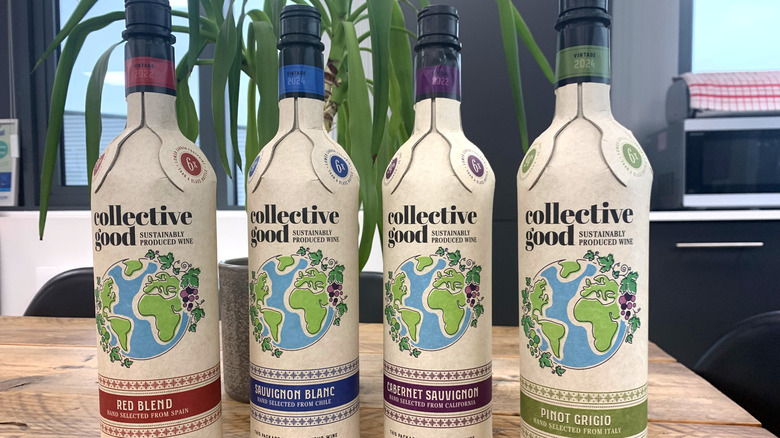
Though not necessarily known for its broad wine section, Target made waves in 2025 when it launched the sustainably-focused private label wine brand Collective Good in 1,200 U.S. stores. The groundbreaking aspect of this particular wine is that it's packaged in a paper bottle, designed by Frugalpac, and made from 94% recycled paperboard. These so-called bottles are reportedly five times lighter than glass, easily recyclable, and focused on significantly reducing carbon emissions when compared to traditional glass wine bottles. Released in April as part of Target's Earth Month promotional push, Collective Good highlights the company's broader focus on sustainability, alongside its commitment to everyday low prices. (These quasi-bottles currently sell for $9.99 each.)
While the prices may be intriguing, is the wine any good? Of Collective Good's Red Blend from Spain, one purchaser wrote, "really cool packaging and the wine is good too," whereas another said, "this wine is super smooth and delicious. Great for the price." Of the Pinot Grigio, one customer wrote, "love it! It is tasty and environmentally friendly." Another less-convinced reviewer, however, described it as a "boring wine" with "not much flavor."
Methodology
To determine which grocery store chains were included in this piece, we looked at a number of factors, including online ratings and reviews, social media commentary, thoughts from wine industry insiders, media coverage, and, of course, personal experience. It is not meant to suggest that grocery stores who aren't featured here can't possibly have a good wine selection, only that we feel confident in saying the stores listed do typically offer one.
Because this was focused on larger chains, we only chose to include brands that have at minimum 100 locations, and that exist in multiple states. One exception to the latter rule, however, that we absolutely had to include, is H-E-B, the beloved Texas grocer that only serves its one enormous state (as well as Mexico), but does so across four major metropolitan areas with more than 400 stores.