

The Vintage Glowing Glassware That Will Make You Want To Dine Under Blacklight
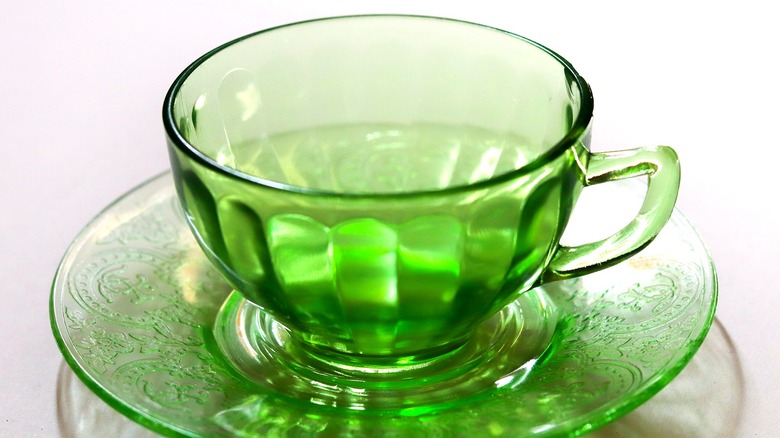
When going thrifting or antiquing, there are a few hidden treasures people seek out for sentimental or monetary reasons. One vintage dishware find that can be worth big bucks has a pale green tint, and can be transparent or opaque and milky. These dishes are made of uranium glass. Even if you can't identify them on first glance, if you pass a black light over them, they'll glow a bright, unearthly green that's impossible to miss.
This glassware went into production during the 1830s, though it became popular in the 1880s. It gets that unique glow and Vaseline-like color from small amounts of uranium oxide. It can also come in other colors like blue or orange. As you might guess, the uranium makes the glass mildly radioactive, especially older versions that used natural uranium. Production of this glass was regulated to require depleted uranium, by 1958; and by the '70s, the U.S. stopped using radionuclides — like uranium — to color dishware, altogether. These glasses are now huge collector's items, with some folks displaying antique curio cabinets of the stuff.
If you want to be absolutely sure you've found uranium glass, and not just another piece of depression glass, you'll need either a Geiger counter or a black light. When exposed to a black light, the glass should glow neon green. Electrons in uranium atoms get excited under UV light, so it fluoresces every time. It should also show higher radiation than natural background levels. Uranium glass may not be as identifiable as vintage Weck jars that are worth their weight in gold, but if you can find it, you'll have a flashy piece of history.
What to know before hosting a uranium glass tea party
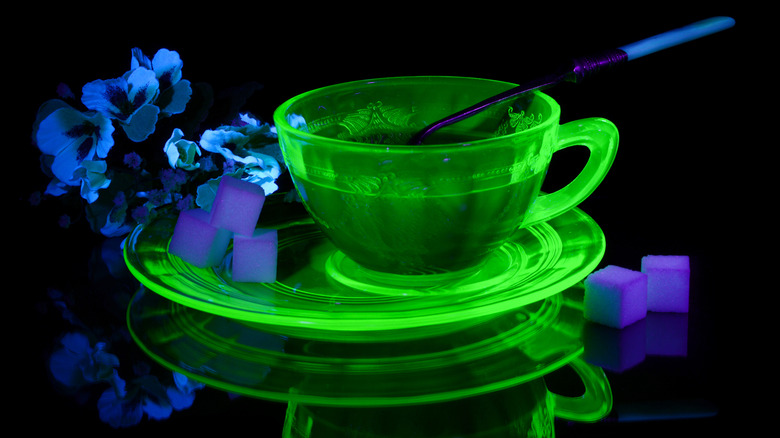
The big question that many new owners of uranium glass ask is: Are radioactive dishes safe to eat from? The answer is generally no, but that can depend on what kind of uranium glassware you have. The first thing to do with your glowing dishes is to check for cracks. If you see a crack or chip, you should absolutely avoid eating or drinking from it. Ingesting fragments of uranium glass, no matter how small, can be harmful.
Beyond this safety check, things get a little more hazy. If the dishware is coated in uranium glaze, it may be more radioactive than just the glass, so it should remain as a display piece. You'll also want to skip acidic foods and liquids which can cause uranium to leach into what you eat. In general, it's simply not worth the risk to eat or drink from uranium glass at all.
However, some sources indicate that uranium glass is generally safe. One study concluded that handling uranium glass regularly equates to the same amount of radiation exposure as a single one-hour flight per year. Others show that you're more vulnerable to contact with radiation from everyday electronics than from a uranium teacup. Hearing this, it can be tempting to host a dinner party using your glowing dishes. After all, you're probably already cooking irradiated meat (It's okay, there's no reason to panic). While occasionally handling uranium glassware is fine, it's a good idea to use it as a conversation starter rather than regular dishware.