

11 Fruits That Belong On Your Next Pizza
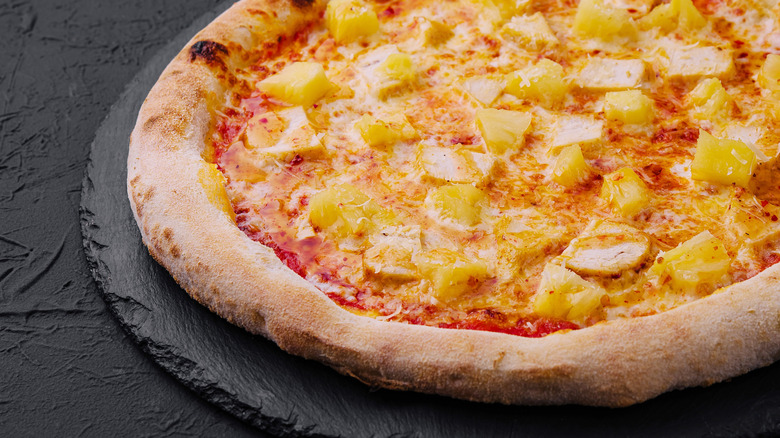
If you've ever poo-poohed the very idea of fruit on pizza, consider this your gentle nudge (okay, loving shove) to open your mind. When done right, fruit on pizza can be a genius hack instead of totally wack. Hear us out ... pizza is already a molten, melty sea of salty cheese, spicy sauces, crispy crusts, and savory toppings. Most other food recipes would require some sweetness to come in and bring balance to make it all shine, right?
Think about it: Salty and sweet have always been a power couple in the culinary world, so why would pizza be any different? When fruit meets a hot oven, it caramelizes, softens, and concentrates in flavor. It brings brightness, and a welcome contrast that cuts through the rich (some could say heavy) taste of meats and cheeses that many pizzas are blanketed with.
Speaking of meats and cheeses, that fruity sweetness pairs beautifully with bolder cheeses (such as gorgonzola, goat cheese, feta, or blue cheese), as well as cured meats (think prosciutto and pancetta), and even spicier elements (jalapeños or chili oil, anyone?). It's important to note that not all fruits behave the same way, however. Certain varieties work especially well, and others ... not so much. As such, we meticulously selected the 11 fruits that belong on your next pizza. Our full methodology for hand-picking these fruits follows at the end of the article.
Figs
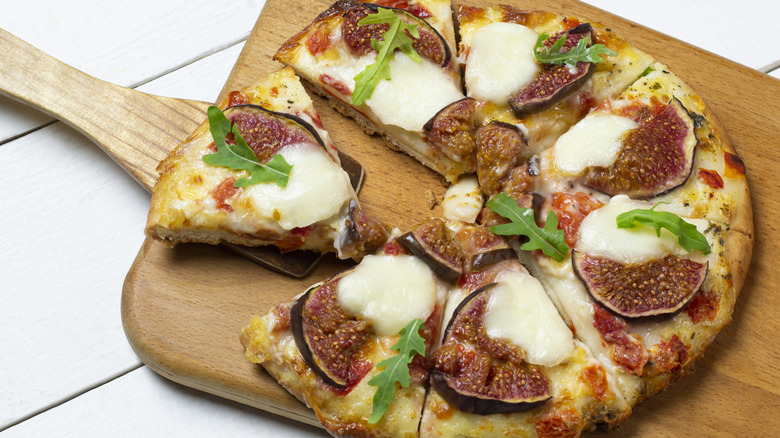
Okay, figs on pizza. Before you balk, this one makes a lot of sense once you think about it. Figs aren't super sugary like many fruits. Their sweetness is more mellow, almost like a natural jam. That easy subtlety explains why these Mediterranean fruits provide a pizza upgrade that works so well with savory flavors (complementing without smothering or being cloying).
When figs bake on a pizza, they soften and caramelize just enough to give a rich, almost-burnt sweetness to each slice, without turning the whole pie into dessert. It's an addition that balances, not bullies. Where figs really earn fans is when diners taste how they make salty ingredients sing. Specifically, cheeses like gorgonzola, blue cheese, and goat cheese sidle up smashingly alongside figs thanks to their peak saltiness, which cuts the sweetness and keeps everything grounded. That winning salty-sweet combo is actually a major reason fig pizzas are popping up on so many restaurant menus. Odds are those menus feature prosciutto or jamon serrano with the figs, or even caramelized onions.
It is worth noting that fresh figs tend to be softer, while dried figs are chewier and possess more potent, concentrated flavor. Both versions are commonly used, and both work well, so we don't really give a fig which you choose. Just promise you'll pick one for your next pizza.
Pears
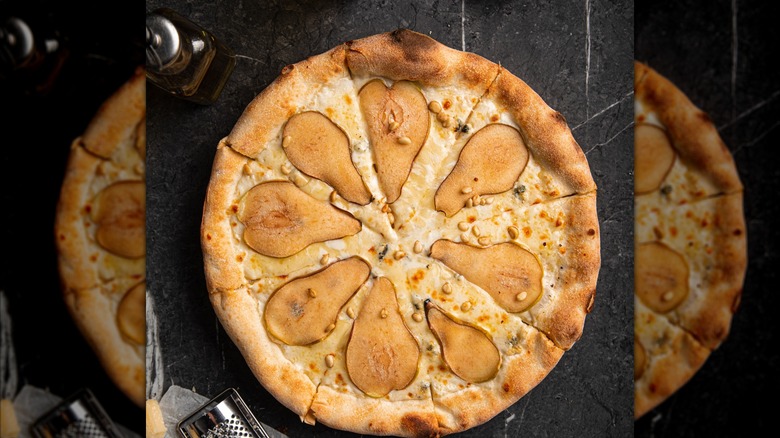
Pears are ideal pizza fruits because they don't scream for attention, but manage to shine anyhow. Maybe it's their milder sweetness, or the juiciness they bring to the pie that plays up other flavors without making each slice soggy. The fruit is also complementary when set beside savory and salty ingredients, as pears offer flavor that doesn't dominate. Theirs is a character that supports and improves overall flavor, adding freshness and some levity. On the other hand, richer, more saccharin-sweet toppings might weigh the entire outfit down.
Crisp pear varieties work especially well on pizza because they maintain their sturdy structure better when exposed to heat, offering a pleasant (not soggy or too soft) contrast to melty cheese and chewy crust. Pears are also famously compatible with bold, tangy cheeses (looking at you, gorgonzola and blue cheese), where their sweetness softens the dairy's sharper edges without muddying the flavor. Pears are also marvelously mouthwatering when matched with mozzarella and parmesan, a winning trio that layers up tremendously.
However, what we should really discuss is the killer combination of pears and cured meats. Prosciutto is a classic pairing, as the high level of meaty saltiness fuses with the juicy sweetness of the pear to enhance each other naturally. Toss in some fresh herbs (thyme is a tried-and-tested pick alongside pears), and you have an added earthy note that keeps the whole pie grounded in glorious good taste.
Apples
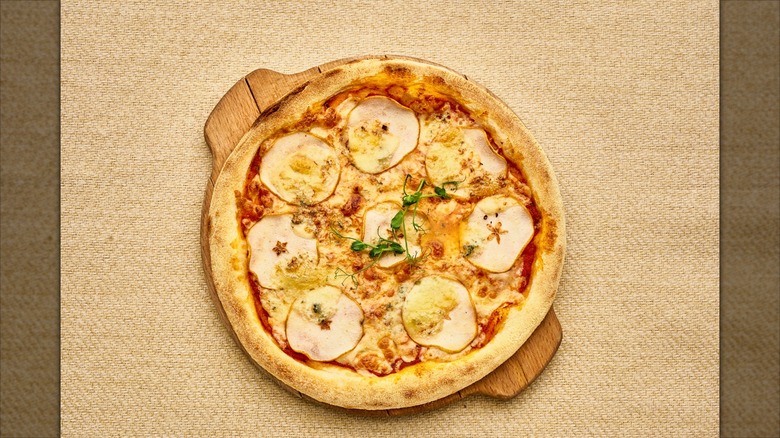
Apples on pizza might sound pretty un(apple)tizing at first, but these fruits have slowly won over naysayers for some time now. This is especially the case for diners who love savory-sweet combos. The crisp texture of an apple, coupled with its clean sweetness, makes the fruit a first-rate frontrunner for smoothing out stronger notes (think salty, smoky, or sharp flavors, for example). Apples especially straddle that sweet spot when thinly sliced, where they soften ever so slightly in the oven while still maintaining enough "body" for a bit of bite. This allows the fruit to add freshness to the pie without making things mushy.
Flavor-wise, apples are particularly complementary with strong or aged cheeses. Sharp cheddar, for starters, is a classic coupling. Blue cheese and smoked cheeses also work well, since the apple's sweetness offsets their intensity. Apples are also frequently paired with salty meats — like ham — where the combination feels almost nostalgic, and reminiscent of fall flavors or comfort food classics (pork chops and applesauce, anyone?).
As far as species go, certain apple varieties are better suited for pizza slices. For instance, firmer, slightly tart apples tend to hold up best structurally, while simultaneously preventing the slices from skewing too sweet.
Grapes
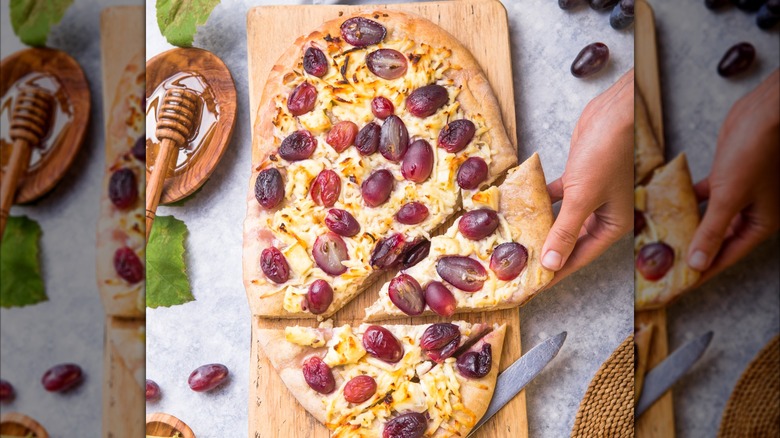
Grapes might not be the first fruit people go for when topping a pizza, but the appeal makes sense once you understand how these juicy, sweet baubles behave under heat. Grapes caramelize when roasted, concentrating their natural sugars into something deeper and more complex than their fresh, popping-by-the-fistful snack form. That richness is exactly what gives grapes their "gotcha" moment, where they can be recognized as the unexpectedly perfect contrast to salty, tangy cheeses (goat cheese, feta, and gorgonzola are especially great co-pilots).
What really gives grapes their grand status as soon-to-be pizza staples is how effortlessly they elevate white pizzas. When not battling the tartness of tomato sauce, grapes are free to fully shine alongside creamy cheeses and herbs. Speaking of herbs, rosemary is a particularly popular companion to these baby raisins, as it can help keep the fruit's sweetness in check. Add a drizzle of honey or olive oil to the equation, and you'll get a resounding "hell yes."
Texture also takes center stage when considering grapes as a pizza sidekick. That's because grapes tend to burst slightly when baked – think little bubbling pockets of wine-like loveliness that make you lick your lips while reaching for round two. Finally, grapes are far less intense for those who want less crunch, bringing a soft and jammy contrast to the mix.
Melon
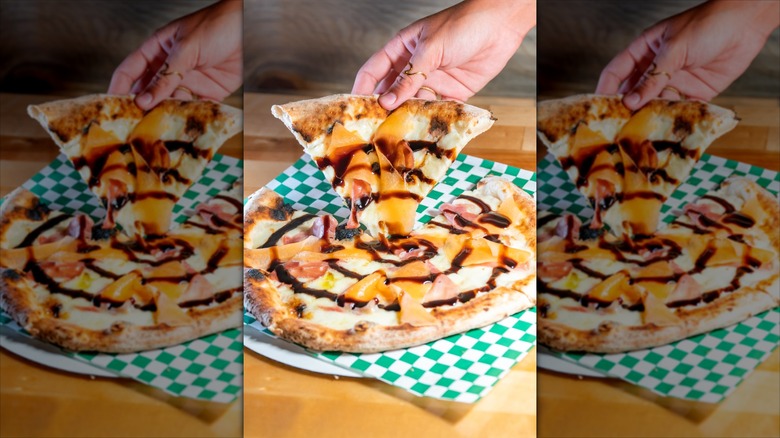
When you hear the words "melon pizza," "mouthwatering" might not be the first adjective to cross your mind. However, halt the brakes on your pizza snobbery, and imagine a world where a melon pizza pairing might just make your taste buds sing. Well friend, when used thoughtfully and with expert execution, melon can give your pizza pipes like Pavarotti. And now we'll offer more advice that might just send you sideways.
Unlike heartier fruits, melon works best when added fresh ... after baking. This helps preserve its crisp texture and refreshing juiciness, while avoiding saturation of the oh-so-crispy crust (often our favorite part) with unnecessary excess moisture. After all — just like glam girls — melons prefer to glisten, not sweat. This post-oven add-on approach frames melon as more of a finishing touch than a baked-in topping, giving your pizza a bright, unexpected flavor boost that doesn't take over as the belle of the ball.
Pairing cantaloupe with prosciutto translates effortlessly to pizza, as the salty cured meat magically melds with the melon's more mellow flavor. On the other hand, watermelon — when not provoking fruit pizza ire on the internet – works fabulously when fused with feta, which has a saltiness that offsets the melon's softer, more subtle sweetness. Add some peppery arugula, and you get a tasty trio that might just tempt (or totally sway) even the staunchest fruit-on-pizza skeptic.
Mango
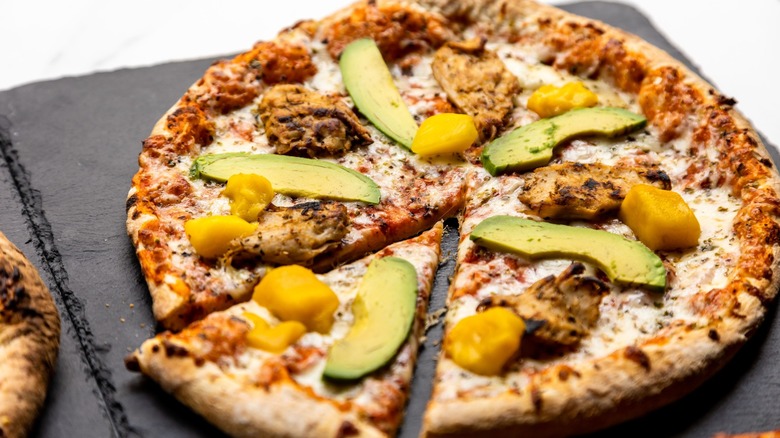
In our humble opinion, mango already has a leg up on its competition. Who doesn't love tropical flavors? However, even the most dedicated beach lover might draw the line at fruit on pizza, even if it is tropical mango. Try not to make snap judgments, though, as mango may just earn its place in your heart (or on your pizza ... alongside melted cheese and other toppings).
Speaking of melted cheese, mango makes magic when matched with softer, milder dairy products that won't fight it. Paneer in particular is a primo pairing with mango, particularly in Indian-inspired fusion pizzas where fruit serves to complement and support the warmer spices. Fresh herbs like cilantro also send pizza into a whole other stratosphere when mango serves as a partner in crime. Overall, the tropical sweetness of mango melds miraculously with spicy elements, creating a simpatico balance that makes for a bold, yet not overpowering slice of pizza paradise.
Texture is a great selling point of mango, too. It's one of the few fruits that manages to mostly retain its juiciness rather than immediately drying out, because no one likes a dusty, withered pizza topping on their beloved pie. So go ahead and take that first bite. You might just find that this tropical twist is the sweet-and-heat pizza hack you never knew your meal was missing.
Pineapple
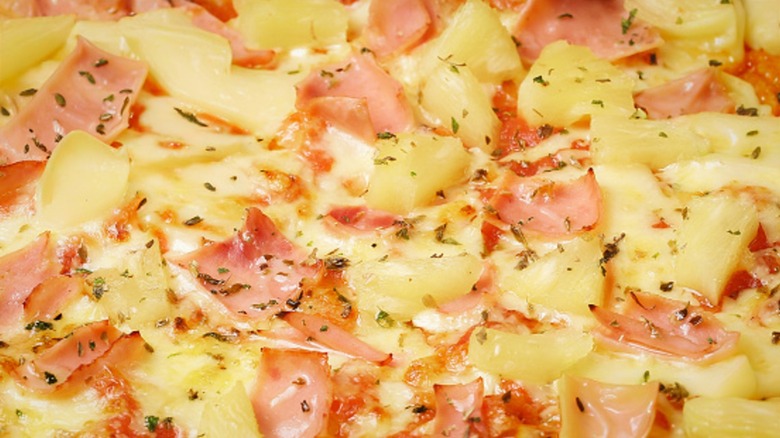
Pineapple may be the most controversial pizza topping of all time. Before you say we're being dramatic, "dramatic" is more the adjective we would use to describe the discourse that instantly pops up when adding pineapple to pizza is even whispered about. Though many people get their panties in an absolute bunch over this hot topic, many anti-fruit fanatics are softening their previously vehement stance.
Though even Gordon Ramsay hates pineapple on pizza, the pairing has staying power among faithful holdouts (and lately, pineapple on pizza has been helped by plugs from "Stranger Things"). The fruit's bright, juicy sweetness brings acidity and creates a contrast that cuts through the rich, salty, and fatty ingredients of most pizzas in a way few toppings can. That's why pineapple is becoming a popular pizza topping, especially when paired with pepperoni, ham, or bacon. The salt and smoke of these meat products join pineapple with equal main character energy, supporting the slice as co-stars rather than allowing the fruit to plow over them. Pairings with spicy flavors are where pineapple especially makes its case — think jalapeños, chili flakes, or other spicy elements that create the iconic sweet-salty-spicy combo that eaters either passionately defend or loudly debate.
Whatever your opinion on the matter, you'll likely admit that such a startling flavor contrast helps keep each bite lively instead of relegating your pizza to the one-note wonder realm. So, love it or hate it, pineapple and pizza seem here to stay ... together.
Dates
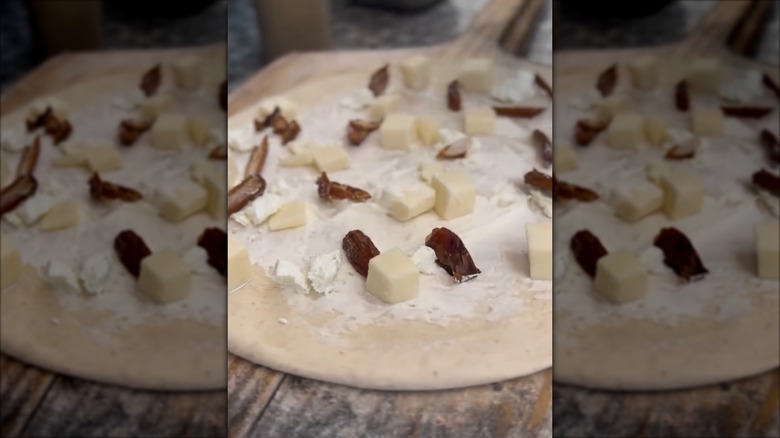
Let's talk about dates (the fruit, not the meet-cutes). Both refer to a perfect pairing, but this one is regarding edible dates ... and pizza. Dates bring a kind of luxury experience to pizza, infusing the pie with a decadent vibe that somehow doesn't dare go too far into the dessert category. We say "luxury" because it conjures up the word "rich," which is exactly what you get when adding dates to pizza: A rich, sticky-sweet energy that skews more caramelized and grounded than light or flighty.
Unlike brighter fruits, dates deliver that aforementioned depth, making them perfect for pizzas that lean savory and bold rather than fresh and summery. The natural sugars intensify under heat, ushering in a jammy texture that practically clings (in a most excellent co-mingling) to salty cheeses and cured meats. Salty pork products (think bacon or pancetta) are particularly primo pairings, where the contrast between their smoky fat and the dates' concentrated sweetness creates instant chemistry. Feta or pecorino also forms a romance even Gaga couldn't convince us was bad.
While we hope we've pulled you aboard, we must offer a little bit of caution. Because dates are naturally dense, they demand moderation — as in, a little goes a long way. Let's face it: Nobody likes a date that comes on too strong.
Plums
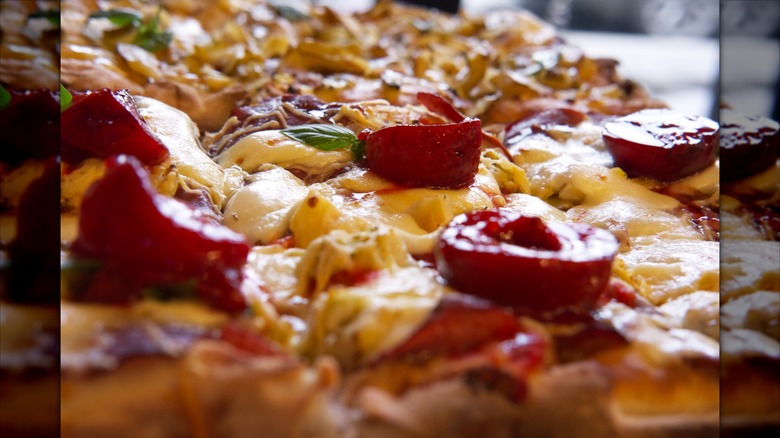
Far be it from us to foist certain fruits on our readers for pizza toppings, but we might have to admit to "plumbing" for compliments when it comes to this particular fruit. We're talking about plums, of course. We love good puns and good plums as well, which we see as a criminally underrated pizza topping that truly comes to life when roasted (and not by comedians). That said, the real joke is on whoever won't open their mind to how deeply delectable plums on pizza can really be.
Thin crust is often the best base, allowing the plums to turn almost jammy-like and plush in consistency. This concentrates their sweeter flavor while retaining that small tinge of tartness that maintains contrast and avoids cloying sweetness. It's plums' slight acidity that prevents them from reading as overly sweet, providing a more suitable match for milder and creamy cheeses. Ricotta and brie are particularly well-suited to plums, offering a mellow energy that lets the fruit shine.
That meeting of creamy and jammy gives texture to a now-layered pizza bite that won't bite back. Plums also make a heavenly match with savory herbs (thyme or rosemary are the ones that come to mind). Even cured meats can consider plums as friends and not foes, as each balances the other well.
Pomegranate seeds
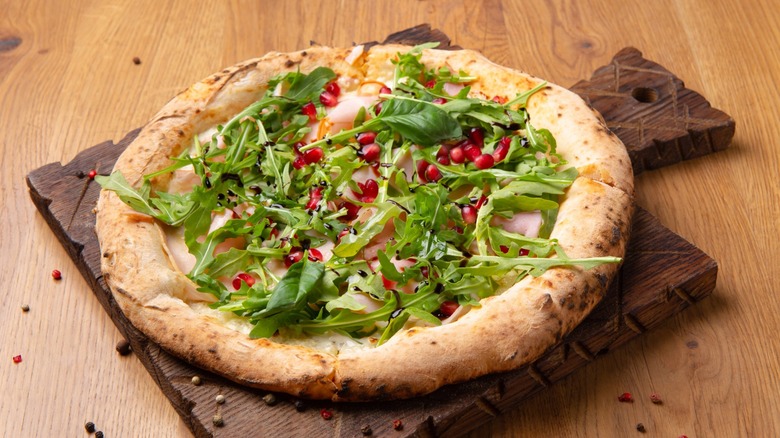
Forget everything you know about pizza toppings that melt together. Pomegranates give diva energy, and due to their texture alone, they're absolutely not meant to blend in. No sir. These ruby-red gems are too taut, too tart, too much of a munch to simply meld into the mix at your pizza party. Speaking of parties, here's where we mention that pomegranates should be considered more of an ideal "after-party" for your pie, since they're definitely best when added post-bake. This allows them to hold the crunchy characteristics that make them such a satisfying addition to each slice. It's this electric tartness that wakes up the taste buds and really rocks our world.
These mini fruits are bold, supplying each slice with a sharp, acidic pop that's a pretty perfect wingman for almost any other toppings ... but especially earthy greens (kale and arugula come in clutch here). There's also the culinary levity pomegranate seeds bring. If you loathe pizzas weighed down by heavy, creamy cheeses (there's such a thing as too much), a sprinkle of these seeds acts like a proverbial lightning bolt, shattering any too-fatty richness and bringing freshness to every bite.
The seeds are also aesthetic showstoppers, so scattering these vibrant fruit jewels over a golden crust demands attention in the most delicious — and decidedly diva — way.
Berries
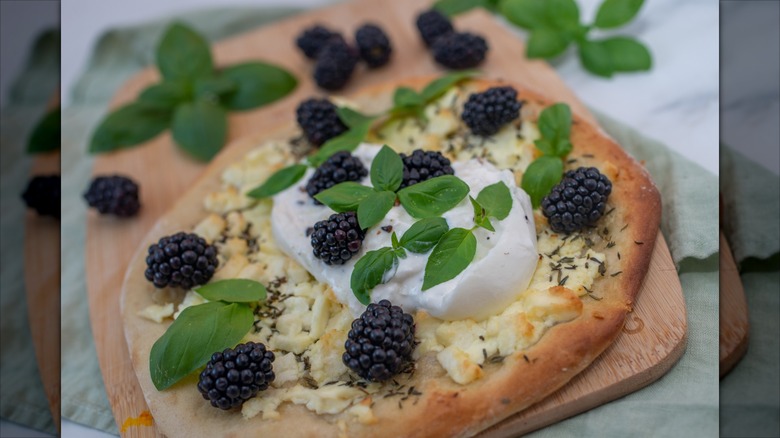
Next up in this lively debate are berries. Opt for adding blueberries to your pizza as a sweet topping, for instance. Honestly, any berry could be considered a rebellious way of keeping summer in your recipe rotation year-round. Berries are basically concentrated sunshine, and who wouldn't want a bit more brightness in every slice? Before you worry that berries might bring a little too much brightness, think of them as mouthwatering mood lighting instead of blinding spotlights on your next slice. This is especially the case when pairing these colorful treasures with creamy ricotta. No jarring, too-bold vibes here ... only a smooth partnering that is sublimely simpatico.
As for specific berries, blackberries stand out as pizza-topping marvels. This is because blackberries have a more tart flavor profile than their sister berries, allowing them to match well with aromatic herbs in particular.
Speaking of herbs, we advise leaning hard into your herb garden to keep things from veering too sugary. A simple sprinkling of mint or a pinch of peppery basil works wonders in ensuring that berry sweetness doesn't mask or overpower the other equally mouthwatering pizza flavors. Plus, you can save room for actual dessert this way, and not get your fill of sugar during the meal.
Methodology

We followed the buzz to find the fruits that truly belong on pizza, digging into expert food articles, catching up on commentary in the latest cooking forums, and ruminating over well-loved recipe roundups. We took care and paid close attention to which fruits showed up in repeated conversations, not just one-off random novelty mentions. We also scrolled through passionate online debates, Reddit rants, and pizza-obsessed communities where fruit-on-pizza loyalists proudly defend their favorite combos. This final list reflects both culinary credibility and the enthusiasm of people who genuinely love pushing pizza boundaries. We applaud, and stand proudly beside you.