

Are You Eating Fake Lobster? Here's How To Tell
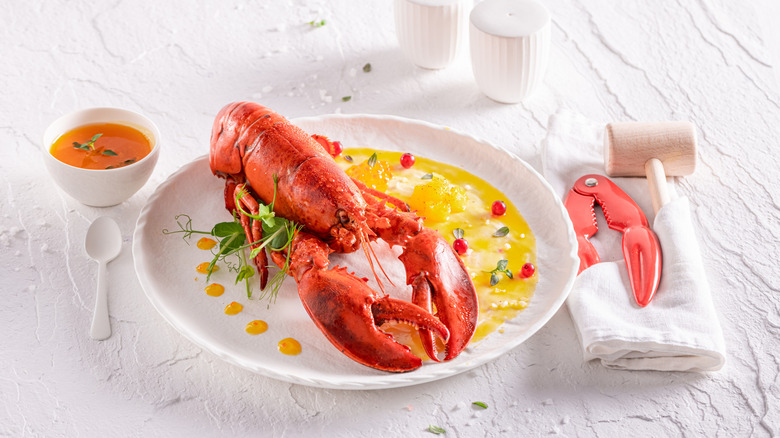
Lobster dishes just feel top tier, but not everyone gets the real deal when their lobster mac and cheese lands on the table. Sometimes what you're getting isn't lobster at all, but instead a mixture of processed seafood products or lower-quality fish, like whiting and pollock. You might even get langostino, a crustacean that resembles a small lobster — it's often referred to as "squat lobster" or "langostino lobster — but is actually more closely related to crabs (and then there's langoustines, which are true lobsters, but smaller in size), and is often passed off as lobster at restaurants. A 2016 investigation discovered that of 28 different national and regional restaurants that served lobster, over ⅓ were selling substitutes as lobster, including Red Lobster. Fortunately, there are ways to tell if you're eating fake lobster when you're out on the town or making seafood at home.
A red flag that'll tell you the lobster on the menu is fake is the absence of a species listed in the description. Restaurants that serve authentic, real lobster are proud of it — you'll see "Maine lobster" or other identifiers printed at least once on the menu. If you order a dish that includes pieces of lobster instead of the whole crustaceans, you might also be getting fake lobster as well. Another red flag to watch for is the flavor and texture: If the lobster on your plate is mushy and flavorless or has too much of an overpowering seafood flavor, that's a dead giveaway. Fake lobster also has a lower price tag than the real stuff (and here's why lobster costs so much). If the cost seems too good to be true, it probably is.
How to identify real lobster before you take a bite
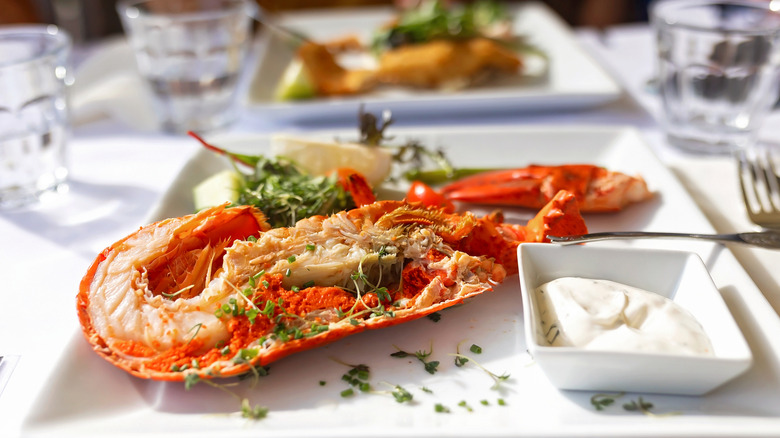
It's great to know how to eat lobster like a connoisseur, but you should know how to order like one, too. A menu item labeled "Maine lobster" is one of the best ways to know for sure you're getting the real thing. But there are a few additional ways to avoid the most common mistakes that people make when buying lobster. The flavor should have a complex balance of sweet and savory; it won't be overpowering, but there should be some distinct, rich-tasting notes in the lobster. Claws that measure 2 or 3 inches on your plate are also a great sign that you've gotten the real thing, as are larger chunks of tail meat in the mix.
One of the best ways to make sure you get real lobster on your plate is to order it the right way. Avoid lobster-flavored dishes or menu items that only incorporate lobster. Instead, choose the simplest preparation you can find, like grilled lobster. Always choose a restaurant that's known for seafood and regularly serves lobster to help better your chances of getting real, fresh, and authentic lobster for dinner.