

The Astonishing Price Of Groceries In Rural Alaska
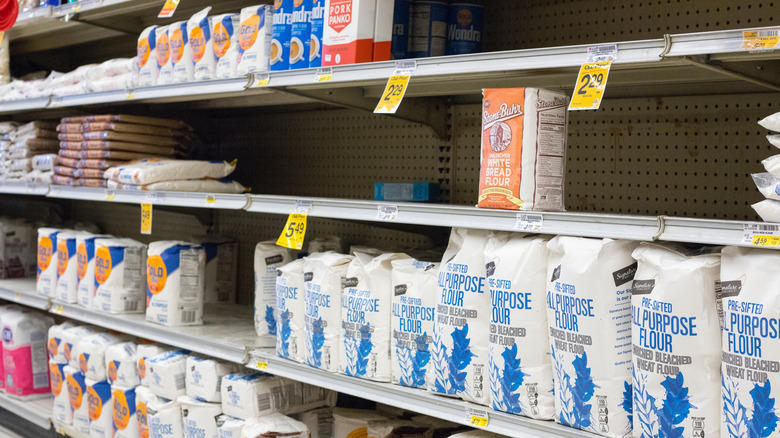
It's no secret that living in Alaska isn't for the faint of heart. From days with only a couple hours of sunlight (or darkness) to a complete lack of Chipotles, America's largest and northernmost state is famous for its extremes. However, one lesser-known challenge of living in Alaska is the state's high grocery prices. Most shoppers are painfully aware that grocery items have been getting more expensive across the country in recent years, but, if you're feeling salty about rising food costs in the lower 48, prices in rural Alaska will make you freeze in your tracks.
Alaska is the state with the second-highest average weekly grocery bill, just behind Hawaii, and those sky-high food costs become even dearer in remote areas (of which Alaska has many). For example, TikTok creator @grantmagdanz, who lives in Kotzebue, a tiny town just north of the Arctic Circle, highlighted butter on sale for $8.14 a pound in November 2024, while staples like a quart of orange juice, a bag of bread, or a six-pack of toilet paper clocked in at nearly $10 each. In Skagway, TikTok user @dutchworld_americangirl found that a dozen eggs went for (brace yourself) $12.29, and a 12-ounce can of Spam — a famously budget-friendly canned meat that's been making a comeback due to inflation – was hardly a steal at $7.19.
Why are groceries in rural Alaska so expensive?
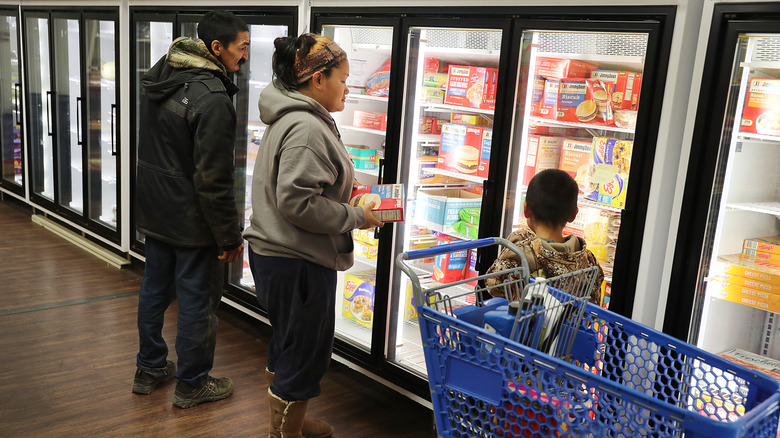
Rural Alaska's grocery prices are so high due to a combination of logistical, geographic, and economic factors. First of all, Alaska is not exactly America's breadbasket — in fact, its agriculture industry is one of the nation's smallest. This means that the vast majority of the state's food supply has to be imported thousands of miles from the lower 48, contributing to higher prices statewide. These prices only snowball in rural areas, where many communities are inaccessible by road, meaning that everything (including groceries) has to be flown in and out. According to The Hustle, a gallon of milk goes for $5 in Juneau, Alaska's capital city; @grantmagdanz, however, found it sold for north of $10 after being flown to a tiny rural town.
Unsurprisingly, the shocking cost of everyday staples in rural Alaska contributes to higher rates of food insecurity, and the isolation of remote communities makes it even more difficult for residents to access food banks and other resources. Luckily, many locals supplement their extremely expensive grocery trips with hunting, foraging, and fishing: Regional delicacies include reindeer hot dogs and stinkheads, which smell exactly how they sound.