

Why Some Glass Baking Dishes Shatter — And How To Prevent It
We may receive a commission on purchases made from links.
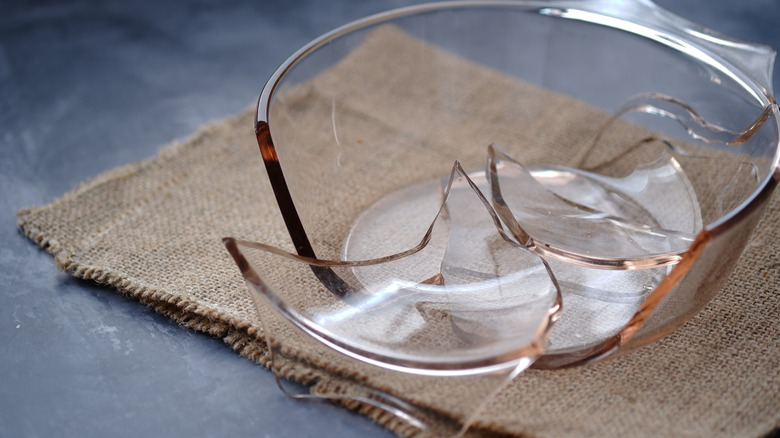
Glass is many people's go-to kitchen material, as it does so much in the kitchen — from baking to storing leftovers to keeping packed lunches fresh — but like any quality material, glass has its limits, chief among them the risk of shattering. The type of glass and sudden temperature changes can affect the outcome of a glass baking dish during baking or accidental drops — some are more prone to shattering.
In your grandma's or great-grandma's cabinets, you may find glass bakeware very different from what's commonly made and sold today. Older glass bakeware was made with a type of glass that could withstand rapid temperature changes, also known as thermal shock. However, if dropped, it breaks into large, sharp shards. This glass was known as borosilicate, made from silica and boron trioxide, which helped minimize expansion and contraction when exposed to heat. Using this type of glass dish allows last night's lasagna to be transferred straight from the fridge into a hot oven with relatively low risk of shattering.
In the 1940s, leading glass bakeware producer Corning Inc. began making products using tempered soda-lime glass. This type of glass is made from silica, soda ash, and limestone and goes through an extreme heating process, known as tempering, to make it stronger. It's also easier to mass-produce, therefore making it more cost-efficient, and if accidentally dropped, it breaks into small, round-like chunks, earning tempered glass its name as "safety glass" since the risk of injury reduces when shattered. Today, the majority of glass bakeware in the U.S. is largely made from this soda-lime glass. However, it's less resistant to sudden temperature changes than borosilicate is.
Shatter-proof strategies for glass bakeware
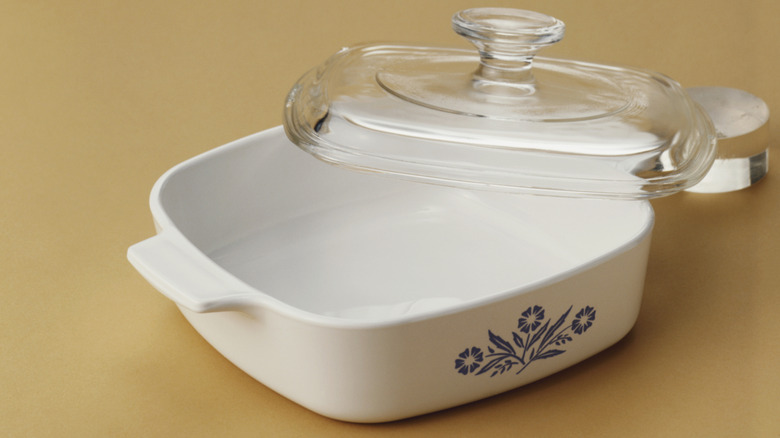
If you find your glass dishes frequently cracking or shattering during baking or storage, it may be worth seeking out vintage Pyrex pieces or other glass bakeware made from borosilicate glass. This material isn't gone, but it can be harder to find than tempered soda-lime glass. Vintage Pyrex pieces originally made from borosilicate can be found in thrift stores (similar to the kitchen item Martha Stewart wants you to buy from thrift stores) or tucked away in older relatives' cabinets. To check if Pyrex is actually vintage, it can be identified by certain markings on the bottom of the dish. Vintage Pyrex is labeled "PYREX" in all caps. Anchor Hocking's earlier oven-proof line, made of borosilicate glass, was stamped as "Fire-King" and can still be found online and in stores. Some European brands also still use borosilicate today, and those products can be found online.
While borosilicate is a stronger type of glass, no glass is 100% shock-proof when exposed to extreme temperature changes. Whether you're using vintage or modern glass bakeware, the most important way to prevent shattering is to avoid sudden temperature swings. Storing a dish in a cold garage or basement and then filling it with hot food or moving it straight into a hot oven from the freezer or vice versa are just a few instances that can cause it to break.
It's also a good idea to always check your glassware for small cracks before use. Even the tiniest flaws can grow and lead to breakage.