

No One Follows These 11 Old School Dining Etiquette Rules Anymore
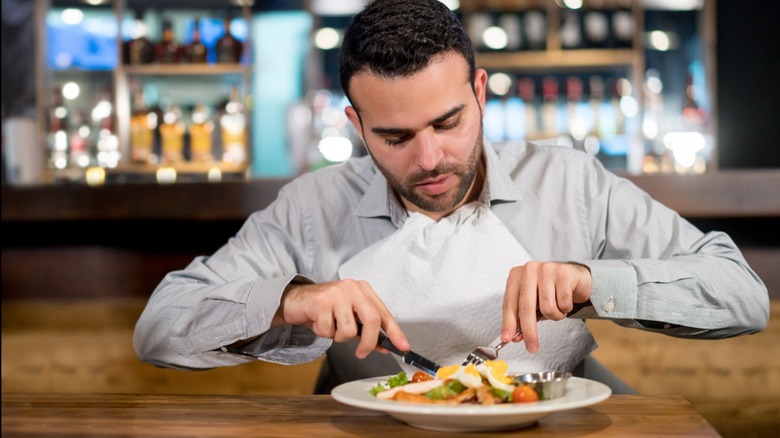
Once upon a time, dining came with a long list of understood expectations (think elbows off the table, napkin on your lap, no phones, no slurping ... basically, no fun). It was high stakes at suppers, and one single faux pas could earn you a snicker from your older sibling at best, and a full-on lecture from your mama at worst. Luckily, we don't live in that world anymore. We eat on the couch. We scroll our socials while we sup and sip.
Now is the era of casual dining, where takeout culture, food trucks, and delivery apps have stormed the scene, completely changing how we think about meals and the manners surrounding them. Eating is less about impressing at the table and more about munching on our meals as we see fit, without all the fuss and fanfare. That's not to say manners are dead. We still say please and thank you, and nobody's advocating for absolute anarchy at the dinner table. It's just that many of the old-school rules that once felt non-negotiable (some may even go so far as to say sacred) now seem outdated, unnecessary, and just plain exhausting.
Whether we're talking about table manners or dining etiquette (there is a difference), the world has moved on, and we're clearly over all the dining do's and don'ts. So, let's take a nostalgic, slightly cheeky look back at the dining rules that once reigned, but are now ignored, bent, or outright broken.
Removing hats indoors
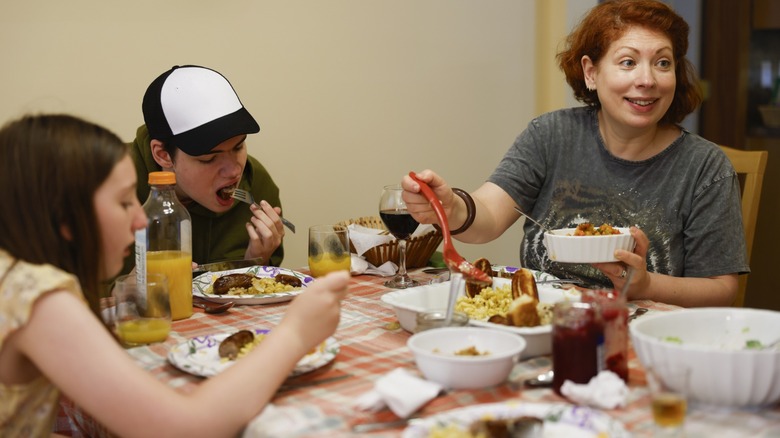
There was a time when wearing a hat indoors would raise one helluva stink. You didn't just walk into someone's house for supper — nevermind a restaurant — donning a cap. No sir. You removed it immediately, no questions asked, like a knee-jerk reaction woven into your very DNA. This was because leaving a hat on was seen as not only disrespectful, but lazy, or even proof that your "mama didn't raise you right." This rule of not covering our noggins was drilled into our heads, hard. Fast forward to now, and no one seems to care nearly as much.
People walk into coffee shops, bars, and casual restaurants wearing hats without anyone batting an eye. Even in homes, hosts are far less likely to get offended simply because your Stetson stays put. This rule has softened largely because hats aren't considered disrespectful when worn inside. In this day and age, they're basically just accessories, fashion statements worn to match our outfits.
That said, there are still moments where taking your hat off feels appropriate and expected. Super fancy restaurants, extra formal events, or even religious spaces are places where many still quietly expect it. The biggest difference now is that the rule seems more situational than universal. Now, rather than always removing your hat, it's more about reading the room.
Arriving promptly on time
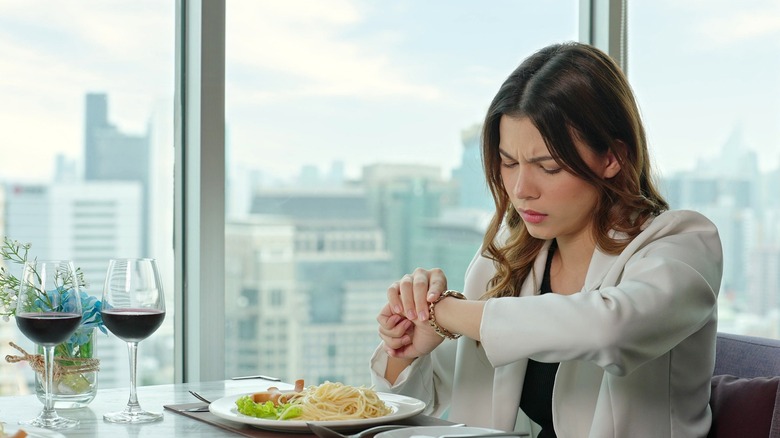
Being exactly on time used to be a huge deal. Showing up early was even seen as a polite bonus, but arriving late? That was Stephanie Tanner level RUDE! If dinner was at 6, you were expected to be there at 6. Not 6:05, not 6:10, but 6 sharp. People planned their entire evenings around this idea (set the alarm if you need to, seriously), and lateness often blew past feeling low-key rude to being taken quite personally.
But now, things seem more flexible, likely because we have all finally embraced the truth that, hey, life is messy. Traffic jams take your day for a detour. Work meetings drag on. And babysitters? They run late, meaning you do too. But now, with texting literally at our fingertips, we can at least keep our loved ones updated on where we are (and our ETA) in real time. Shooting a short "running 10 late!" takes two seconds and can save many a relationship when one party is running behind schedule.
This still doesn't mean punctuality is not important. There remains a big difference between being slightly tardy and being totally inconsiderate. 30 minutes without a heads-up or text check-in? Stephanie Tanner says still rude. And repeated lateness? Yep, Steph is shaking her head. Basically, the rule hasn't disappeared; it's softened, with modern etiquette being a bit more forgiving and realistic.
Asking to be excused when finished
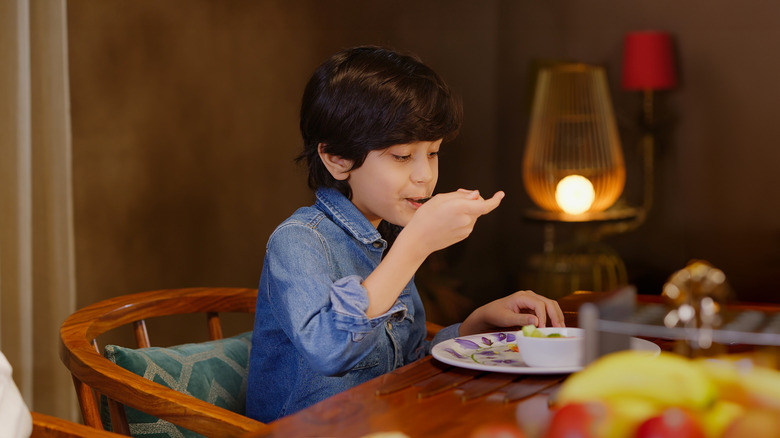
If you grew up asking to be excused from the table, you know how serious this rule once was, especially for kids. You didn't just finish your food and buzz off. You sat there, waited, then formally asked permission to leave. For adults, this rule applied too, albeit more subtly. Leaving the table before everyone else had finished was considered impolite, rushed, or even dismissive. After all, meals were considered the main event, and were supposed to be enjoyable, shared experiences, not pit stops en route to somewhere more important.
Today, this rule mostly survives only in very traditional households or in those with young children learning basic manners. In most modern settings, people finish when they finish, and that's the full extent of it. Someone might get up early to catch that report on the nightly news, take a call, or even get a head start on clean up. Others may choose to linger. Whatever floats your boat, fam, no formal announcement expected.
The shift pretty much comes down to how we view meals now. They're still social, but they're also flexible. Not everyone eats at the same pace, and forcing people to sit around awkwardly after they're done eating doesn't feel especially respectful. Instead, it feels kinda pointless. (Yes, we said it.) Context still matters, so basically, don't be abrupt, don't be rude, and don't treat the table like a drive-thru.
Don't start eating until everyone is seated and has their food
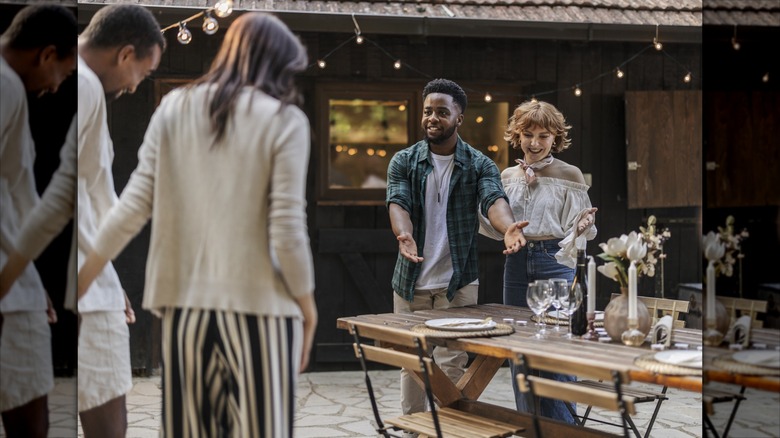
This rule used to be nearly a biblical commandment. You did not touch your food until everyone was seated and served. Period. At restaurants, at home, at Grandma's house — wherever you were, you waited. Starting early was seen as impatient at best, and flat-out rude at worst.
The same standard applied for leaving. You stayed at the table until everyone was done, whether you were full, bored, or slowly losing your mind while your siblings finished their soup at a snail's pace. Today, this rule has loosened exponentially. Restaurants don't always manage to serve the entire table's meal at the same time, and most people don't expect you to let your food go cold while waiting for one delayed dish. At dinner parties, some hosts even encourage guests to "go ahead and start," and most of us happily oblige.
In homes, families and loved ones eat at varying paces, adhere to different schedules, and sometimes just need to get up and move on to the next obligation. That doesn't mean the rule is totally dead. Waiting can still be seen as a sign of respect. It's just that the modern version is more flexible, more human. It's less about rigid obedience and more about awareness. Basically, don't inhale your food while others are empty-handed, and don't dramatically stand up the second you're done to ditch your fellow diners.
No phones at the table
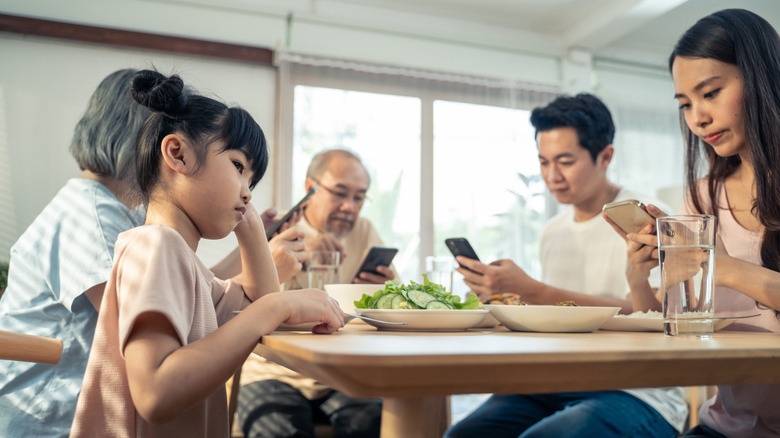
For a long time, phone etiquette rules at the dining table weren't discussed, because cell phones didn't exist. But when cell phones hit the scene, suddenly "no phones at the table" became the new "no elbows" admonition. The idea behind the ban was that meals were meant for dining and conversation (between you and the people sitting beside you). Looking at your phone was considered dismissive, rude, or even a sign you didn't want to be there at all.
Now, with cell phones being so integral to daily life, many people won't automatically feel insulted when devices appear at the dining table. Checking a text message or glancing down to monitor a notification doesn't exude the same uncivilized energy it once did. Polls and commentary even suggest younger generations view phones as simple tools for staying in the know, not social grenades that give major jerk vibes.
Still, this rule hasn't completely vanished. It has just evolved. For instance, full-on scrolling, watching entire videos, or answering work emails while someone is actively trying to talk to you is still considered poor taste (most of us would agree there's a big difference between quick use and zoning out entirely). So, maybe now the rule isn't so much "no phones ever," but more like "don't make the people you're eating with feel invisible."
Sitting down and eating at an actual table
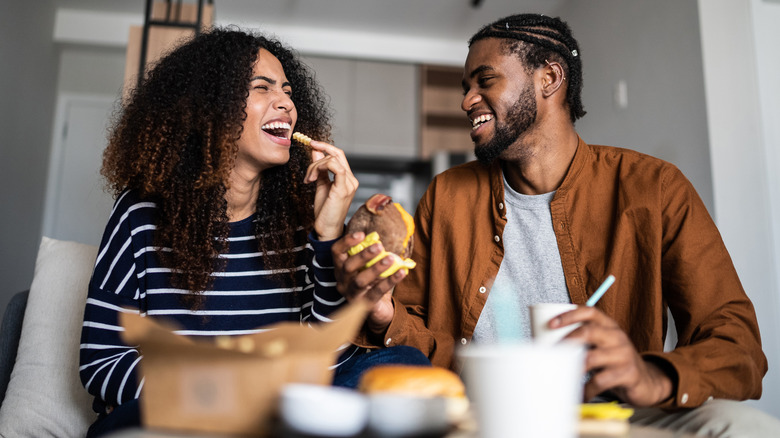
Eating at the table used to be a non-negotiable. Meals happened sitting down, together, ideally at the same time. Eating in front of the TV, standing while stuffing your face over the sink, or wandering around with a plate was seen as near Neanderthal behavior and definitely something you'd be corrected for immediately.
Fast forward to today, and many people don't eat at tables at all. Now, meals happen on couches, in beds, at desks, in cars, or standing in the kitchen (yes, maybe even over a sink, but more than likely while scrolling socials). Speaking of socials, TVs, phones, and laptops have replaced the dining table as the center of daily life. So it makes sense that entire comment sections online are full of people admitting they don't know anyone who regularly eats at a table.
This shift isn't about suddenly adopting bad manners as much as it is about embracing lifestyle changes. Smaller homes (some with no room for proper tables), as well as busy schedules, solo eaters, and more flexible routines, all play a role in this recent rule bend. Simply put, sitting down for every meal together is no longer realistic for many households.
Getting dressed up for going out to dinner

Once upon a time, going out to eat meant dressing up, no discussion. Not necessarily formal wear, but definitely donning some duds nicer than your everyday attire. There was no problem with strict restaurant dress codes, and eating out was an event, something you looked forward to and even revelled in the planning and process. Showing up underdressed just felt embarrassing or disrespectful.
Today, that expectation has mostly evaporated because to us, "posh" is the name of a Spice Girl we once secretly wished to be or be with — not a state of dress when going to dinner. These days, casual dress is the norm (think jeans, sneakers, hoodies), and when we wear these normal clothes, as long as it is not a black-tie event, no one even blinks.
In fact, many people openly reject the idea of dressing up to eat, seeing it as borderline performative, potentially uncomfortable, and even outdated. Online commentary makes it pretty clear that people want to enjoy their food without all the pressure of getting gussied up and pretending to be someone they're not. Final verdict? Comfort trumps formality in today's dining culture. If you want to get all dressed up, go for it, but chances are no one will shame your family for being way too underdressed for a restaurant.
No elbows on the table
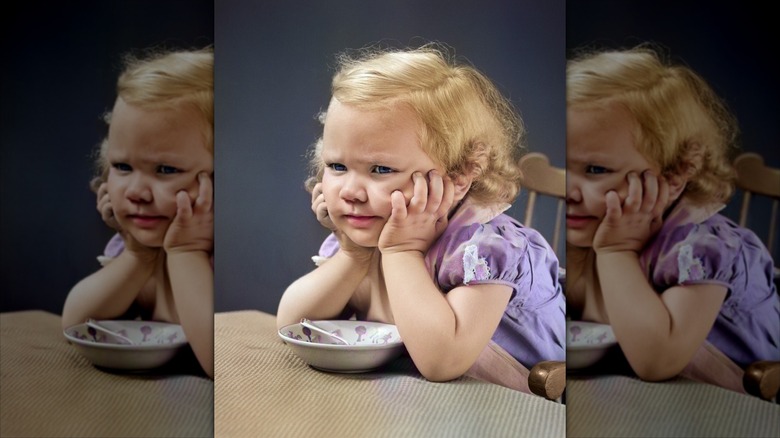
Next up? Elbows off the table, always. This rule of proper etiquette was drilled into us from a young age, often without explanation. Heck, it was even a rule of dining etiquette we learned in a cult classic movie. (Pretty Woman, anyone?) Resting your elbows on the table top was seen as rude, sloppy, or even taking up too much space. Proper posture was also a factor, with slouching being synonymous with setting our elbows exactly where they should not be. It's almost uncanny to remember how big a deal the whole elbow rigamarole was, because today this rule barely registers for most people. As long as you're not crowding others or knocking things over, elbows (wherever they may be found) are generally ignored.
Etiquette experts may still mention the rule, but even they acknowledge it seems to be fading. Our modern focus now feels less centered on maintaining perfect posture or a strict protocol in favor of embracing a more open-armed invitation for comfort and conversation. Nowadays, people seem far more concerned with whether you're engaging and being pleasant than with where your arms are resting.
That being said, elbows can still be an issue in cramped settings or at super formal meals. Resting them casually between bites? That still feels fine. Sprawling across the table? That, our friends, is super annoying.
Clinking glasses with everyone before eating
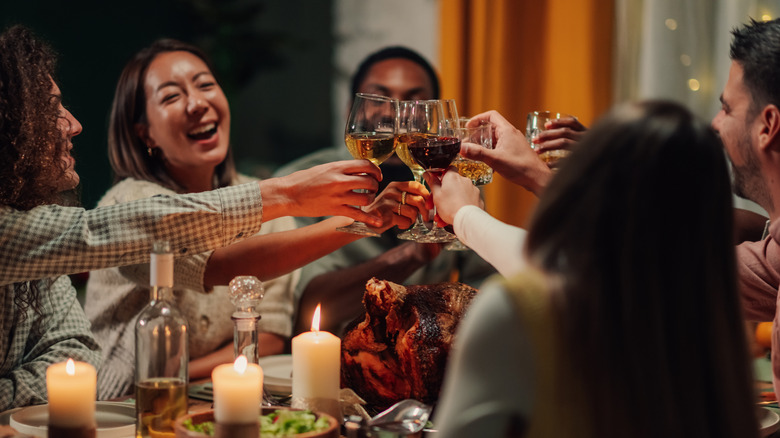
There was a time (call it the Dark Ages) when dinner couldn't officially start until every single person at the table had a glass in hand and participated in a group toast. The whole ordeal was a drag, to be completely honest. You waited ... and waited. You politely held your glass in limbo while drinks were poured and refilled. When that highly anticipated moment arrived, someone always managed to miss the clink entirely, which meant awkwardly circling back so no one felt excluded. What was intended to be a communal celebratory moment often just descended into a logistical nuisance or needlessly dramatic dud.
These days, the need to clink glasses with everyone has loosened a lot. Drinks arrive at different times. Some people order cocktails, while some skip alcohol altogether. One person might already be sipping because they're thirsty, not because they're being rude. All of these things are true, and not one person at the party seems particularly bothered by it anymore.
Basically, you could say that modern dining has turned toasting into an optional moment rather than a mandatory tradition. If someone wants to toast a birthday, an engagement, or a reunion, almost everyone happily joins in. But the idea that every meal must pause until glasses are raised? Please. We're beyond that.
Saying grace before a meal
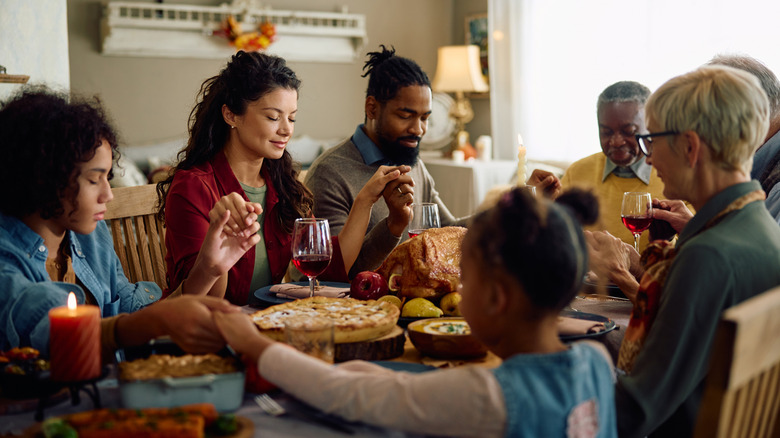
For many families, saying grace before a meal was once as automatic as sitting up straight. You sat down, folded your hands, bowed your head, and waited quietly. It didn't matter who was there (guests were expected to participate, or at least sit silently). It wasn't questioned, but rather a given. It's a new era, though, and that expectation has changed dramatically.
This is not because people are disrespectful; rather, we're generally more considerate and aware of the diversity that gathers around our tables. Different religions, different belief systems, and plenty of people who don't identify as religious at all often share the same meal (and huzzah to that). But in that context, public prayer can feel uncomfortable or awkward, especially if it's assumed rather than discussed.
That doesn't mean grace has vanished. Many families still say it over their meals at home, or quietly offer a personal prayer wherever they eat out. In mixed company, however, let's just say it's no longer the default. In fact, many hosts are more likely to skip it entirely than risk making someone feel out of place or even offended. Today's etiquette leans more toward inclusivity and awareness.
Napkins on lap
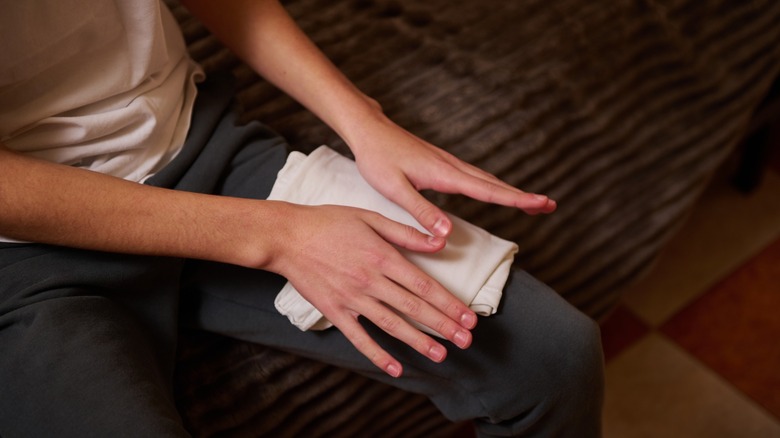
Putting your napkin on your lap used to be etiquette law. You sat down, immediately unfolded it neatly, and placed it right there. Forgetting wasn't just a mistake, but a telltale sign that (gasp!) you were lacking fundamental table manners. This rule of etiquette was drilled into our brains, right alongside "don't talk with your mouth full" and "look me in the eye when I'm talking to you!"
Today, that rule has nearly crumbled completely. At casual restaurants, paper napkins often stay on the table until they're needed (if present at all). And at home? Many people don't even set napkins out until food is served, or it's just a paper towel roll on the table. As for those of us eating on the couch, at the counter, or over the sink? The lap napkin rule doesn't really even enter the conversation.
It's worth mentioning that placing the napkin on your lap is still fine dining etiquette, and most people will instinctively follow the social cue. The difference nowadays is that it's more context-driven than automatic assumption. No one is silently judging you for forgetting to place that linen square across your leg, unless perhaps you wipe your hands on your pants. Then in that case, we simply can't help you, you savage.