

The Historic Reason Your Mom Always Told You To Not Put Your Elbows On The Table
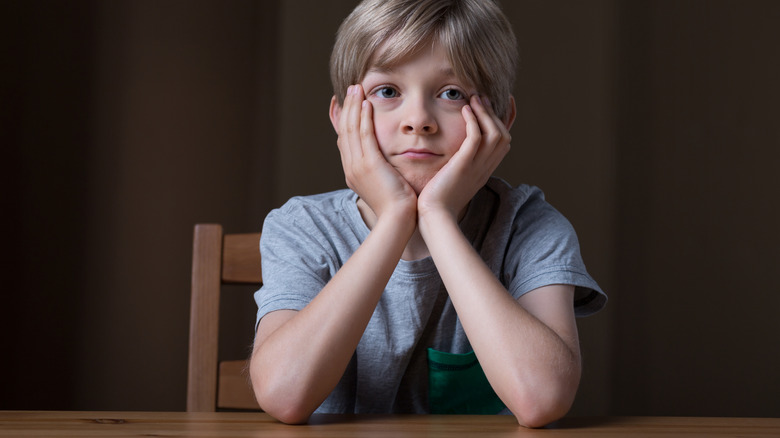
We've all been told at some point not to put our elbows on the table, especially at holiday dinners, which makes little or no sense in contemporary times. Though not exactly a common restaurant etiquette rule, at one point, it was a rule put in place to keep the peace during mealtimes. Historically — that is to say — around medieval times, having your elbows on the table was a sign that you were an easily-ruffled individual, ready to fight at any time. While peace-keeping wasn't the only reason elbows were shunned from tables, it likely allowed for more relaxation while eating.
Other reasons for leaving elbows off the table include space. During these times, dining halls were packed with people, all seated at long tables, eating their meals. One random elbow in the wrong zone could have led to spilled drinks, knocked over food, or invaded another person's space. Elbows off the table was also a sign that you weren't lazy. Placing elbows on the table is nearly impossible without slouching over your food. With elbows tucked at either side of the body, posture is naturally better. Were those keeping this table etiquette alive trying to prevent fights at the table? Maybe. Though, in recent times, older forms of table etiquette are looked at through a different lens, and if they are upheld, the reason for it has likely changed.
Elbows off the table: Etiquette, manners, or simply functionality?
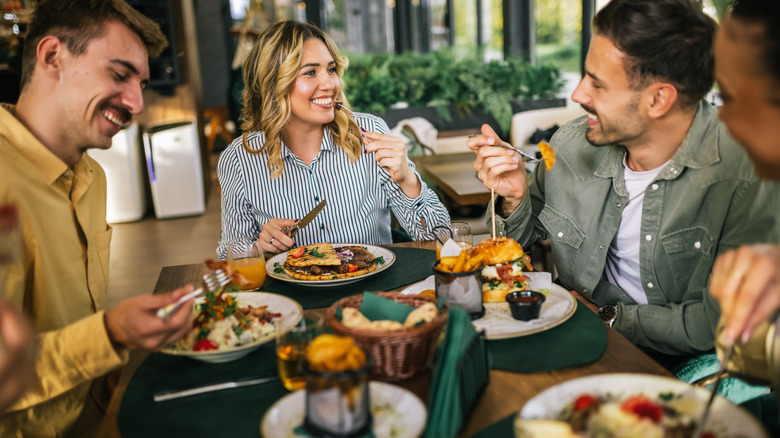
Not many people would bark at you to get your elbows off the table these days, but plenty still follow this practice anyway, possibly because of the constant reminders they received while growing up. But it also could be because it's actually a great habit for maintaining boundaries at the table. So many of us are more concerned with everyone at the table feeling welcome and comfortable, that a lot of etiquette is only used out of thoughtfulness. Keeping elbows down gives the diner next to you space to enjoy their meal and prevents any accidental spills.
While the words are often used interchangeably, there is a difference between dining etiquette and table manners. Etiquette is a variety of rules made over the years that, at one point, defined how respectable a person is or isn't. Manners are how individuals choose or choose not to abide by those rules. Both can vary in different cultures.
Many individuals now base how they behave at the table on what makes other guests feel welcome. This brings an awareness to mealtimes that perhaps didn't exist before, as different actions make different individuals more or less comfortable. For example, slouching at the table may be considered rude in your great-grandmother's formal dining room, but completely fine when you're out with friends. Though the phone rule you're probably breaking at the dinner table has become pretty universal. It's a dining etiquette to set down the phone and pay attention to the people you're with. Even if you need it on for an important call or text, staring at your phone through an entire meal might be the new equivalent of elbows on the table.