

The $5 Aldi Find That Makes Washing And Storing Produce A Breeze
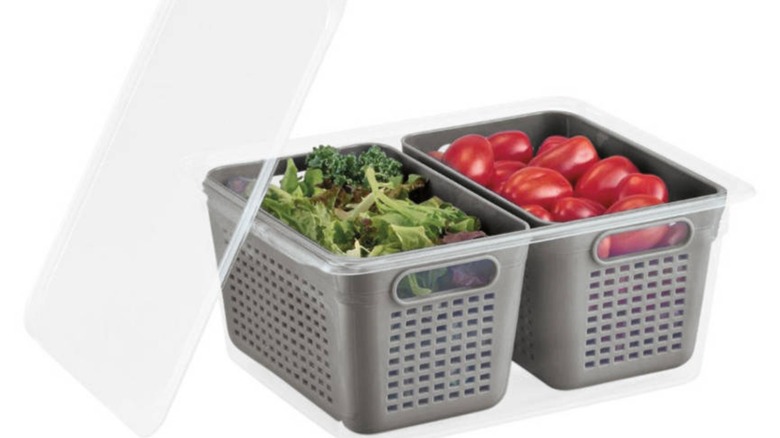
Washing produce is something we all know we ought to be doing, but I've always been rather casual about it to the point where there needs to be actual visible dirt before I bother rinsing. Shocking, I know, but if there's anything that can get me to change my slipshod ways, it's a $5 Aldi find. (A $5 Aldi pineapple corer, once I learned to use it, completely changed my relationship with that fruit.) Crofton fridge colanders, which will be available at Aldi starting December 31, may not be solely intended for produce washing, but they're just the gadget to get the job done.
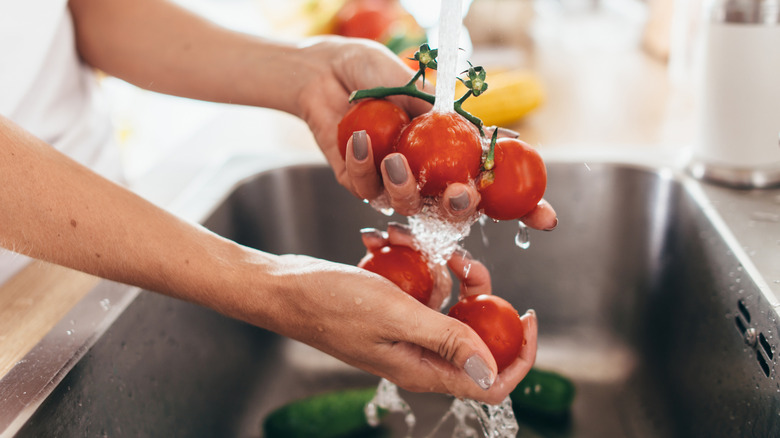
For $4.99, you can purchase either a two-pack of these colanders or a single, larger one. Both varieties come with lids and are available in a choice of grey or white. The containers can be used to store your produce in the fridge since they allow for air circulation. (This is especially beneficial for berries, lettuces, and other leafy greens since air exposure helps them stay fresh for longer.) When you want to wash the produce, which should be done right before you plan to eat it, all you'll need to do is put the produce-filled colander in the kitchen sink and run the tap.
Is rinsing enough to clean your produce?
You may be wondering if plopping your produce in one of these Aldi colanders and giving it a quick rinse under a running faucet will be sufficient to clean it. According to the U.S. Food and Drug Administration, it should be. (It's best to use cool water, though, since hot water might cause any surface bacteria to be absorbed by your fruits and vegetables.) Soap is to be avoided, as are any products marketed as produce washes.
What about vinegar or baking soda, however? Neither of these is really necessary, although both additives are edible, so they won't really harm the produce or anyone eating it. (There's a slight possibility they may affect its flavor, though, unless you rinse thoroughly.) What's more, there's some evidence that baking soda can remove pesticide residue from produce. A study published in the November 2017 issue of the Journal of Agricultural Food Chemistry found that a 12 to 15-minute soak in a 1% baking soda solution (about half a teaspoon per cup) could remove most of the surface bacteria from apples, although researchers still favored peeling as a more effective decontamination method. If you do want to use baking soda (or vinegar), the Aldi storage colanders also make a useful tool for soaking your produce, as they allow you to drain it in a single step.